

By Wamala Sipirian
Published: September 25, 2026
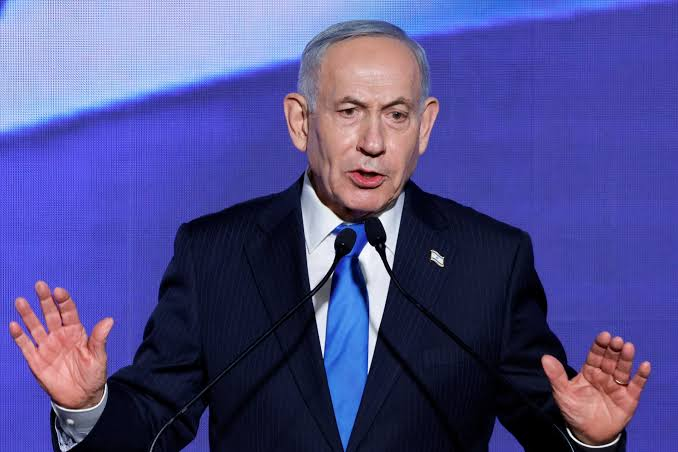
NEW YORK — Israeli Prime Minister Benjamin Netanyahu has thanked Uganda for erecting a memorial to his late brother, Yoni Netanyahu, at the Old Entebbe Airport terminal, where the Israeli commando commander was killed during the 1976 hostage rescue operation.
Netanyahu made the remarks during his address to the United Nations General Assembly in New York on Thursday, recalling the Entebbe raid as an example of Israel’s determination to confront threats against its citizens.
“My brother, the commander of the storming party, was the only soldier killed in this mission. I want to thank Uganda again for recently erecting a statue of Yoni in the place where he fell,” Netanyahu said.
He added: “My friends, Yoni’s words are as true today as they were more than half a century ago. We’re going to win. We have no other choice.”
Uganda Unveils Yoni Netanyahu Memorial
The tribute followed the unveiling of a monument to Yoni Netanyahu on August 1 at the historic Old Entebbe Terminal.
Uganda’s Chief of Defence Forces, General Muhoozi Kainerugaba, presided over the unveiling.
Yoni Netanyahu commanded the Israeli force that flew thousands of kilometres to Entebbe in July 1976 to rescue passengers aboard an Air France aircraft that had been hijacked by Palestinian and German militants.
He was the only Israeli soldier killed during the operation.
During the unveiling ceremony, Kainerugaba described Yoni’s leadership and sacrifice as “an enduring symbol of courage, duty, and selfless service.”
He also said the memorial reflected the transformation of relations between Uganda and Israel since the rule of former Ugandan President Idi Amin.
Netanyahu’s UN Address
Netanyahu’s reference to Uganda came during a wider UN address focused heavily on Israel’s wars and regional security threats, including Iran, Gaza and the West Bank.
The speech was met with visible opposition, with scores of delegates walking out as the Israeli prime minister prepared to speak.
Netanyahu defended Israel’s strikes on Iran’s nuclear facilities, describing them as necessary for the country’s survival.

“Devastating Iran’s nuclear facilities was hard. It was very hard to do. But for me, it was one of the easiest decisions I’ve ever had to make as Prime Minister, because if we hadn’t done it, we’d all be dead,” he said.
He also rejected allegations that Israel has committed genocide in Gaza, describing the accusation as the “greatest lie of the century.”
Netanyahu said Israel had sought to prevent attacks against its population and argued that its military had taken measures to reduce civilian casualties.
The Gaza war followed the Hamas-led attacks on Israel on October 7, 2023. According to Israeli figures cited in the source, about 1,200 people were killed and 251 people were taken hostage.
Israel’s subsequent military campaign has killed more than 73,000 Palestinians, according to Gaza health authorities. The figures cited do not distinguish between civilians and combatants.
Netanyahu also rejected criticism of Israeli settler violence in the occupied West Bank, describing those responsible as a small group of offenders.
He accused international media, social media platforms and some governments of spreading hostile narratives about Israel.
The Israeli prime minister portrayed Israel as confronting multiple armed groups and threats involving Hamas, Hezbollah, the Houthis, Iran, armed groups in Iraq and Syria, and Palestinian militants in the West Bank.
Uganda-Israel Relations
Netanyahu’s reference to the Entebbe memorial was one of the more conciliatory moments of his address and highlighted changes in relations between Kampala and Jerusalem since the 1976 raid.
Uganda and Israel restored diplomatic relations in the 1990s after ties were severed during Idi Amin’s government.
The two countries have since expanded their relationship into security and other areas of cooperation.
The memorial at the Old Entebbe Terminal now stands at the site where Yoni Netanyahu was killed during the operation, providing a physical link to one of the most significant episodes in the history of Uganda-Israel relations.