

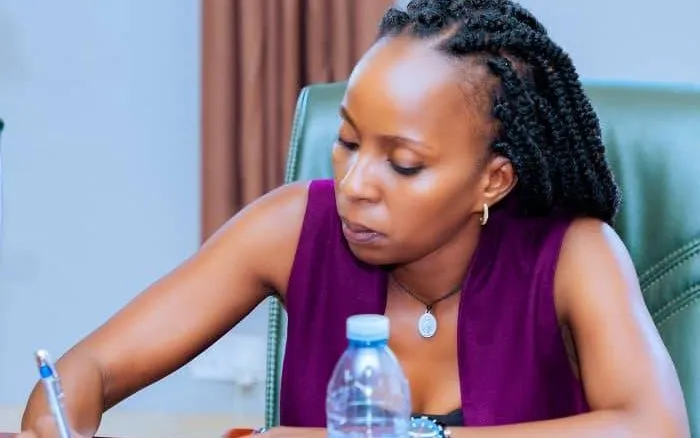
Ugandan singer Phina “Masanyalaze” Mugerwa is raising her voice beyond the stage—this time, for a cause that could redefine Uganda’s entire arts landscape. The “Fundukululu” star has called on fellow artists, performers, and creatives to unite in demanding a long-overdue change: the amendment of the 1959 Uganda National Cultural Centre (UNCC) Act.
Phina describes the law—enacted more than six decades ago—as “stale and stifling,” arguing that it no longer reflects the realities or ambitions of Uganda’s fast-evolving creative sector.
“The most important thing is advocating for the amendment of the 1959 UNCC Act because it is too old and stale. That’s why the industry has no leadership and structures — the very tool we should be using to guide us is outdated,”
— Phina Mugerwa, speaking on the state of Uganda’s arts industry.
Why the 1959 UNCC Act Is Holding Back Uganda’s Creatives
The UNCC Act, established when Uganda’s arts industry was still in its infancy, was meant to guide cultural policy and governance through the National Theatre and National Cultural Centre. However, Phina and other advocates say it now acts as a major barrier to innovation, leadership, and growth.
Uganda’s creative economy has evolved—artists are now global, social media drives trends, and the industry contributes significantly to youth employment and tourism. Yet, the laws that govern it are frozen in the past.

Phina believes this outdated framework has led to:
- A lack of strong leadership and policy direction in the arts.
- Ineffective management of cultural institutions.
- Missed opportunities for funding, training, and infrastructure development.
A Vision for the Future: Leadership, Funding, and Structure
Phina envisions a future where Uganda’s creative sector has clear structures, accountability, and government support—something she says can only happen through modern legislation.
“Modernizing the Act would open up opportunities for better governance and development in the creative industry,” she explained. “Despite our growing potential, we are still being held back by outdated systems.”
With Uganda’s entertainment scene booming—from music and film to fashion and dance—Phina argues that the creative economy can become a powerful engine for national development if given the right legislative support.

Reviving the National Theatre: Preserving Heritage, Building the Future
Beyond laws, Phina also has her eyes set on revamping the National Theatre, a historic landmark she describes as “the beating heart of Uganda’s arts and culture.”

She revealed that discussions are already underway to refurbish and expand the National Theatre’s facilities—an initiative she believes could provide a lifeline to thousands of local creatives.
“We need to renovate the National Theatre because that’s what we desire the most,” Phina said passionately. “We don’t want it to be demolished — it’s part of our heritage.”
She suggested that the renovation include new performance spaces, modern facilities, and improved parking, which could transform the theatre into a profitable, self-sustaining cultural hub.
Funding the Arts: A Missed Opportunity for Uganda’s Economy
Phina’s advocacy touches on a bigger issue—the lack of investment in Uganda’s creative sector, despite its clear potential to drive employment and tourism.
According to industry observers, Uganda’s arts contribute billions to the economy but receive a fraction of the government funding allocated to other sectors. By updating the UNCC Act, advocates believe it could:

- Unlock public-private partnerships for arts funding.
- Encourage foreign investment in film, music, and cultural exchange.
- Establish a creative industries council to support artists’ welfare.
- Empower youth with training and employment opportunities in the arts.
Battling Bureaucracy—but Staying Hopeful
Even as Phina acknowledges the bureaucratic red tape that often delays government projects, she remains optimistic that with consistent advocacy and unity, the arts sector can overcome decades of stagnation.
“We know how long government projects can take, but I believe if we keep pushing, things will change. The arts deserve recognition, investment, and respect.”
Her message to fellow creatives is simple but powerful: come together, speak up, and fight for reform.
Uganda’s Creative Industry: A Sleeping Giant Ready to Awaken
Across Africa, countries like Nigeria and South Africa have transformed their entertainment industries into billion-dollar sectors, thanks in part to progressive cultural policies. Phina believes Uganda can do the same—with the right legal and structural backing.
From Afrobeat to theatre, comedy to fashion, Uganda’s young creators are bursting with talent—but without a modern law to protect and nurture them, their potential risks being lost to neglect and outdated systems.

Phina’s call for reform comes at a time when more Ugandan artists are gaining international recognition, proving that the world is ready to embrace Ugandan creativity—if only the system at home would keep up.
The Bottom Line: It’s Time to Rewrite History
Phina “Masanyalaze” Mugerwa’s rallying cry is more than just a political statement—it’s a movement for empowerment, recognition, and national pride.
Her message resonates beyond the National Theatre’s walls: Uganda’s arts deserve modern laws, modern spaces, and a modern vision.
“The arts can build our nation, create jobs, and showcase our culture,” she insists. “But for that to happen, we must start by changing the law.”
💬 What are your thoughts on Phina’s bold call for reform? Should Uganda’s government finally update the 1959 UNCC Act? Drop your take in the comments and stay tuned for more exclusive updates from E Page One!