

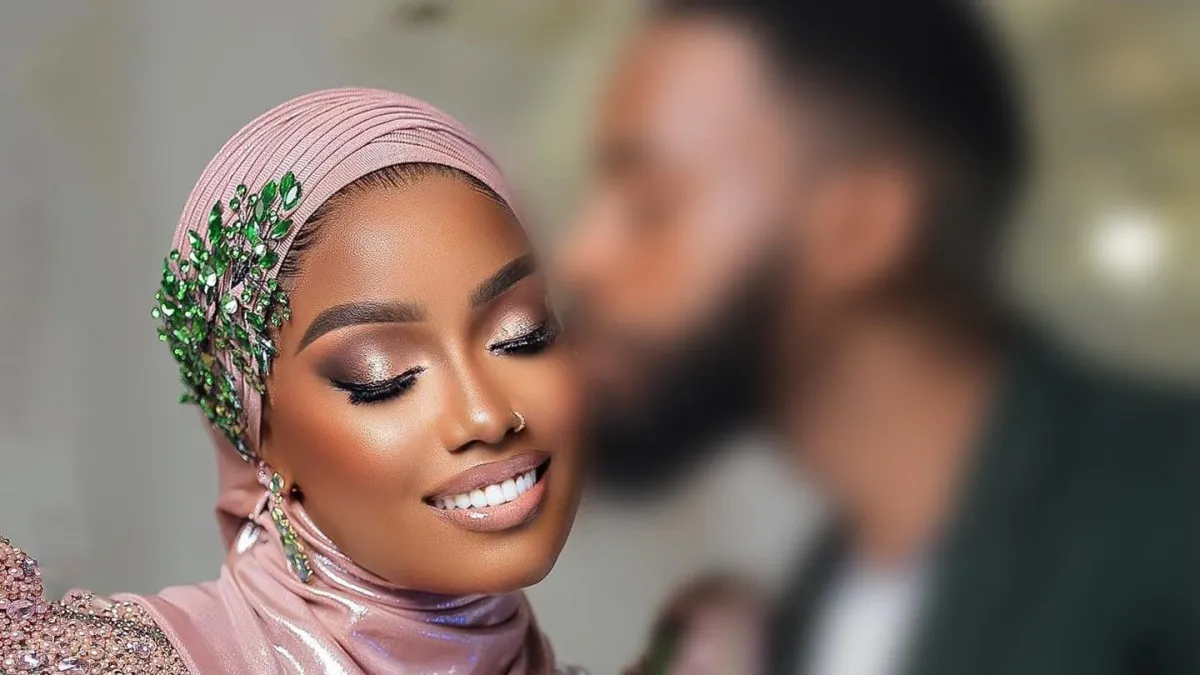
She Wore the Dress. She Said “I Do” on Camera. And Then the Internet Decided Her Marriage Was Cursed.
Somewhere between the final edit of Lydia Jazmine’s Ameenallah music video and its release into the world, a verdict was reached — not by critics, not by music reviewers, but by a corner of the internet that takes its supernatural consequences very seriously.
The charge: she appeared in wedding scenes. She wore the outfit. She played the bride.
The sentence, according to those convinced of the curse: her real wedding may never come.
Lydia Jazmine heard every word of it. She considered the claim carefully.
Then she laughed.
The Ameenallah visuals dropped and, by most accounts, delivered exactly what a quality Ugandan music video should — cinematic production, emotional storytelling, and Lydia Jazmine in full wedding regalia doing what she does best.

But a section of viewers couldn’t get past the symbolism.
The belief is not new, and it is not unique to Uganda. Across various cultures, there exists a deeply held superstition that an unmarried woman who acts in wedding scenes — wears the dress, walks the aisle, plays the role — risks jinxing her own path to the altar. The performance, the thinking goes, satisfies something spiritually that was meant to happen in real life.
Lydia Jazmine became the latest artist to collide with that belief head-on.
Messages poured in. Warnings followed. People who, by all appearances, were genuinely concerned told her, with varying degrees of urgency, that she had brought something upon herself.
And then things got really interesting — because her response wasn’t defensive. It was almost amused.
She did not hedge. She did not qualify. She did not thank people for their concern and gently suggest they might have a point.
“My wedding will happen,” Lydia Jazmine said.

Full stop.
She acknowledged the belief directly — she had heard people say it, understood what they were claiming, and chose to address it on her own terms rather than let it circulate unchallenged.
“I heard people say that if you act in wedding scenes, you bring a curse on your personal wedding, but I serve a living God,” she said. “If something is meant to be, it will always be so — all those are assumptions.”
Three sentences. Complete demolition of the premise.
She didn’t dismiss the people who raised it. She dismissed the idea itself, and she did it from a position of faith rather than frustration — which somehow made the response land even harder.
Lydia Jazmine is one of Uganda’s most consistent and vocally gifted female artists, with a discography built on emotional depth and musical precision. She has navigated the industry for years with a reputation that rests almost entirely on the quality of her craft rather than manufactured controversy.
Ameenallah is among her more recent releases — a visually ambitious project that put her in a wedding setting as part of the storytelling. For most viewers, it was simply a well-executed video. For others, it became a conversation about spiritual risk.


The superstition she addressed is genuinely widespread across East Africa and beyond, which is why the warnings she received were not coming from a place of malice. Many of the people who reached out likely believed they were doing her a favour.
That context matters — because Lydia Jazmine’s response was not angry. It was confident. And there is a difference.
Fans immediately noticed the energy she brought to the rebuttal — unbothered, grounded, and faintly entertained by the whole premise.
The clip moved quickly. “My wedding will happen” became the most quoted line almost instantly, circulating across WhatsApp threads and social media timelines with the kind of momentum that attaches itself to a statement that feels genuinely meant.
The internet had thoughts, and they were not holding back. Supporters flooded the comments with affirmations. Others debated the superstition itself — some doubling down on the belief, others calling it out as baseless pressure placed disproportionately on unmarried women in the public eye.
Within hours the conversation had expanded well beyond the video and into something bigger: who gets to define what a woman’s future looks like, and why a creative decision in a music video should carry any weight in that conversation at all.
Some fans believe the speed of Lydia Jazmine’s response — direct, faith-rooted, and completely unbothered — is itself a message to the wider industry about how female artists should handle unsolicited warnings about their personal lives.

Others pointed out, not without irony, that the superstition seems to apply almost exclusively to women. Male artists routinely appear in wedding and romantic scenes without anyone suggesting their future marriages are spiritually compromised.
It’s unclear whether the conversation will die down or continue to follow the video’s circulation. What is clear is that Lydia Jazmine has no intention of entertaining the premise any further. She made her position known, cited her source — a living God — and moved on.
That, it appears, is the end of the discussion as far as she is concerned.
There is a particular kind of pressure that follows unmarried women in the public eye — a running commentary on their relationship status, their choices, and apparently now, the creative decisions they make in their own music videos.
Lydia Jazmine did not ask for the warnings. She did not invite the speculation about what her Ameenallah visuals might mean for her personal future. She made a video. She wore a dress. She told a story.
The fact that her response was laughter rather than defensiveness says something about where she stands — in her faith, in herself, and in her understanding of what actually determines the course of a life.
Superstition did not build her career. She did.
She wore the wedding dress on camera, heard from hundreds of people that she had cursed her own marriage, and responded by announcing — with a smile — that her wedding will happen regardless. The real curse, it turns out, might just be assuming that an unmarried woman needs the internet’s permission to play a bride in her own video.
Lydia Jazmine has faith, a great video, and absolutely zero patience for unsolicited spiritual audits of her love life. The dress fit perfectly — and apparently, so does her confidence. Will the curse believers be in attendance when the real wedding finally comes?