

The DNA results in the Prince Paul Kafeero paternity case have been released. Four biological children were confirmed. More than twenty other claimants were not.
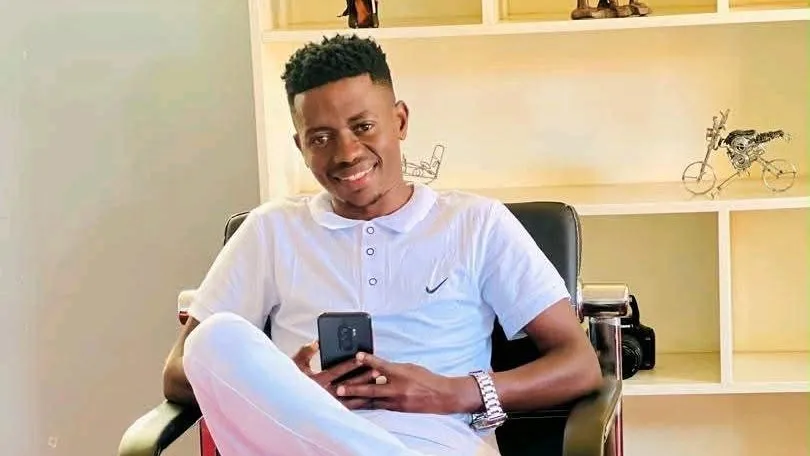
For many, that should have been the end of the story. For Ivan Kyanzi of Kachumbali TV — a platform that has spent years documenting the human side of this dispute — it is the beginning of a different conversation entirely. One about what happens to the people the results left behind.
The background to this case is long and painful.
Prince Paul Kafeero, one of Uganda’s most beloved Kadongo Kamu musicians, passed away over 19 years ago. In the years that followed, a family dispute grew steadily around the question of his biological children — eventually reaching a point where more than 25 individuals came forward with claims of descent.
The matter escalated to the point of a court-sanctioned exhumation of Kafeero’s remains to enable DNA testing. The results, when they came, were definitive in the scientific sense: four biological children were confirmed. The remaining claimants were excluded.

Kachumbali TV, a community-based online platform established in 2020, has been covering this story from the ground level — hosting several individuals connected to the Kafeero family, including Mugerwa Joseph, Nantongo Sarah, Nende Abubaker, and Nantongo Stella, who has publicly identified herself as an excluded daughter of the late singer.
Ivan Kyanzi, the platform’s head, has now gone on record with a measured but pointed appeal directed at the government and relevant authorities.
On the question of the DNA results themselves, Kyanzi is respectful of the scientific process but raises the possibility of further review.
“If legally and scientifically appropriate, an independent review or a repeat DNA test conducted by a highly reputable international laboratory could help eliminate any remaining doubts and strengthen public confidence in the outcome,” he stated.
He was careful to frame this not as a rejection of the current findings but as a transparency measure — one that could reinforce rather than undermine confidence in the outcome.

His more pressing appeal, however, addresses what happens if no repeat test takes place.
“If there will be no repeat DNA test, I respectfully appeal to the government to consider the welfare of the other children who have now been excluded. Many of them have lived for years believing they belonged to Prince Paul Kafeero’s family.”
Kyanzi suggested concrete forms that government support could take — assistance in establishing small businesses, access to land, or livelihood programmes — framing the request as a humanitarian gesture rather than a legal one.
“The ultimate goal should be justice, transparency, compassion, and lasting peace for the family of the late Prince Paul Kafeero, whose musical legacy continues to inspire generations of Ugandans.”
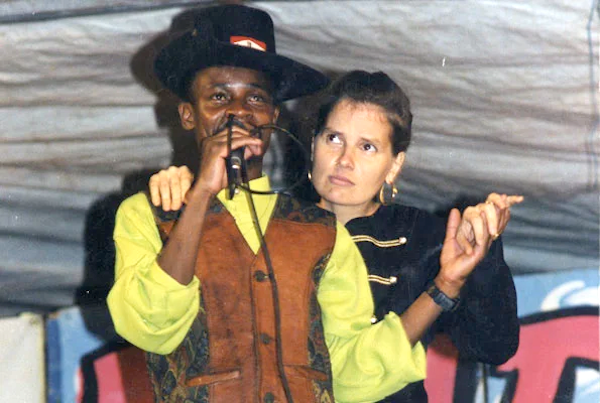
Prince Paul Kafeero occupies a significant place in Ugandan musical history. His Kadongo Kamu style — intimate, acoustic, deeply lyrical — connected with audiences across generations and continues to be referenced as a benchmark of Ugandan musical authenticity.

His death left behind not just a legacy but a vacuum around which, over time, competing claims and unresolved questions accumulated. The DNA dispute is not simply a legal matter — it carries emotional and cultural weight for a public that holds Kafeero’s memory close.
Kachumbali TV’s role in this story is worth understanding in context. The platform describes itself as dedicated to giving voice to individuals whose stories often go unheard — and in this case, that has meant providing a platform for those on the margins of the dispute, including claimants who now find themselves excluded from the confirmed family tree.
Ivan Kyanzi’s appeal to the government is not a legal filing. It is a public statement from a media figure who has been close to the human dimensions of this story and is now asking that those dimensions not be forgotten once the legal chapter closes.
DNA testing resolves biological questions. It does not resolve identity.
For individuals who grew up believing they were the children of one of Uganda’s most celebrated musicians — who built their sense of self, at least in part, around that connection — a negative result does not simply erase years of lived experience. The psychological and material consequences of that exclusion are real, regardless of what the science confirms.


Kyanzi’s appeal draws attention to that gap — between what the law can determine and what justice, in a broader human sense, might require. Whether the government responds, and in what form, remains to be seen. But the question he is raising is one that the closure of the legal process alone cannot answer.
Among those who have spoken publicly through Kachumbali TV is Nantongo Stella, who has identified herself as an excluded claimant and described her situation as that of an abandoned daughter.
Her story, and those of others in similar positions, represents the most difficult dimension of this case — people who did not manufacture their belief in who they were, and who now face the task of rebuilding an identity the results did not validate.
Kyanzi’s language around this is deliberate. He does not frame the excluded claimants as fraudsters or opportunists. He describes them as people who lived for years inside a belief, and who now need a path forward — with dignity.
The DNA results in the Prince Paul Kafeero case have answered the biological question at the centre of this dispute.
What Ivan Kyanzi is asking is whether answering that question is enough — and whether the people the answer left behind deserve something more than just a result.