


Nobody in Uganda’s music industry asked for this conversation.
But Charles Peter Mayiga — the Katikkiro of Buganda, one of the most respected and influential cultural voices in the country — decided to have it anyway. Publicly. Directly. Without apology.
His message to Ugandan creatives landed in three parts: stop making explicit music videos, stop mimicking foreign cultures, and stop settling for work you know isn’t good enough.
In an industry where those three things have quietly become the norm, Katikkiro Mayiga’s words hit like a bucket of cold water — and the conversation he started isn’t going away anytime soon.
Mayiga didn’t ease into it.
He came with a clear position on what makes a music video truly powerful — and what’s been getting it wrong in Uganda’s creative space.
“I believe a music video that stands the test of time portrays the message and theme of the song as expressed by the artist in the lyrics,” he stated. “Even if the song is about love or romance, there are many appropriate ways of expressing that.”

The implication was obvious to anyone paying attention. Explicit visuals aren’t creativity — they’re a shortcut. And Mayiga is not interested in shortcuts.
He acknowledged that love and romance are legitimate themes in music. Nobody is asking artists to sanitize their art into something lifeless. But his point was sharp: there is a wide, creative space between a heartfelt love song and what often ends up on Ugandan screens — and too many artists aren’t bothering to find it.
But that’s not even the part that got people talking.
Mayiga pivoted to something that clearly frustrates him deeply — the growing wave of Ugandan artists who, in his view, have traded their own identity for a borrowed one.
“I see artists copying and trying to look like Americans. It is unfortunate,” he said bluntly. “That is why when they cross borders, they are often dismissed.”
He didn’t stop there.
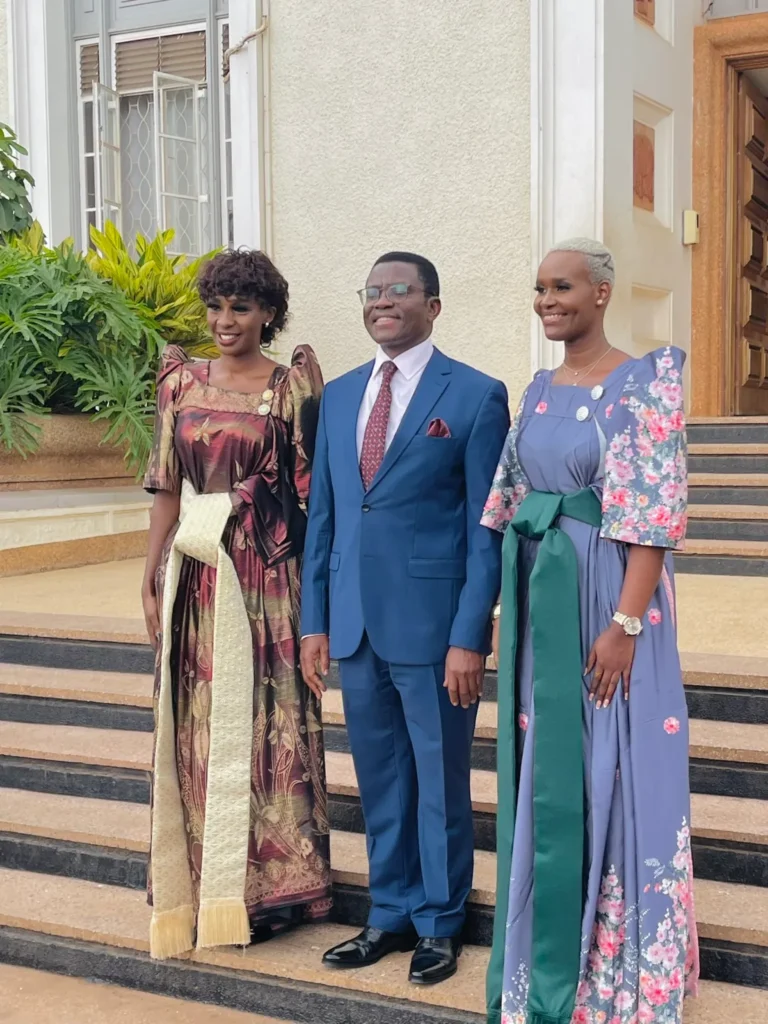
“Copying and pasting other people’s cultures is not the way to go. You don’t have to imitate Americans or Jamaicans when creating dancehall or rap music for Ugandans.”

That sentence alone was enough to set the internet on fire.
His final point carried a different energy — less criticism, more challenge. He urged artists to hold themselves to a higher standard, even when it costs more.
“When you realize that a video is not good enough, do it again, although I understand that it requires a lot of funding. It is better to produce something of quality and be appreciated for it than to settle for less.”
Coming from someone of Mayiga’s stature, that wasn’t just advice. It was a standard being set — publicly, on the record.
Charles Peter Mayiga has served as the Katikkiro — Prime Minister — of the Buganda Kingdom since 2013. He is widely regarded as one of Uganda’s sharpest legal minds and most articulate public intellectuals, and his voice carries weight that extends far beyond the walls of the kingdom.
When Mayiga speaks on culture, people listen. Not just because of his title, but because of his track record of saying difficult things with precision and without walking them back.
His decision to weigh in on the music industry is significant. It signals that the conversation about Uganda’s cultural output has moved beyond entertainment blogs and Twitter arguments — it’s now being raised at the level of institutional cultural leadership.

Uganda’s music scene has produced genuine regional stars and moments of real creative brilliance. But it has also battled recurring criticism about quality control, over-reliance on trends imported from abroad, and music videos that prioritize shock value over substance. Mayiga’s remarks land squarely in the middle of that ongoing debate.
The moment his words began circulating — particularly the “stop copying Americans” line — social media in Uganda caught fire.
Fans and industry insiders immediately noticed that Mayiga hadn’t spoken in vague, diplomatic terms. He had said exactly what he meant, named the cultures being imitated, and connected the dots between imitation and the dismissal Ugandan artists face when they try to cross borders.
The internet had thoughts, and they were absolutely not holding back. Comment sections filled with people tagging their favorite artists, debating which videos Mayiga might have had in mind, and arguing passionately about where the line between cultural influence and cultural erasure actually sits.
Within hours, clips and quotes from his remarks were spreading across WhatsApp, Twitter/X, and Facebook — with many users adding their own two cents about the state of Ugandan music videos.
The public response was loud, layered, and deeply divided.
A significant portion of commenters backed Mayiga completely — arguing that his critique was long overdue and that the industry’s obsession with mimicking foreign aesthetics has come at the direct expense of Uganda’s own rich musical identity.

Others pushed back, arguing that music is a global language and that artists should be free to draw from whatever influences speak to them creatively. Some pointed out that the most successful African artists globally — from Afrobeats to Amapiano — have blended local and international elements without losing themselves.
Some fans believe Mayiga’s comments may have been directed at specific recent videos that have sparked controversy online, though he did not name names. It’s unclear whether any artists will respond publicly, but the pressure to do so is already building.
Sources close to Uganda’s creative community say the speech has sparked genuine internal conversation among artists and managers about brand identity and long-term career strategy.
Underneath the criticism is something Mayiga clearly cares about deeply — the idea that Ugandan creativity, at its best, doesn’t need to borrow anyone else’s voice.
There’s a quiet sadness in watching talented people shrink themselves into imitations of someone else, convinced that’s the only path to relevance. Mayiga’s message — however bluntly delivered — is ultimately one of belief. Belief that Ugandan artists have something original, valuable, and exportable, if only they’d trust it enough to lead with it.
For young creatives watching from the sidelines, trying to figure out who to be in an industry that rewards trends and punishes patience, that message might land differently than any criticism ever could.
Here’s the irony worth sitting with: Uganda’s most powerful cultural traditionalist just delivered the most forward-thinking advice the music industry has heard in years. Don’t copy. Don’t settle. Do it again if it isn’t good enough.
That’s not conservatism. That’s a masterclass.
The Katikkiro came, he spoke, and he left the entire music industry with homework — the question now is, which artist is brave enough to turn it in? Drop your thoughts below.