

By Wamala Sipirian
Published: October 8, 2026
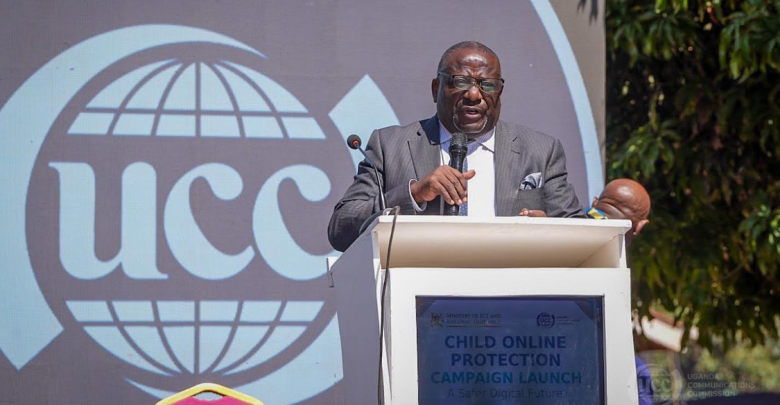
The Uganda Communications Commission (UCC) has launched a Child Online Protection Campaign aimed at promoting a safe, secure and responsible digital environment for children in Uganda.
The campaign was launched at Kololo Secondary School in Kampala on Wednesday as more young Ugandans gain access to the internet and encounter risks associated with online activity.
During the launch, Permanent Secretary for the Ministry of ICT and National Guidance Dr Aminah Zawedde also flagged off the Schools Awareness Assembly Program (SAAP), a youth-focused initiative designed to raise awareness about digital safety among students.
The 90-day campaign will target more than 100 schools across the country.

UCC highlights online risks facing children
UCC Executive Director Nyombi Thembo said children are already using the internet, making the focus less about restricting access and more about ensuring they can use digital platforms safely.
“You’ve heard that countries like Australia have introduced laws. France has debated this, and the United Kingdom, most recently, has planned to introduce restrictions for children under 16 from 2027,” Thembo said.
“The question is not whether children should use the internet; they already do. That one we know. The question is, how do we make sure they can learn, connect, create, and have fun online without being exposed to avoidable harm,” he added.
Thembo listed cyberbullying, harassment, stalking, blackmail, exploitation, harmful content, misinformation, addiction and other forms of abuse among the risks children can encounter online.
He said the consequences of online activity can extend into children’s offline lives.

According to Thembo, protecting children does not mean telling them to stay away from technology but instead giving them the knowledge and skills needed to use it safely.
He urged students to think carefully before posting online, protect their personal information, exercise caution when interacting with people online and avoid participating in bullying or harassment.
He also encouraged students to report situations that make them uncomfortable or put them at risk to a trusted adult rather than suffering in silence.
Government shifts focus to digital child protection
Dr Zawedde said the campaign represents a shift in the government’s approach to protecting children, noting that child protection efforts have traditionally focused heavily on offline violations.
“For many years, we have spoken about protecting children, but our focus, understandably, has been on issues to do with child labor, child trafficking, child abuse, and other violations of children’s rights,” she said.

She said those challenges remain, but described digital safety as an increasingly important issue for Uganda’s younger generation.
“We are moving away from only focusing on trafficking. It’s still going on, and we are still ensuring that children are protected against this, but now the most pressing issue and most impactful issue we have to deal with is you, the Ugandans, who are the digital generation,” Zawedde said.
Zawedde said the government already has measures aimed at addressing children’s exposure to inappropriate online content.
She said Cabinet approved the national communication policy in March 2026, including provisions requiring internet service providers, under UCC regulation, to block inappropriate content accessible to children.
She added that as the government reviews other laws, it must also establish mechanisms to ensure that digital platforms used by children are safe.

UCC calls for shared responsibility
Thembo said child online protection should not be treated as the responsibility of regulators alone.
“It requires collaboration among regulators, schools, parents, service providers, civil society, law enforcement, among others,” he said.
Zawedde also called on telecommunications operators, digital platforms and technology companies to strengthen safety mechanisms and reporting systems.
“I call upon telecom operators; I call upon the digital platforms and technology companies to play their part as well. Let us make sure that as we design the technology, we design technology that has safer platforms. We strengthen the mechanisms for reporting abuse,” she said.
She described parents as the first line of protection for children and urged teachers to equip learners with both digital skills and the judgment needed to navigate online environments safely.
The 90-day Schools Awareness Assembly Program will take the digital safety campaign to more than 100 schools nationwide.
Sources
Uganda Communications Commission; Ministry of ICT and National Guidance; statements by UCC Executive Director Nyombi Thembo and Permanent Secretary Dr Aminah Zawedde