


A man was arrested — allegedly — over a stolen mobile phone and a sweater.
He has been sitting in detention, with reports of torture circulating, long after the election that supposedly justified his arrest has come and gone.
And now, one of Uganda’s most powerful and respected traditional leaders has had enough.
Charles Peter Mayiga, the Katikkiro of Buganda Kingdom, stepped to the podium at the Buganda Parliament this week and delivered an address that cut straight through the political noise — calling for the immediate release of political prisoners, questioning the credibility of their prosecution, and raising alarm over torture allegations that, if true, demand urgent answers.
Uganda is listening. And the internet is already ablaze.
Mayiga did not mince words.
Addressing the Buganda Parliament on a range of pressing national issues, the Katikkiro turned his attention to the individuals still languishing in detention following Uganda’s concluded electoral season — and he made his position absolutely clear.

“Since the election period is finished, we ask that peace and calm be restored,” he stated. “Those arrested over petty political issues should be released.”
He specifically called out the case of Eddie Mutwe, the bodyguard of opposition leader Bobi Wine, who was arrested alongside other security aides on allegations of stealing a mobile phone and a sweater.
A mobile phone. And a sweater.
Mayiga described these charges as petty and entirely unworthy of prolonged detention — and then he went further. He questioned the prosecution’s evidence, noting its conspicuous absence of anything convincing, and raised grave concern over reports that the accused had suffered torture while in custody.
And then things got really interesting — because the Katikkiro didn’t stop at Eddie Mutwe. He broadened his call to include all individuals arrested over what he described as minor, politically motivated offences, arguing that the post-election moment demands reconciliation, not retribution.
The message was pointed. The timing was deliberate. And the audience inside that parliament chamber was hanging on every word.
For readers outside Uganda, a quick catch-up: Charles Peter Mayiga is the Katikkiro — Prime Minister — of the Buganda Kingdom, the largest and most influential of Uganda’s traditional kingdoms. He is widely regarded as a measured, authoritative voice on national affairs, and when he speaks publicly on political matters, the country pays attention.

Eddie Mutwe is a senior aide and bodyguard to Robert Kyagulanyi, better known globally as Bobi Wine — the pop star turned politician whose People Power movement electrified Uganda’s opposition landscape and shook the country’s political establishment to its core.
Mutwe’s arrest, alongside other Bobi Wine security personnel, came during one of the most politically charged periods in recent Ugandan history. The charges — theft of a phone and clothing — struck many observers as disproportionate at best, and politically motivated at worst.
Mayiga’s intervention places the weight of Buganda’s moral authority squarely behind those demanding their release.
Fans and political observers immediately noticed what Mayiga was doing — and they were not about to let it pass quietly.
Clips from the Buganda Parliament address began circulating almost instantly across WhatsApp groups, Facebook pages, and Twitter timelines, with thousands sharing the Katikkiro’s direct quote about petty political arrests.
The internet had thoughts, and they were not holding back.
Within hours, “Free Eddie Mutwe” was trending in Ugandan online spaces, with supporters of Bobi Wine amplifying the Katikkiro’s remarks as validation of what they had been saying for months. Others praised Mayiga for speaking truth to power from a platform that carries both cultural and moral weight.

The moment landed — hard.
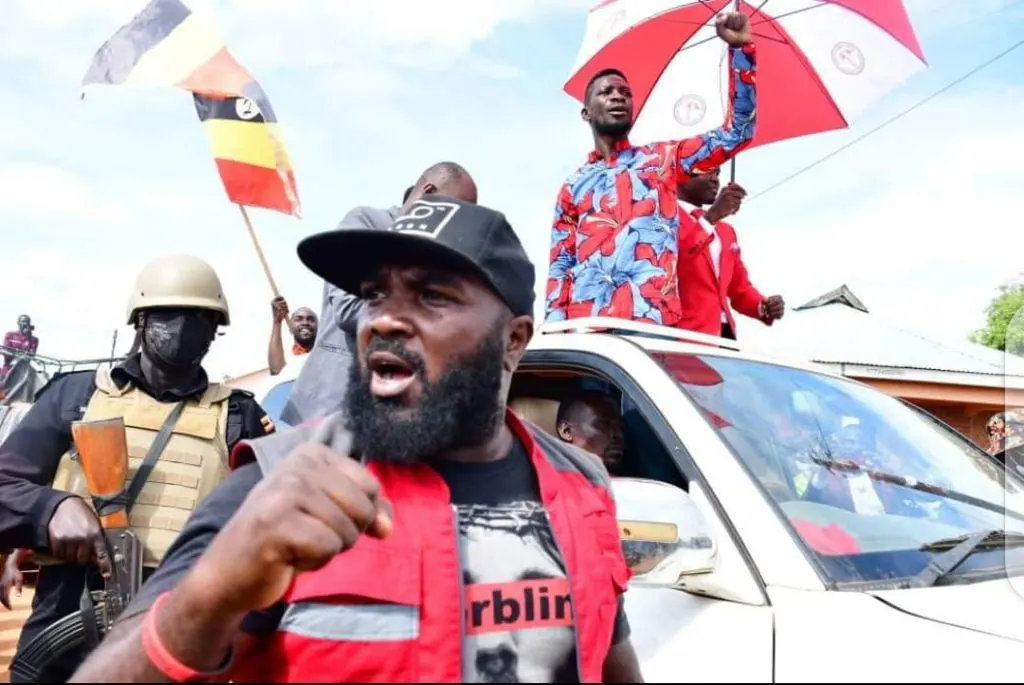
Some fans and political commentators believe Mayiga’s speech signals a broader shift in how traditional institutions are willing to engage with Uganda’s post-election political climate.
Others speculate that the Katikkiro’s opposition to the controversial Sovereignty Bill — also raised during the same address — combined with his call to free political prisoners, suggests a coordinated message of pushback against policies seen as threatening civil liberties.
Sources close to Buganda Kingdom affairs have not indicated any direct communication between the palace and the opposition, but it’s unclear whether the timing of the address was purely coincidental.
What is clear? When the Katikkiro of Buganda speaks in parliament, governments listen — whether they want to or not.
Behind the politics, the arrests, and the parliamentary speeches are real people — men who have families, who woke up one morning working a job, and found themselves in detention facing charges that have been publicly called petty by one of Uganda’s most senior traditional leaders.

Mayiga’s appeal to dialogue, forgiveness, and national healing is not just political strategy. It reflects a genuine understanding that countries — and communities — fracture when grievance is left unaddressed after contested elections.
His call for unity is a reminder that reconciliation is not weakness. It is, in fact, the harder and braver path.
Here is the quiet irony at the heart of this story: the most powerful demand for political freedom this week did not come from a politician, a protest, or a press release.
It came from a traditional kingdom’s parliament — delivered in measured, dignified language — and it may prove more difficult for authorities to ignore than anything that came before it.
Buganda has spoken.
The elections are over, the evidence is reportedly thin, and now the Katikkiro himself is asking for these men to come home.
At what point does “prolonged detention” stop being justice — and start being the answer to a question nobody asked? 👀