

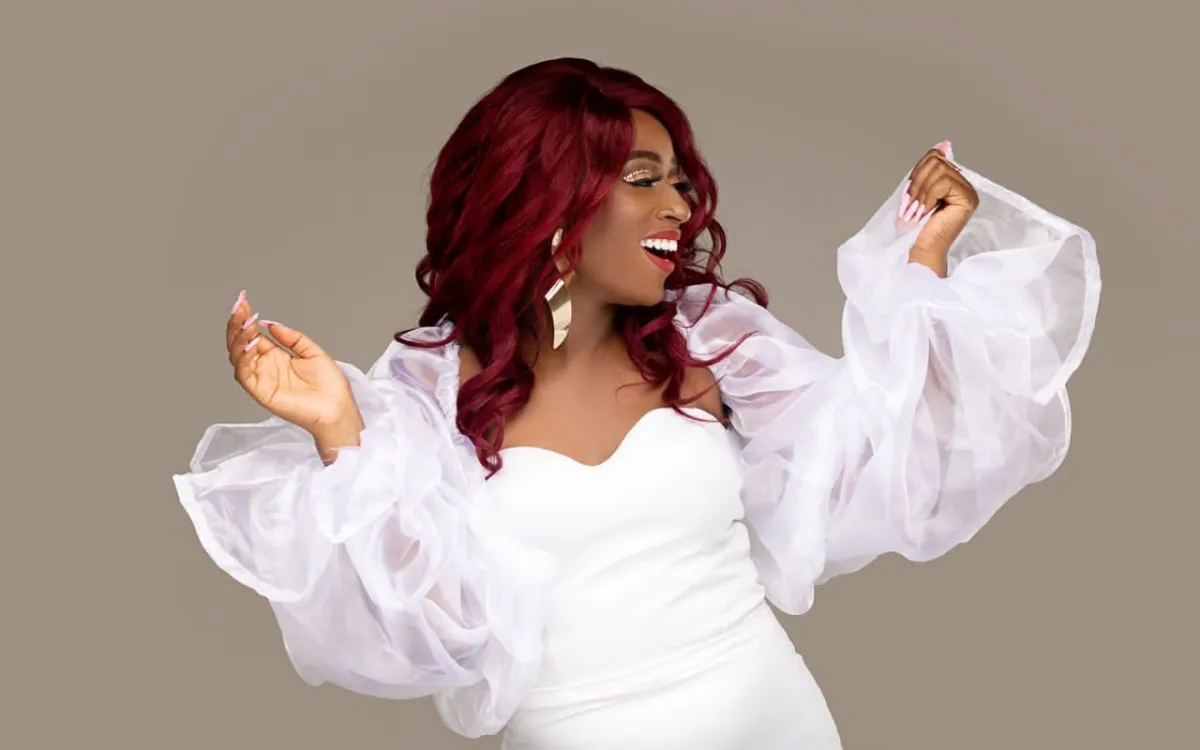
She went quiet. No new music. No explanations. No timeline.
For over a year, one of Uganda’s more distinctive female voices has been conspicuously absent from the scene — and the rumours that filled that silence were not quiet ones.
Now Zafaran is back. She is talking. And the terms she has set for her return are the kind that immediately separate serious artists from everyone else in the room.
No CD performances. No backing tracks. Full band or acoustic — depending on your budget. Take it or leave it.
Uganda’s entertainment industry is paying attention.
Zafaran sat down with NRG Radio Uganda and did not waste time on pleasantries or vague comeback language.

She made her position clear from the opening: she is a live performer. She has always been a live performer. And she is not about to compromise that identity to make logistics easier for event organisers who would rather hand her a USB stick than book a band.
“I am not the kind of artist who performs on CD. I have always been a live performer. I request that we keep it that way. It’s going to be strictly live — either full band or acoustic, depending on your budget.”
That last clause — depending on your budget — is the detail that separates this from a simple artistic statement. She is not issuing an ultimatum that prices her out of the market entirely. She is offering a tiered option: full band for those who can resource it, acoustic for those working with tighter numbers. The standard stays the same either way. The format adjusts. The backing track does not enter the equation.
She went further, using her return to deliver a direct message to the wider industry.
“CD performances are good, but give people value for their money.”
That is not a compliment dressed as a challenge. That is a challenge dressed as a compliment — and every artist in Uganda who has ever walked on stage with a prerecorded track heard it clearly.

But that is not even the most interesting layer of this story. Because before any of this, Zafaran disappeared. And the industry has been speculating about why ever since.
Zafaran built her reputation as one of Uganda’s more musically serious female artists — a performer whose sound sits in a space that rewards live instrumentation and genuine vocal delivery. Her catalogue, while not prolific in volume, carried a quality that distinguished her from the more commercially driven end of Uganda’s music market.
Her last reputable music project landed over a year ago. What followed was a silence that her audience initially assumed was a creative pause — until the pause stretched long enough that silence started to look like something else entirely.
Rumours of a falling out with Swangz Avenue — one of Uganda’s most prominent music labels, home to some of the country’s biggest names — began circulating and have not been officially confirmed or denied by either party. Whether the label relationship is fully severed, restructured, or simply strained remains unclear. What is clear is that Zafaran is now speaking publicly and positioning herself as an independent creative voice making decisions on her own terms.
The NRG Radio interview is her first significant public statement in the period of her absence — and she chose to fill it with standards rather than explanations.

The moment Zafaran said “strictly live — full band or acoustic, depending on your budget” the clip started moving.

Fans immediately recognised the confidence of the positioning. This was not a returning artist being grateful for any opportunity. This was an artist announcing her re-entry with a filter already in place — one that would screen out the bookings not worth her time before a single conversation needed to happen.
The internet had thoughts, and they were not holding back.
Several fellow artists and music lovers in the comments expressed open support for the live performance standard, with many pointing out that Uganda’s concert culture has drifted toward a reliance on prerecorded tracks that shortchanges audiences paying full ticket prices.
Others were more focused on the Swangz Avenue angle — reading the independence of her statement as confirmation that whatever happened with the label, she has come out of it with her artistic authority intact.
Some fans are treating the live-only policy as a welcome provocation directed at Uganda’s broader performance culture — where CD performances have become so normalised that audiences rarely push back against them.
Others are speculating about what her first live performance back will look like and which promoters will be willing to meet her full band requirement. The acoustic option suggests she has already thought through the accessibility question — and has a version of the return that works at multiple budget levels.

The Swangz Avenue question remains the loudest unanswered thread. It is unclear whether she will address the label situation directly in future interviews, or whether the NRG Radio appearance was a deliberate choice to lead with music rather than grievances. For now, the speculation continues — and Zafaran has given her audience just enough to talk about while withholding everything they most want to know.
There is something quietly significant about an artist who disappears under difficult circumstances and returns not with an apology or an explanation — but with a standard.
Zafaran did not come back asking for sympathy or softened expectations. She came back telling the industry what she requires and trusting that the audience who valued her music before will value it enough to show up for the version of it she is unwilling to compromise.
That is not arrogance. That is an artist who spent a year away and came back knowing exactly who she is. Whatever happened in that silence — with the label, with the music, with herself — she has clearly arrived at the other side of it with her identity sharpened rather than shaken.
Here is the quiet irony at the centre of Zafaran’s return: she vanished from Uganda’s music scene for over a year, said nothing, released nothing — and came back with more authority than most artists project when they are at the peak of their visibility. The absence did not diminish her. It clarified her. And the industry she is returning to is about to be reminded of exactly what a live performance is supposed to feel like.
Zafaran is back, the standard is set, and the backing track is not invited. The only question left is which promoter moves first — and whether they can afford the band.
Drop a comment — do you think Uganda’s artists should be doing more live performances, and are you ready for Zafaran’s return to the stage?