


Every year, thousands of young Ugandans enroll in music programs, voice classes, and performance academies chasing a version of success that one of the country’s biggest current exports never pursued.
Joshua Baraka didn’t go through that system. And he has thoughts about it.
Sitting down on the Grab a Coffee podcast, the singer who quietly turned himself into a global music name delivered a take that is equal parts liberating and uncomfortable — depending on where you’re sitting.
Formal training, he argues, is not the starting point. Knowing what you’re actually good at is.
And most people, he says, never figure that part out.
Baraka’s argument isn’t anti-education. It’s more precise than that — and more honest than most artists tend to be in interview settings.
“You don’t really need formal training to start,” he said on the podcast. “But people can make use of platforms like YouTube to try and get pointers to be better at what they do.”

His reasoning goes deeper than a simple “just believe in yourself” motivational line.
“I genuinely believe sometimes you’re just talented and gifted at something,” he continued. “Music is more about perspective. You could be talented in one particular aspect, and if you nurture it, you will definitely go miles with it.”
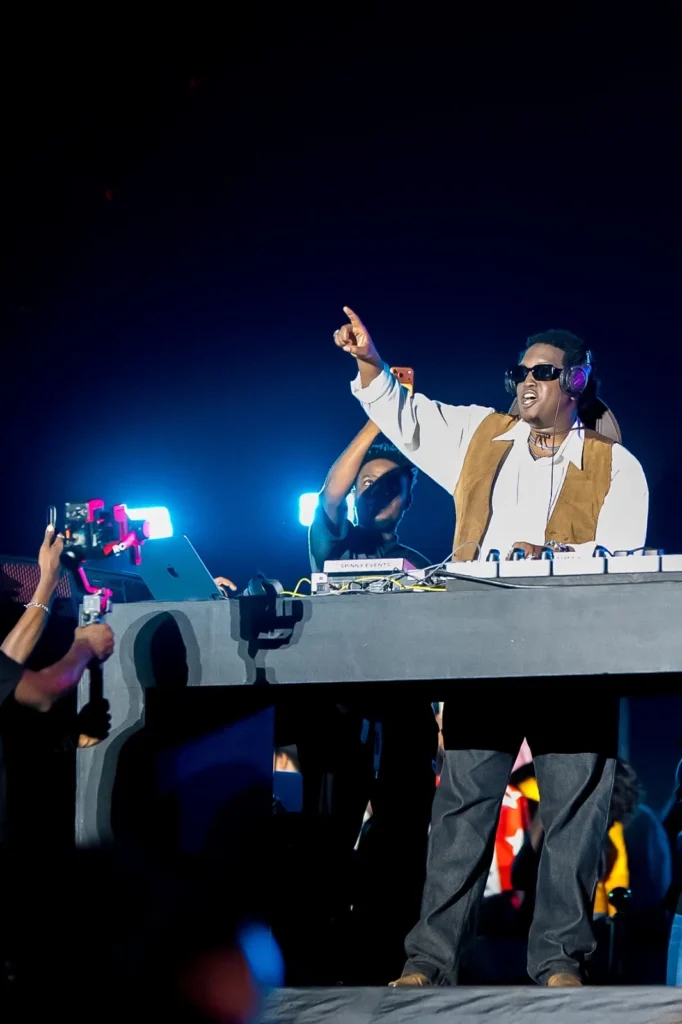
Then he dropped a name that made the point land harder than any abstract argument could.
“Sarz is a great producer, but he can’t play the piano.”
Sarz — one of the most sought-after and decorated producers in African music, responsible for some of the continent’s biggest records — built a career at the absolute top of his industry without a skill that most formal music programs would consider foundational.
That’s not a loophole in Baraka’s theory. That’s the whole point.
But here’s where the conversation gets really interesting.

Baraka doesn’t think the talent itself is the hard part. He thinks the hard part is something most people never actually do — identify what their specific gift is in the first place.
“As long as there is the seed of it, you can improve it,” he said. “Unfortunately, most people don’t know what that seed is in their lives.”
That single line reframes the entire conversation. The obstacle isn’t access to training. It isn’t opportunity or resources or even talent. It’s self-knowledge — and according to Baraka, that’s the thing most people are missing.
Joshua Baraka has become one of Uganda’s most compelling music stories in recent years — not because of a single viral moment, but because of a steady, deliberate rise that has placed him on international stages and playlists far beyond East Africa.
His sound sits at the intersection of Afro-soul, R&B, and contemporary African pop — polished enough to travel globally, rooted enough to remain distinctly his own. That balance is not accidental, which makes his comments about identifying and nurturing a specific gift feel less like advice and more like autobiography.
The Grab a Coffee podcast has become one of Uganda’s more respected platforms for extended, candid conversations with entertainment figures — the kind of long-form format where artists tend to say things they wouldn’t in a standard press junket. Baraka’s appearance fits that pattern.
His reference to Sarz — a Nigerian producer whose credits include work with Wizkid, Burna Boy, and a generation of Afrobeats heavyweights — signals that Baraka is thinking about the music industry at a continental and global scale, not just a local one.

The Sarz line was the moment clips started moving.
Fans immediately noticed that Baraka wasn’t just speaking theoretically — he was pointing at one of the most successful figures in African music as evidence that conventional skill hierarchies don’t determine greatness.
The internet had thoughts. Comment sections filled with people debating whether formal training helps or hinders natural talent, tagging musicians they knew, and sharing the clip with the caption energy of someone who had just heard something they needed to hear.
The “seed” quote, in particular, spread as a standalone screenshot — the kind of line that gets pulled out of context and still makes complete sense, which is the unofficial standard for something being genuinely quotable.
Response to Baraka’s comments has been largely warm, with a thoughtful undercurrent.
Many young Ugandan creatives have engaged with the clip as validation — a successful artist in their own generation confirming that the absence of a formal music education is not a ceiling.
Some music educators and industry professionals online have pushed back gently, arguing that while raw talent can carry someone far, structured training accelerates growth and prevents technical blind spots. The debate has been more civil than most — partly because Baraka’s framing is careful enough to not dismiss training entirely, just to reorder its importance.

It’s unclear whether Baraka was drawing from a specific personal experience of feeling discouraged by formal gatekeeping, or speaking more broadly from observation. Sources who follow his career closely note that his artistic development has always appeared self-directed and intentional.
Some followers have speculated that the “most people don’t know what their seed is” line hints at a larger conversation Baraka may want to have publicly about mentorship, creative identity, and what the Ugandan music industry could do better for emerging artists.
What makes Baraka’s take resonate beyond music is how broadly it applies.
The idea that most people move through life without ever clearly identifying their specific gift — not a general interest, not a subject they studied, but the particular thing they are genuinely built for — is not a music industry observation. It is a human one.
For young people in Uganda navigating pressure to pursue conventional qualifications while quietly holding onto creative ambitions they’ve been told aren’t practical, hearing a globally recognised artist frame it this way carries real weight.
It’s not a promise that talent alone is enough. It’s a harder challenge: figure out what you actually have, then do the work to make it undeniable.
Joshua Baraka could have given a standard interview answer about hard work and staying humble.
Instead, he sat down, named one of Africa’s greatest producers as someone who can’t play piano, and then told an entire generation that the real problem isn’t their training — it’s that most of them haven’t found their seed yet.
That’s not an inspirational quote. That’s a diagnosis.
Joshua Baraka found his seed, nurtured it, and is now performing it for the world. The only question left is: do you know what yours is?