

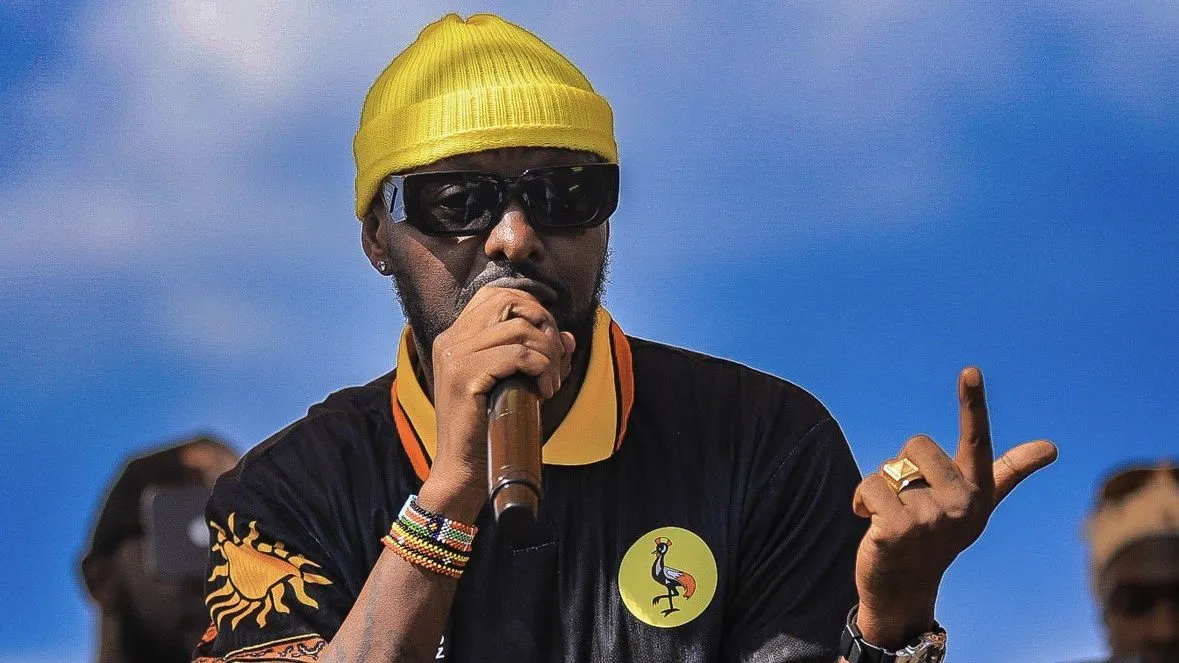
Ugandan singer Eddy Kenzo has renewed his criticism of the Uganda Performing Rights Society (UPRS), accusing the organization of relying on an outdated royalty collection and distribution system that does not fairly reward artists based on how their music is consumed.
Kenzo’s comments come after recent UPRS royalty payouts sparked debate among musicians and fans, following reports that some established artists received relatively small payments.
Among the figures that drew attention were reports that Weasel received Shs250,000, while Spice Diana was allocated Shs1.4 million.
Speaking about the issue, Kenzo argued that the current system does not accurately measure the value of individual artists’ contributions because it does not properly track how often songs are played.
The Uganda National Musicians Federation (UNMF) president said royalty distribution should be based on verified music usage rather than general collections from businesses that play music publicly.

According to Kenzo, UPRS collects money from places such as bars and entertainment venues where music is played, but the distribution process does not include a transparent system showing how much each artist earned based on actual airplay.
“They created a situation where they collect money from bars for music plays, but after receiving the payments, they decide how to distribute it instead of basing it on the actual airplay each artist received,” Kenzo said.
He added that the current approach lacks a clear mechanism for determining what each musician should receive.

Kenzo Pushes for Digital Monitoring
Kenzo believes the solution lies in implementing the Nyange machine, a digital tracking system introduced following amendments to Uganda’s copyright and neighbouring rights laws.
According to him, the technology would allow music usage to be monitored more accurately and help determine royalty payments based on verified data.

The singer argues that a tracking-based system would create more transparency by showing exactly how often songs are played across different platforms and public spaces.
For Kenzo, this would replace what he describes as a general distribution model with one that directly connects earnings to music performance.
He also questioned the fairness of the reported payment received by Weasel, describing it as “the highest level of disrespect.”
Kenzo argued that an artist whose music has enjoyed major success across Uganda and the wider region should not receive such a small payout if royalty collections are being distributed properly.
The debate over music royalties has been a long-running issue within Uganda’s entertainment industry.

Collective management organizations such as UPRS are responsible for collecting and distributing royalties generated when copyrighted music is used publicly.
However, many artists have repeatedly raised concerns about transparency, payment structures, and whether existing systems accurately reflect the popularity and usage of their songs.
Kenzo, one of Uganda’s most internationally recognized musicians, has previously spoken about reforms within the music industry and the need for stronger systems to protect artists’ earnings.
As president of UNMF, he has positioned himself as a vocal advocate for changes he believes can improve conditions for musicians.
Why It Matters
Royalty payments are a major source of income for musicians, especially as traditional music sales continue to decline and artists increasingly depend on performance rights, streaming, and licensing revenue.

A transparent tracking system could potentially change how earnings are calculated by linking payments directly to verified music consumption.
The ongoing debate also highlights broader questions about how Uganda’s creative industry can build sustainable income models for artists.
Human Angle
For many musicians, royalties represent more than just money — they are recognition of the value created through years of writing, recording, and performing music.
Kenzo’s concerns reflect frustrations among artists who want systems that clearly show how their work translates into financial returns.
As Uganda’s music industry continues to grow, the push for accountability and transparency remains one of the biggest conversations shaping the future of the business.
Eddy Kenzo’s latest comments have reignited debate over Uganda’s royalty system, with the singer calling for technology-driven reforms that would link payments directly to how music is consumed.