


She opened her home. She opened her circle. She opened her heart.
And according to Jowy Landa, some of the people she let in used every single one of those open doors to try and walk her career straight into the ground.
The Ugandan singer — legally known as Joan Namugerwa — has officially reached her limit. In a fiery, unfiltered statement that has set social media ablaze and triggered a nationwide debate about friendship, loyalty, and the specific, exhausting betrayal that comes from people you once called your own, Jowy didn’t whisper her frustrations.
She announced them.
“Whoever I sheltered — go eat faeces.”
Uganda stopped scrolling. And started sharing.
Jowy opened with a question — the kind that doesn’t really want an answer.
“If you’re a girl child and you’ve ever sheltered a fellow female friend in your own home, raise your hand — but you’re very few.”
She paused just long enough to let the weight of that land.

“Are you all ill-mannered?”
Then came the statement that turned a personal frustration into a viral moment: a direct, unambiguous, entirely unladylike message to every person she once gave a home to who repaid her with disloyalty.
The names haven’t all been named publicly. But two have been linked to the reported fallouts — media personality-turned-singer Black Shuga and singer Nandor Love, both of whom were once considered part of Jowy’s inner circle.
Neither has been explicitly accused by name in her statement. But the dots are close enough together that Uganda’s internet has already connected them — and the comment sections have been doing the rest.
But that’s not even the wildest part — because Jowy didn’t stop at a general betrayal complaint. She went further, revealing something far more calculated and far more chilling about what she believes some of these former friends were actually doing.
In a recent interview, she claimed that certain individuals from her circle deliberately advised her to release vulgar music.
Not because they thought it would suit her artistically. Not because the market demanded it. But, she alleges, with the specific intention of damaging her brand and collapsing her career entirely.
She said she saw through it quickly. She said she chose to distance herself from the advice and the people behind it.
But the fact that she is talking about it now — loudly, publicly, with zero diplomatic softening — suggests the wound is still very much open.
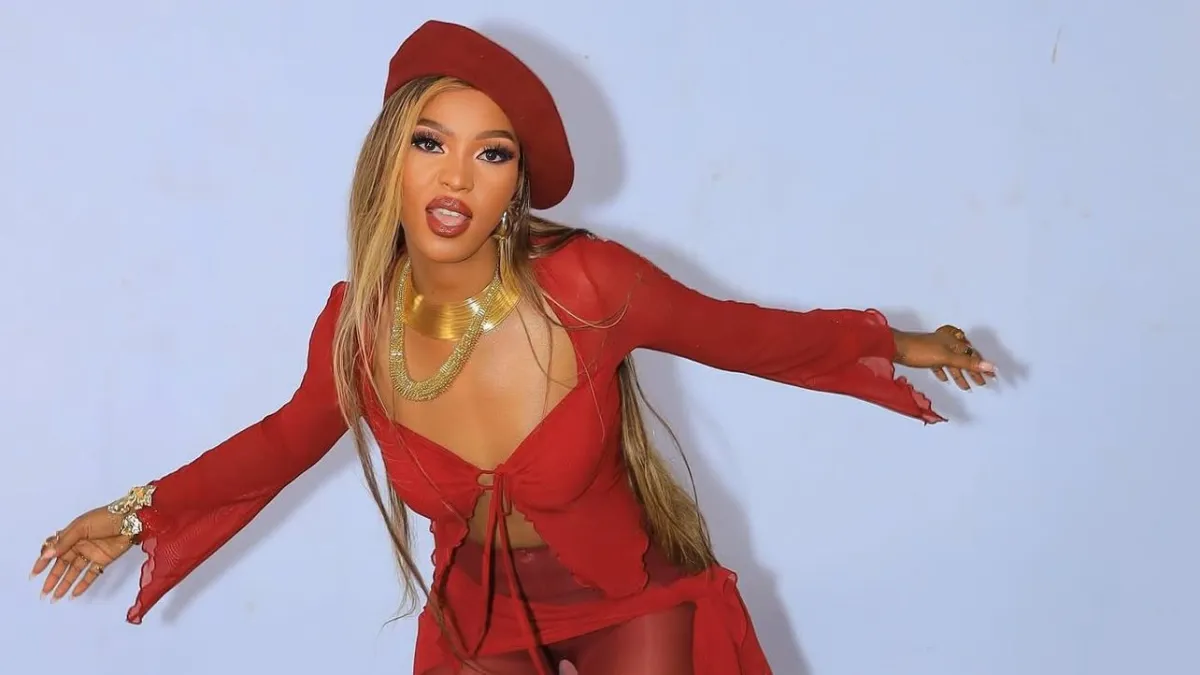

And then things got really interesting — because Jowy’s decision to speak out has sparked a conversation that goes well beyond her personal situation, touching on something many women in Uganda’s entertainment industry have experienced but rarely discussed this openly.
Jowy Landa has been building her music career with a careful eye on her brand — an artist who has consistently positioned herself as someone with longevity in mind, not just viral moments. That context makes the alleged advice to release vulgar content particularly pointed. It wasn’t just bad career guidance. If her account is accurate, it was targeted sabotage dressed up as friendly counsel.
Black Shuga is a recognisable figure in Uganda’s entertainment landscape, having transitioned from media personality into music — a move that naturally shifted her relationship dynamics within the industry.
Nandor Love is a singer whose name has circulated in Uganda’s music circles long enough to have accumulated both fans and complicated interpersonal histories.
The alleged fallouts between these women sit within a broader conversation about female solidarity — or the lack of it — in Uganda’s entertainment industry. The question of whether women in the industry genuinely support each other, or whether proximity to the same spaces breeds competition and resentment, is one that Jowy’s statement has cracked wide open.
Fans immediately recognised that Jowy’s statement had a specific, raw energy that most celebrity callouts lack — the energy of someone who has genuinely been hurt, not just someone performing outrage for engagement.
The “go eat faeces” line, delivered with full conviction, spread across WhatsApp, Twitter, TikTok, and Facebook with startling speed — equal parts shocking and darkly hilarious, the kind of line that gets screenshotted, captioned, and sent to every group chat simultaneously.
The internet had thoughts, and they were absolutely not holding back.
Women across Uganda flooded the comment sections sharing their own versions of the same story — friends they had housed, helped, and supported, only to find themselves on the receiving end of betrayal. Jowy’s specific callout had accidentally become a collective catharsis.
Within hours, the conversation had expanded well beyond celebrity gossip into something that felt uncomfortably universal.
Some fans believe the vulgar music allegation is the most serious element of Jowy’s statement — arguing that if true, it represents a deliberate and calculated attempt to derail her career from the inside, which goes well beyond ordinary friend drama.
Others have urged caution, noting that fallouts between friends often involve perspectives on multiple sides, and that the full picture of what happened between Jowy, Black Shuga, Nandor Love, and others has not yet been publicly established.
Sources close to Uganda’s entertainment circles note that tensions within female artist friendship groups are rarely as simple as one villain and one victim — but acknowledge that Jowy’s willingness to speak publicly suggests she believes her account is unambiguous.
It’s unclear whether Black Shuga or Nandor Love will respond publicly — but given the size of the audience now watching, silence will be interpreted as loudly as any statement.
There is a particular kind of hurt that comes from extending your home to someone — your literal physical space, your safety, your resources — and discovering that the person you trusted used that access to work against you.
It is not just betrayal. It is a violation of something intimate.
Jowy’s anger is understandable. But underneath the fury is something more fragile — the disappointment of someone who believed in people, invested in relationships, and came out the other side questioning whether the generosity was worth it.
Her decision to speak out publicly is not just about confronting the individuals involved. It is, perhaps, about reclaiming a narrative that she felt was being quietly written for her by people who did not have her best interests at heart.

Sometimes the loudest statements come from the deepest silences finally breaking.
Here is the sharpest irony in this entire story: the people who allegedly advised Jowy Landa to release vulgar content — reportedly to damage her reputation — have now been the cause of arguably the most viral, most talked-about moment of her career.
They tried to make her look bad.
She ended up looking unbothered, unfiltered, and completely unforgettable.
The plan, if there was one, did not go as intended.
Jowy Landa opened her home, her circle, and eventually her mouth — and it turns out the last one was the most powerful move of all.
To every woman who has ever sheltered a friend who didn’t deserve it: Jowy just said what you’ve been thinking. Was she wrong? 👇