

By Wamala Sipirian
Published: October 7, 2026
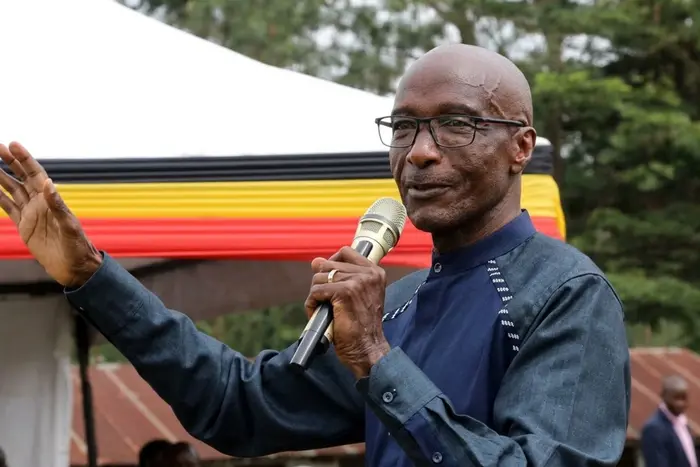
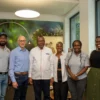
Former Inspector General of Police Gen Kale Kayihura has called for respect for opposition leader Col Dr Kizza Besigye, reflecting on a relationship that evolved from friendship during Uganda’s Bush War to years of political and security confrontations.
Kayihura, speaking at a recent event, described Besigye as a former friend whose contribution to Uganda should be recognised despite their difficult history.
“Dr Besigye was my friend since I first met him in the bush war. Surely we must respect his contribution. Even the president compliments him because he was his doctor,” Kayihura said.
Besigye served as President Yoweri Museveni’s personal physician during the 1981–1986 Bush War and later held government positions after the National Resistance Army came to power. He eventually fell out with Museveni and became one of the president’s most prominent political opponents.
The political rivalry frequently brought Besigye into conflict with security agencies during Kayihura’s tenure as IGP from 2005 to 2018.
Kayihura said he nevertheless tried to maintain a personal relationship with Besigye despite their political differences.
“When I was the IGP, I really tried my best, just the people did not know. I tried so hard, I even went to his house and he refused to let me,” he said.
He also recalled confronting Besigye over his repeated criticism of him in the media. According to Kayihura, Besigye told him that the criticism was not personal.
“One time he came to my office and I asked him why he was endlessly attacking me and my name in the media. He told me it was not personal and that he was only using my name to vent out his frustration with other people,” Kayihura said.
Despite defending their personal connection, Kayihura also maintained that Besigye sometimes created difficult situations for police.
“But he was also provocative. He would wake up in the morning and park his vehicle in the middle of Kampala Road and all the hooligans would come and surround him. What would you do if you were the IGP?” he said.
Kayihura added that he believed both men had made mistakes during their years of confrontation.
“Indeed, I was gentle with him. He made mistakes, there is no question about that. I made mistakes myself and owned up to them, but he too did.”
Besigye’s confrontations with police during Kayihura’s tenure included the 2011 Walk-to-Work protests, which were organised amid public concerns over rising food and fuel prices. Security forces repeatedly arrested Besigye during the demonstrations.
On April 28, 2011, security personnel smashed the windows of Besigye’s vehicle during a standoff in Kampala and sprayed a chemical irritant inside before removing him from the vehicle. His lawyer said the incident temporarily affected his sight.
The use of force attracted widespread criticism, while Kayihura later ordered investigations into allegations of excessive force during the protests. Besigye was subsequently acquitted of charges arising from the demonstrations, including rioting after proclamation, incitement to violence and disobeying a lawful traffic order.
The confrontation intensified during the 2016 presidential election, when Besigye challenged Museveni for the fourth time.
Police arrested Besigye during his campaign in Kampala on February 15, 2016, and again on election day after he went to a house in Naguru where he alleged election malpractice was taking place. He was detained again on February 19, with restrictions subsequently placed on his movements from his Kasangati home.
Human Rights Watch described the restrictions as arbitrary detention and reported that Besigye was arrested whenever he attempted to leave his home for more than 40 days. Kayihura rejected the description of the measures as house arrest, saying police were regulating and monitoring Besigye’s movements over what the force considered threats to public order and incitement to violence.
The restrictions were withdrawn on April 1, 2016, after the Supreme Court concluded proceedings related to a presidential election petition filed by former presidential candidate Amama Mbabazi.
Kayihura’s latest comments come as Besigye remains in detention and faces treason charges alongside Obeid Lutale and Capt Denis Oola.
Besigye was seized in Nairobi, Kenya, in November 2024 and returned to Uganda before appearing before a military court. His case was later transferred to civilian courts after the Supreme Court ruled against trying civilians before military courts.
His detention and reported deteriorating health have since prompted calls from opposition leaders, activists and his family for his release and permission to seek specialised medical treatment abroad.
Kayihura’s remarks offer a reflection on one of Uganda’s most consequential political relationships—one that began in the bush and later placed former comrades on opposite sides of the country’s political and security divide.