

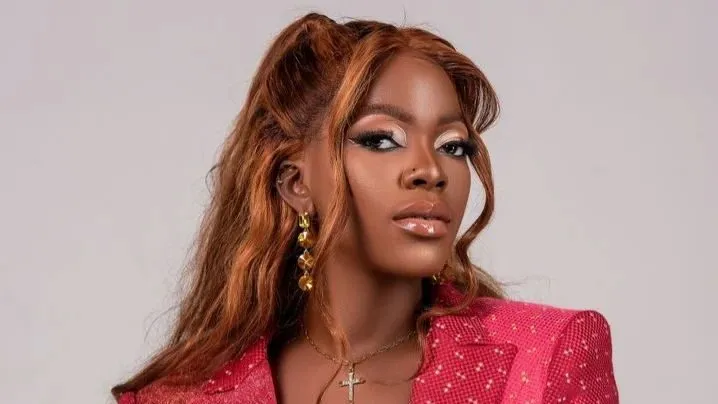
She did not say she hates love. She did not say she will never marry. She said she does not have the energy for chores — and somehow that one line has done more for Uganda’s online conversation this week than anything else on the timeline.
Dianah Nalubega, one of Uganda’s most recognisable female voices, sat down with Allan Cruz of Cruz Xclusive and said out loud what a significant number of women think privately but rarely say in public. She is not rushing toward marriage. She is not performing enthusiasm for a future she has not fully chosen. And she is not going to apologise for either of those things.
The interview was calm. The delivery was composed. But the content has been anything but quiet since it started spreading.
Nalubega was precise about what she wants and equally precise about what she cannot picture herself doing.
“I want someone to just love me, everything else will come naturally. There’s a type of marriage that I can’t manage, especially the very traditional ones because I don’t even have the energy for chores.”

She went further, addressing the specific domestic architecture of traditional marriage directly. “I can’t do the routine of taking care of a man, that’s why I don’t devote myself to marriage and talk a lot about it. Although I want to be the only wife, I need someone very understanding.”
Read that in full and what you find is not rebellion. It is clarity. Nalubega knows what she can offer, knows what she cannot sustain, and is honest enough to say so before anyone wastes time expecting something different from her.

She also drew a line that many people missed in the initial reaction — she is not against marriage as a concept. She wants love. She wants a committed, monogamous relationship. She wants to be the only wife. What she cannot do is fold herself into a version of partnership built around a daily domestic routine that does not match who she is.
That is not the same thing as saying no to love. That is saying yes to a very specific kind of it.
For context, Dianah Nalubega is a Ugandan singer who has built a substantial following through music that connects emotionally with her audience. She is known for her voice, her relatability, and a public persona that feels genuinely unfiltered. She is not a celebrity who carefully manages every statement for maximum palatability — and this interview is a perfect example of why her audience trusts her.

Allan Cruz of Cruz Xclusive has become one of Uganda’s go-to interviewers for the kind of conversation that actually goes somewhere, asking questions that create space for artists to say real things rather than rehearsed things. The combination of the interviewer and the subject produced exactly that kind of moment here.
What Nalubega said is not particularly radical by global standards. But in a Ugandan social context where women — especially public figures — are regularly expected to perform eagerness toward marriage and domesticity, saying it this plainly still lands with significant force.
Fans immediately split into two very distinct camps — and the internet had thoughts, and they were not holding back.
One side celebrated her honesty completely. Women across comment sections responded with variations of finally, someone said it — sharing the interview clip with captions that suggested Nalubega had articulated something they had never quite found the words for themselves. The chores line became the screenshot of the week almost instantly, circulating across WhatsApp groups and X with the kind of speed that only happens when something resonates at a personal level.
The other side pushed back. Traditional voices argued that her position reflects a misunderstanding of what partnership actually means, while others questioned whether her expectations of finding a sufficiently understanding partner were realistic given what she was describing.

Both conversations were loud. Neither showed any signs of stopping.
Some fans believe Nalubega’s statement will age well — that she is simply ahead of a broader cultural conversation that Uganda is slowly but unmistakably moving toward, where women define their own terms for partnership rather than inheriting a template.
Others are speculating about whether her honesty will affect how she is perceived publicly — whether the boldness of the statement creates friction in spaces that still expect female artists to present more traditionally acceptable views on marriage and family.
It’s unclear whether she has a current partner or whether there is anyone specific who inspired these reflections. What is clear is that she was not speaking hypothetically. The specificity of her words — the routine, the chores, the energy — suggests she has thought about this carefully and arrived at a position she is comfortable defending.
What sits underneath all the debate is something worth acknowledging simply and without commentary. Dianah Nalubega looked into a camera, talked about her own life and her own limits, and chose honesty over optics.

She did not say what would generate the least controversy. She said what was true for her. And in a media landscape where public figures routinely sand down every edge before speaking, that kind of candour carries its own quiet value.
She wants love. Real, genuine, singular love. She wants to be chosen and to choose back. She just also knows that love, for her, cannot come packaged inside a set of domestic expectations she never agreed to carry.
That is not a character flaw. That is self-knowledge.
Here is the sentence that Uganda will keep debating long after this news cycle moves on: “I don’t have the energy for chores.” Five words that somehow said everything about expectations, autonomy, and what it costs a woman to simply tell the truth about what she wants from her own life.
Dianah Nalubega said it. She meant it. And she did not flinch once.
She wants love and understanding. She knows her limits. She said so publicly without being asked twice.
Whether Uganda agrees with Dianah Nalubega or not, one thing is not up for debate — she knows exactly who she is. The more interesting question is whether she will find the person she is describing. And honestly, given how clearly she has laid out the brief — whoever that person is, they know exactly what they are signing up for. Do you think that kind of honesty makes love easier or harder to find?