

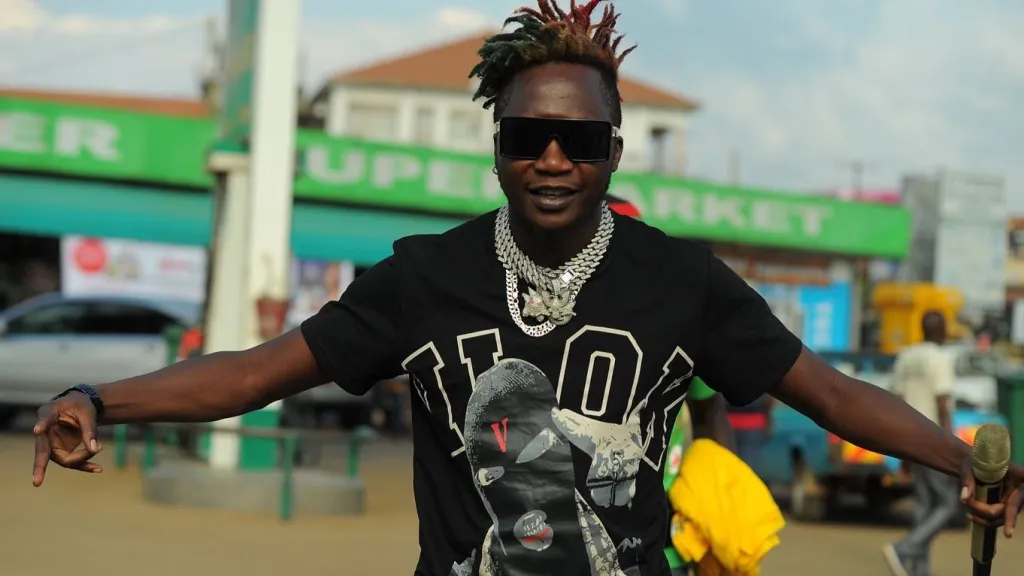
Ugandan musician Kabako has questioned why artists in the country need a president, arguing that the music industry should operate without the kind of leadership structure currently associated with the Uganda National Musicians Federation (UNMF).
Kabako, who has repeatedly criticized the federation’s leadership, believes Uganda should consider how musicians operate in other countries, where he suggests artists do not depend on a single president to represent their interests.

Making his point, the singer referenced American rapper Rick Ross, asking why an internationally established musician would need such a leadership position.
“Uganda has to be like other countries. Who’s the president of Rick Ross?” Kabako asked.


His remarks add to the ongoing debate surrounding leadership and representation in Uganda’s music industry, particularly the role of the UNMF and whether musicians need a central figure to speak on their behalf.
Kabako also turned his criticism towards Swangz Avenue over its decision to bring Jamaican dancehall star Konshens to Uganda.

The singer questioned the timing of the concert, particularly because it was scheduled for the same date as Nina Roz’s upcoming show. He argued that local musicians should receive more opportunities and support to headline major entertainment events instead of repeatedly making room for international performers.
Kabako pointed to what he considers an imbalance in the industry, saying Ugandan audiences have had numerous opportunities to watch Konshens perform while Nina Roz has yet to receive the same level of concert exposure.
“We haven’t seen Nina Roz in a concert but we have seen Konshens 800 times. Don’t bring problems here,” he said.
His comments highlight a broader conversation about the balance between attracting international performers and investing in Uganda’s homegrown talent.
While international concerts bring established acts to local audiences, Kabako believes the industry should also create stronger platforms for Ugandan musicians to headline their own shows and grow their audiences.
The singer’s criticism also raises questions about how local artists can receive better promotional support, concert opportunities and industry representation.
For now, Kabako has made his position clear: he is questioning both the need for a musicians’ president and the decisions surrounding major concerts that, in his view, should give local performers greater priority.