


A new female-only street crew is emerging in Kampala, with rapper and content creator Makula Jowannah leading an effort to challenge the male-dominated “Egaali” culture surrounding musicians.
Makula, born Nabiryo Joan Makula, has begun recruiting young women into a group she says will provide security and support to musicians while creating a stronger female presence in Kampala’s entertainment circles.
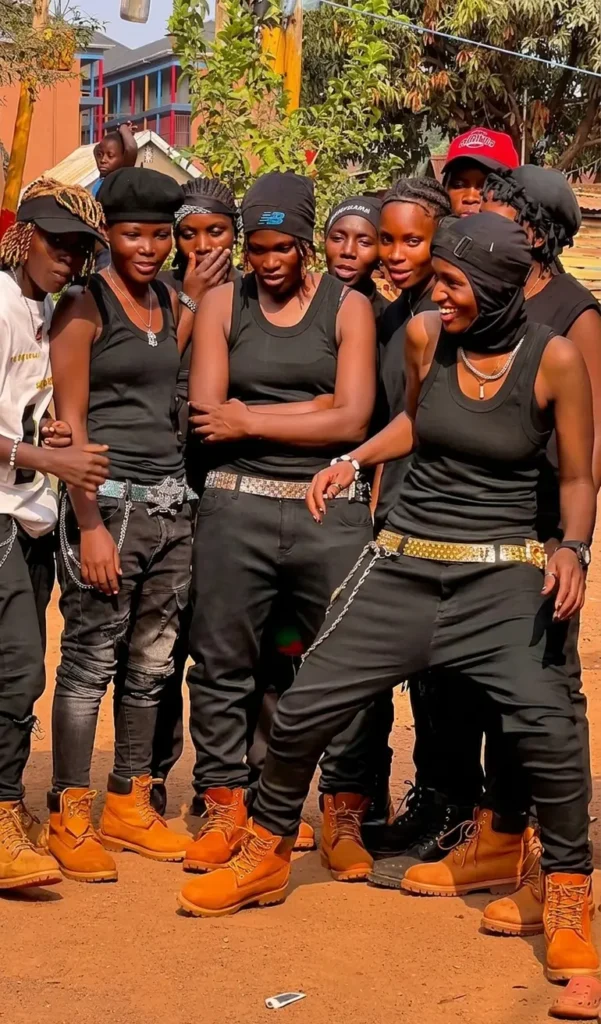
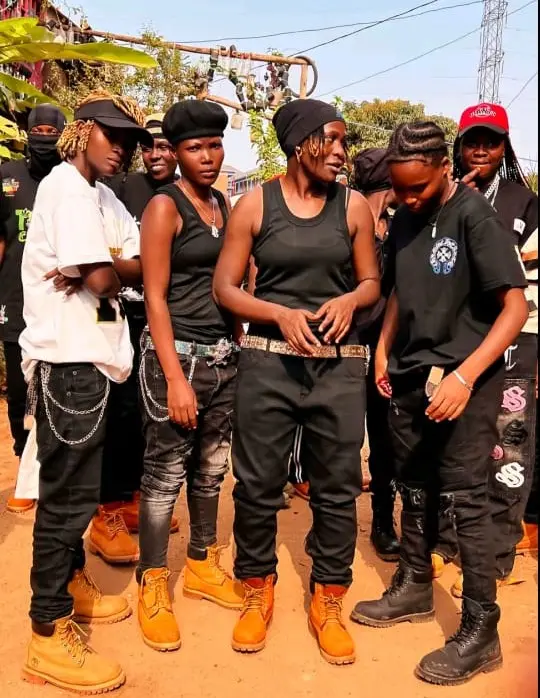
The women have been appearing online in coordinated black outfits, heavy boots, caps and other matching styles — an aesthetic that mirrors the organised appearance often associated with male crews accompanying musicians.
Makula says the group is not intended to promote violence, despite the tough image associated with its members.

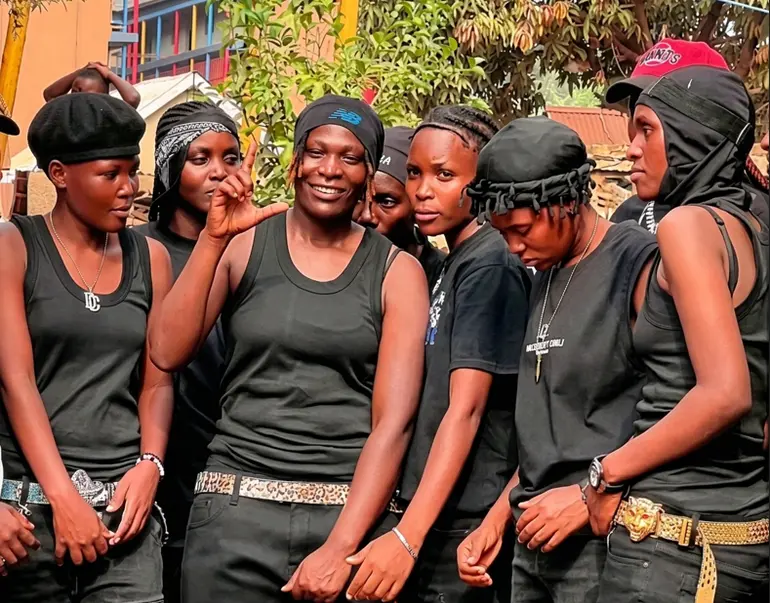
“We don’t seek advice from anyone. We are not trying to inspire anyone. We are just forming a group that will take over the city; provide security to musicians. If there is a musician that needs our service they should reach out,” she said.
In Uganda’s entertainment scene, “Egaali” is commonly used in connection with groups of young men who surround musicians and public figures, often serving as supporters, assistants or informal security.
However, some such groups have also been associated with violent confrontations, including fights at events and clashes involving rival groups. Security agencies have previously warned against criminal activity linked to individuals operating around entertainment circles.
Makula’s female crew is now attempting to carve out space within that environment.

Building a Female Street Identity
The idea reportedly began taking shape weeks before Makula formally announced the group. She approached singer Alien Skin at an event and sought permission to create a female-only crew that could occasionally provide security for him.
After receiving what appeared to be support from the singer, Makula began recruiting through social media and invited women interested in joining to get in touch.
She later claimed that more than 20 women had signed up.
Her recruitment requirements also focused heavily on the group’s appearance. Applicants were expected to have what she described as “a man’s shape and style,” avoid a traditionally feminine image and own a pair of original Timberland boots.

“You must be solid, and not girly. You should also have at least a pair of Original Timberland boots,” she said.
The group’s distinctive look has since attracted attention online, with some critics questioning the identity and sexuality of the women involved.
Makula rejected those assumptions.
“Stop calling us that. We all have our men, others are married. We are not gay,” she said.

Fellow artist Nala Rich, who is also associated with the group, defended the women against criticism and argued that being part of the crew does not prevent its members from having relationships or eventually starting families.
“Those who are feminine we don’t mind you but you are not better than us. You are out there married but we don’t miss any bit of it. When our time comes we shall also get married and have kids,” she said.
For supporters, Makula’s initiative represents women creating their own space in an entertainment environment where male crews have traditionally played prominent roles in security, access and influence around musicians.
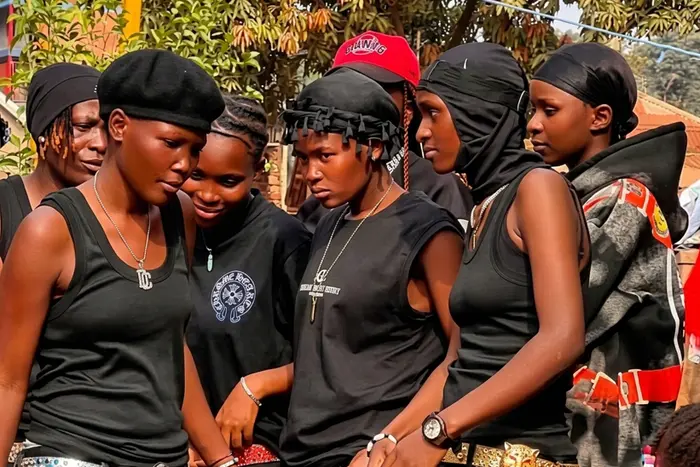
But the group’s emergence also raises a broader question: can a female street crew build an identity around protection and solidarity without reproducing the conflicts that have surrounded some male groups?
For now, Makula and her team are making their intentions clear — they want a place in Kampala’s music scene, and they want to arrive as a crew of their own.