


He was struggling. Visibly. Publicly. And everybody saw it.
Master Parrot — one of Uganda’s most recognizable voices from the golden era of the country’s music scene — had spent his final months speaking openly about hardship, disappointment, and a music industry that had moved on without taking care of those who built it.
People saw. People watched. And largely, people scrolled past.
Then came Monday evening, a fatal road accident on the Northern Bypass in Masanafu, and suddenly — everyone knew his name again.
The tributes flooded in. The “RIP brother” posts filled timelines. And Mudra D’ Viral had seen enough.
Mudra didn’t grieve quietly.
As condolence messages poured across social media following Master Parrot’s death, Mudra took to his own platform with a post that cut straight through the noise — and straight through the people posting it.
“The world is fake,” he wrote. “The guy was struggling and was seen. The people calling him brother, some knew him personally, never helped. They so want to use the RIP.”
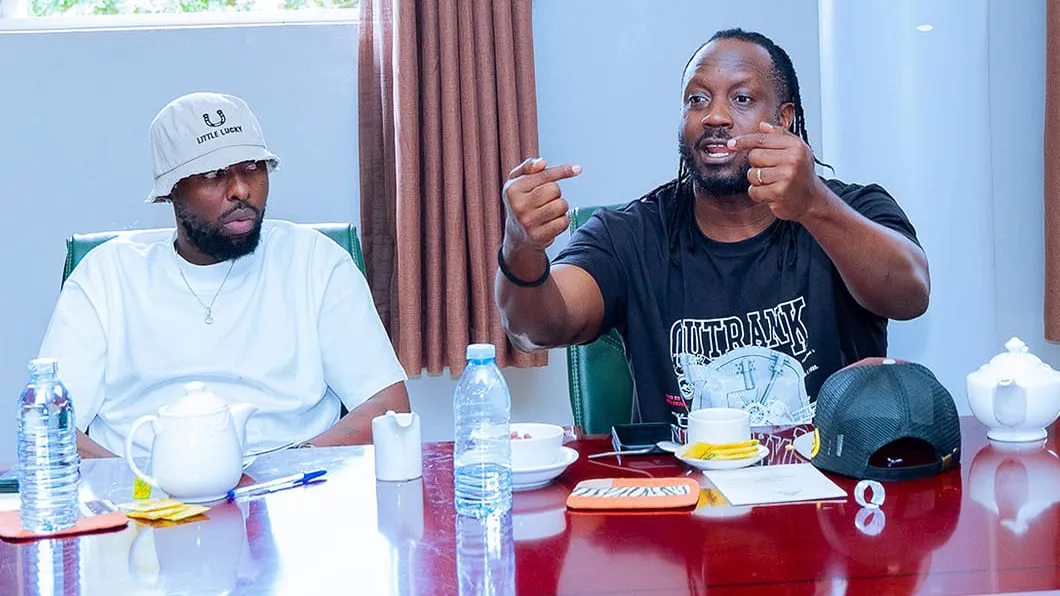
He didn’t stop there.
“God gives us hearts to be human. This industry in its most wicked era.”
Every word landed like a verdict.
The post spread fast — and not everyone was comfortable with it. Mudra eventually deleted it after it attracted mixed reactions, but by then, the message had already been screenshotted, shared, and debated across every corner of Ugandan social media.
But here’s what made it impossible to dismiss.
Master Parrot himself had said it. In his own words, in interviews before his passing, he had spoken openly about his struggles — about giving years of his life to Uganda’s music industry and watching that industry move on without so much as looking back. Fans had noticed his distressed appearance in recent months. His battles with alcohol were no secret. His pain was not hidden.
It was just ignored.
And now those same timelines that stayed quiet while he was hurting were suddenly full of his name, his photos, and claims of brotherhood from people who — according to Mudra — were nowhere to be found when it mattered.

“They so want to use the RIP.”
Six words. And they hit harder than most eulogies.
Master Parrot was a veteran of Uganda’s music scene whose contribution to the industry during his peak years earned him genuine respect among those who were paying attention. He was part of the Firebase Crew era — a time when Ugandan urban music had a specific energy and identity that many fans still speak about with deep nostalgia.
But like many artists of his generation, the years after the spotlight faded were not kind. In a music industry where yesterday’s star can quickly become invisible, Master Parrot found himself speaking publicly about financial hardship and a sense of being forgotten by the very industry he helped shape.
Mudra D’ Viral is one of Uganda’s most prominent and outspoken voices in the current music landscape — an artist known not just for his music but for his willingness to say what others won’t. His decision to call out the industry’s response to Master Parrot’s death was consistent with a pattern of speaking directly about uncomfortable truths, even when the audience isn’t ready to hear them.
The fact that he deleted the post after mixed reactions adds its own layer to the story — a glimpse of someone saying what they felt, watching the pushback arrive, and making a choice. But deletion doesn’t erase what was already seen.
The post was up long enough.

Fans immediately screenshotted Mudra’s words before the deletion, and from that point the content moved faster than any PR team could manage. The phrase “they so want to use the RIP” became the line everyone was quoting — sharp, specific, and devastatingly accurate to a pattern that anyone who has spent time on social media during celebrity deaths would recognize instantly.

The internet had thoughts, and they were not holding back. Some rallied behind Mudra completely, flooding comment sections with personal accounts of seeing Master Parrot struggle while industry peers stayed silent. Others criticized the timing, arguing that grief — even performative grief — shouldn’t be policed in the immediate aftermath of a death.
Within hours the deleted post had been shared across WhatsApp groups, Twitter/X threads, and Facebook pages, ensuring that Mudra’s message reached an audience far larger than the one that saw it first.
The response exposed a fault line that runs deep through Uganda’s entertainment industry.
On one side, supporters of Mudra’s message argued that the cycle of neglect followed by elaborate mourning is not just hypocritical — it is harmful. That when artists watch their peers struggle and say nothing, do nothing, they become part of the system that grinds those artists down.
On the other side, some commenters felt that Mudra’s post was poorly timed — that the days immediately following someone’s death are not the moment to call out mourners, regardless of how genuine or performative their grief might be.
Some fans believe the deleted post may have been pulled after direct conversations with people who felt personally implicated by its contents. It’s unclear exactly what prompted the deletion, but the timing — shortly after mixed reactions began building — suggests the heat came quickly.
What nobody is really disputing is the underlying truth of what Mudra said. Master Parrot struggled. People knew. And the industry’s response while he was alive did not match the one that arrived after he was gone.
Strip away the controversy and what Mudra was really doing was refusing to let Master Parrot’s story get cleaned up in death.

Because that’s what happens. Someone struggles publicly, visibly, painfully — and then they die, and suddenly the narrative shifts. The difficult parts get softened. The hard questions about who was responsible for the silence get buried under a flood of loving tributes.
Mudra didn’t let that happen. He kept the uncomfortable version of the story alive at exactly the moment when it was most at risk of disappearing.
For every struggling artist watching this unfold — wondering whether their own industry would show up for them or simply show up for their funeral — that refusal to be quiet meant something real.
Here is the detail that should sit with everyone long after the tributes fade: Master Parrot told anyone who would listen that he was struggling. He said it in interviews. He showed it in his appearance. He lived it openly.
The industry heard him. And it waited until he was gone to respond.
Mudra D’ Viral said the quiet part out loud — and the fact that it made people uncomfortable doesn’t make it less true.
Master Parrot deserved his flowers while he could still smell them — and the fact that it took a funeral for some people to remember his name says everything about an industry that Mudra D’ Viral just put on full blast. Do you think the music industry does enough for its veterans? Say it in the comments.