

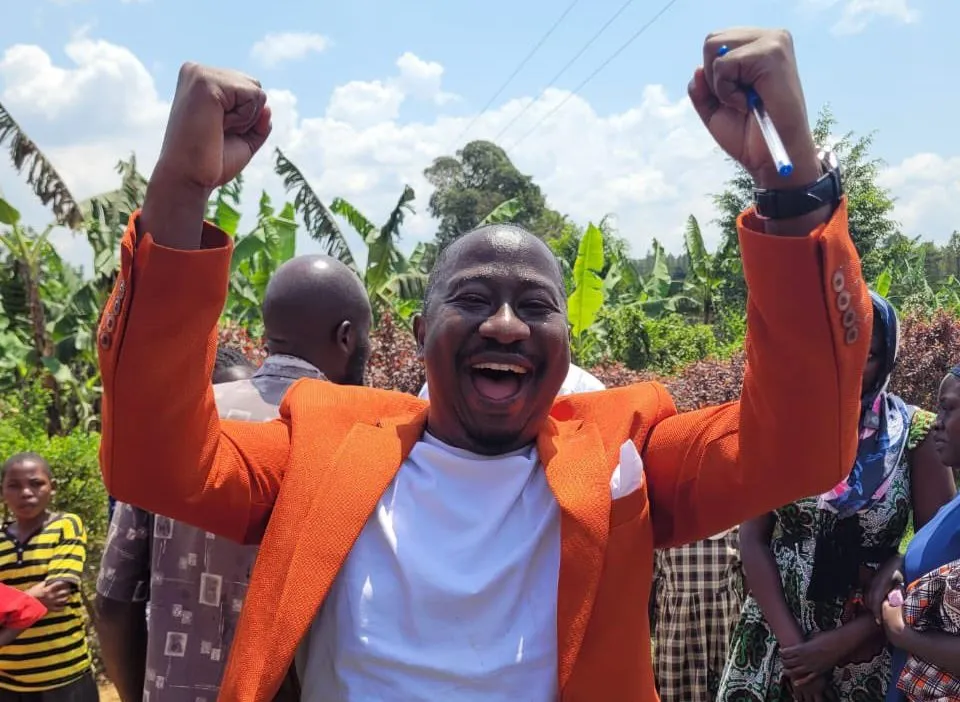
Journalist-turned-politician Solomon Serwanjja is betting on poultry farming as the next big step in his plan to transform Bamutakudde Village, where he serves as LC1 chairperson.
Serwanjja has unveiled a proposal to provide 30 local chickens to every interested household, with the long-term goal of helping families generate income from egg sales.
His bigger vision is for Bamutakudde to become a model village built around practical community-led development.

“I want every household in Bamutakudde Village to get 30 local chickens, and I want us to work together as a village,” Serwanjja said. “My vision is to see every household cash in Shs20,000 every day.”
The initiative is still at the preparation stage, with households interested in participating being asked to construct chicken houses before receiving the birds.
Serwanjja believes the project could eventually create a steady supply of eggs that can be sold both within and beyond the community.

He said local eggs currently sell for about Shs1,000 each, while a tray can fetch Shs30,000.
The plan goes beyond simply giving households chickens. Serwanjja also wants Bamutakudde to develop its own egg brand, with a central packaging facility where produce from participating families would be collected, packaged and marketed to larger retailers.
“I want to establish a place where we will be packaging the eggs, seal them with the words ‘From the People of Bamutakudde’ and sell them to big supermarkets,” he said.

The poultry project builds on several initiatives Serwanjja says he has pursued since taking office.
One of his early priorities was helping residents register for National Identity Cards, which he said would position them to access government programmes such as the Parish Development Model.
He has also led discussions around bringing electricity to the village, with technicians advising residents on the requirements for connecting their homes to the power grid.


Road improvement has been another focus, alongside a community cleaning programme held every Saturday. Residents have also been encouraged to plant fruit and indigenous trees to improve the village’s environment.
Serwanjja has additionally overseen improvements at Bamutakudde Green Park, a recreational area where residents gather, particularly on Sunday evenings.
Clean water is now another item on his development agenda. He said he is exploring support for a solar-powered water pumping system that would move water into a storage tank before distributing it through taps across the community.
If implemented, the system would reduce the distance residents have to travel to access water while improving access to a safer domestic water supply.
For Serwanjja, the various projects form part of a broader attempt to make Bamutakudde a community where residents can improve their livelihoods through locally driven initiatives.