

A teenager in school uniform walks into Uganda’s national conversation — and doesn’t just observe. He petitions Parliament. At 16. While still in Senior Three. Before most of his peers have figured out what they want for lunch.
That is the story of Nyanzi Martin Luther, the quiet boy from Kisozi trading centre in Wakiso District who spent his free time glued to his phone — not gaming, not scrolling aimlessly, but following politics, current affairs, and media trends like a man twice his age.
Earlier this year, he filed a petition with Parliament calling for a legal framework that would compel the government to support community organisations and NGOs. The kind of proposal that lawyers and civil society veterans debate for years before putting on paper. He did it at 16.
But here’s where it gets really interesting — this wasn’t a school project. This was a teenager who had already founded his own media company. And the petition landed in the hands of some very senior, very vocal critics.

Born on December 5, 2009, Nyanzi is the eldest child of businessman Ssekaayi Simon and author Joan Vumilia. He grew up in Buddo alongside his two younger sisters, Nakaayi Dorcus and Nabagulanyi Patricia — a fairly ordinary family setting for someone who would eventually have politicians and civil society leaders talking about him by name.
People who know him say he barely speaks unless the topic is media, politics, or business. One friend put it plainly: “He thinks more about what will happen tomorrow than what is happening now.”

That future-fixation turned out to be more than teenage restlessness.
While still young, Nyanzi began experimenting with small online broadcasting projects. What friends dismissed as harmless teenage tinkering quietly became Apex Media Services — a youth-focused digital media platform with real operations and growing ambitions.
Mayanja Bob, who has watched Nyanzi’s journey closely, admitted the early scepticism was real. “It started like a joke,” he said. “But now it is becoming a real business and many young people are getting inspired by him.”
His first brush with wider attention came when he appeared on a local media platform and publicly criticised Uganda’s education system — arguing that schools were producing graduates with no jobs waiting and no practical skills to create their own. Youth audiences online took notice. His name started travelling.
Then came the parliamentary petition — and things got really interesting.
The proposal sought a legal structure for state support of NGOs and community organisations. Civil society responded fast. Dr Sarah Bireete, executive director of the Centre for Constitutional Governance, pushed back hard, warning that the arrangement could be used to extend government influence over independent organisations.

That kind of heavyweight critique is usually reserved for senior policy voices. Instead, it was directed at a boy who still comes home in school uniform every evening around 5pm.
If you’re reading this outside Uganda, here is the context. Wakiso District sits just outside Kampala, and Kisozi trading centre is the kind of neighbourhood where boda boda riders warm up motorcycles at 6am, chapati sellers work the breakfast crowd, and schoolkids move in uniform clusters toward gates. Normal. Busy. Not the obvious origin point for a national political conversation.
Nyanzi attends Kisozi High School, which shares Makamba–Kitemu Road with Buddo Secondary School and Makamba Memorial School. His daily routine looks unremarkable from the outside: school until roughly 5pm, home, phone, updates on Apex Media Services, and bed. Weekends are when he gets real work done.
His mother, Joan Vumilia, is a published author. His father, Ssekaayi Simon, runs a business. The family has clearly modelled the idea that you build things — and Nyanzi absorbed that lesson young.
The petition hit differently online. Not because the idea was universally loved — it wasn’t — but because of who was behind it.
Fans immediately noticed the dissonance: a 16-year-old still navigating school exams had prompted a formal response from a senior constitutional governance expert. That image alone — teenager versus institution — was tailor-made for social media sharing.

Within hours of the story circulating, comment sections filled with people doing the maths on his date of birth. December 2009. Senior Three. Sixteen. The debate split fast: one side praised his civic engagement, the other raised sharp questions about what his proposal would actually mean for NGO independence.
Neither side could ignore that he had done something most adults never do — put his name on a formal policy proposal and handed it to Parliament.
Some fans believe Nyanzi represents a generation that refuses to wait for permission to enter the conversation. The traditional image of Ugandan public life — dominated by older voices in formal settings — got a brief but memorable crack in it the moment his name showed up in national headlines.
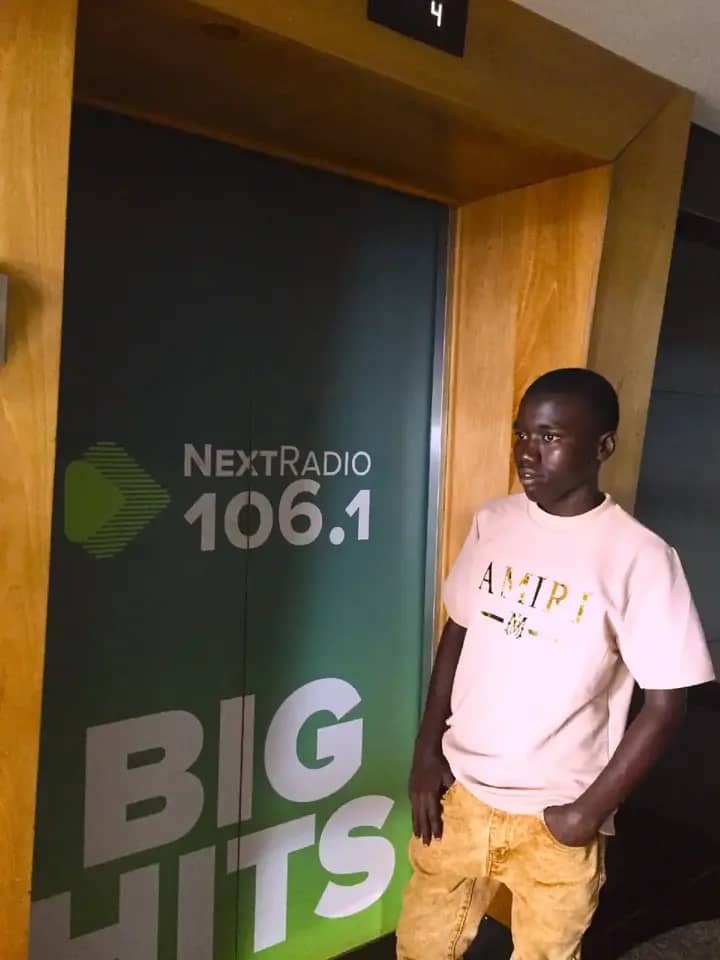
Others were more cautious. Sources close to civil society circles noted that the petition’s content itself deserved serious scrutiny, regardless of who filed it. A proposal that could tighten state oversight of independent organisations is a weighty thing, whatever the intentions behind it.
It’s unclear whether the petition will ever become law — but that may not be the point.
Strip away the headlines and what’s left is a sixteen-year-old trying to figure out who he is — just doing it on a slightly larger stage than most.

The people around him in Kisozi still see him as the boy who walks to school and comes home in the evening. His classmates still see the uniform. His neighbours still see the kid with the phone. But there is a new awareness too: people have started paying attention in a way they didn’t before.
For young Ugandans watching, that visibility carries its own message — that you do not have to be 40 and credentialled to say something worth hearing.
A boy who still needs a permission slip for a school trip just handed Parliament a piece of legislation. Uganda, take notes — because Nyanzi Martin Luther did not come to wait his turn.
Those close to Nyanzi say he plans to keep growing Apex Media Services into a full media company, creating opportunities for young people interested in digital work and communications.
What is already clear, from the roadside kiosks and school compounds of Kisozi, is that he has done something genuinely unusual — forced his way into Uganda’s national conversation before most people his age have forced their way into a career.
One thing’s for sure — Nyanzi Martin Luther did not come to play. The only real question now is: how far does a teenager with a phone and a mission actually go?