


Uganda’s most recognised events host has opened up about the silence, the struggle, and the slow rebuild that no one saw coming.
Behind the energy, the quick wit, and the commanding stage presence that Uganda’s entertainment industry has come to associate with Top Boy MC, there is a story most people never heard. A two-year stretch with no microphone. No bookings. And a mental state, by his own admission, that he does not want to revisit.
The celebrated emcee and events host is now speaking about that period openly — and what he is saying is worth sitting with.
The Hardest Part of the Job Nobody Talks About
In a recent interview with MBU, Top Boy MC laid out one of the most honest accounts of what it actually means to build a career as an emcee in Uganda’s entertainment industry.
It starts with the money — or the lack of it.

“When you don’t get paid and you’re not passionate enough, you can quit,” he said plainly. “If I didn’t love it, I would have thrown in the towel already.”
That is not a hypothetical. For many emcees operating in Uganda’s live events space, unpaid gigs are not the exception — they are often the beginning. Top Boy MC did not dress it up. He named it as one of the biggest challenges in the profession and acknowledged that it has driven many talented people out of the industry entirely.
The ones who stay, he argued, are not necessarily the most gifted. They are the ones who want it badly enough to absorb the loss and keep showing up.
For Top Boy MC, that resolve was tested more severely than most people knew.
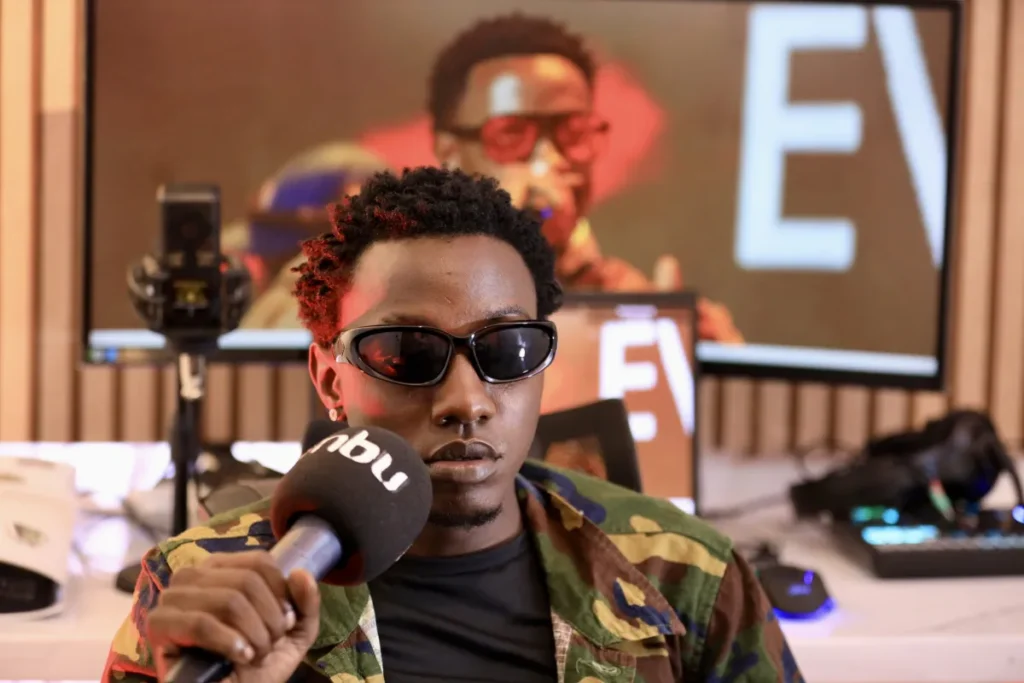
Two Years of Silence
At a point in his career that he did not specify by date, Top Boy MC stepped away. Completely.

“Imagine I sat for two years without touching the mic,” he said. “You don’t know the mental state I was in before making a comeback.”
Two years is a long time in entertainment. Careers have been built and buried in less. But Top Boy MC described the period not as a collapse, but as something more deliberate — a time of deep reflection, regrouping, and strategising.
He came back with something he did not have before: a clearer understanding of the industry itself.
“After those two years, I understood the business we’re dealing in. It became easier to navigate,” he said.
That shift — from performing out of instinct to operating with genuine business understanding — is the kind of evolution that separates short careers from lasting ones. Top Boy MC is making the case that his silence was, in retrospect, the most productive period of his professional life.
Emceeing Is a Craft, Not a Gift

One of the more striking things Top Boy MC said in the interview had nothing to do with his personal journey. It was a direct challenge to how the profession is perceived.
“Emceeing is not an inborn talent. It’s just like any other type of occupation,” he stated.
It is a pointed reframe. The entertainment industry — in Uganda and elsewhere — has a habit of treating stage presence and crowd control as something people are simply born with. Top Boy MC pushed back on that entirely, insisting that emceeing is a skill that can be learned, developed, and mastered through dedicated work and real-world experience.
It is also, read between the lines, a defence of the profession’s legitimacy. If emceeing is an occupation like any other, it deserves the same respect — including fair pay.
Top Boy MC is not a newcomer venting about early struggles. He is an established name in Uganda’s events and entertainment space — which is precisely what makes this interview land differently.
When someone at his level talks about going without pay, stepping away for two years, and questioning whether to continue, it reframes the conversation around what it actually costs to build a career in this industry. It also gives younger emcees and entertainers something they rarely get: an honest account from someone who made it through.

The entertainment industry in Uganda is vibrant, fast-moving, and deeply competitive. But the infrastructure for its performers — payment systems, professional recognition, career support — remains inconsistent. Top Boy MC’s story puts a name and a face to a challenge that many in the industry experience quietly.
There is something quietly courageous about a public figure admitting that he did not know what his mental state was doing to him until he came out the other side. Top Boy MC did not perform resilience in this interview. He described it — honestly, specifically, without embellishment.
That kind of transparency from someone in his position is rarer than it should be.
Top Boy MC came back from two years of silence and built something stronger than what he left behind. For every emcee currently grinding without pay or recognition, his story lands as both a warning and a compass.
The mic never forgot him. The question is whether the industry will finally give the people who hold it what they deserve.