

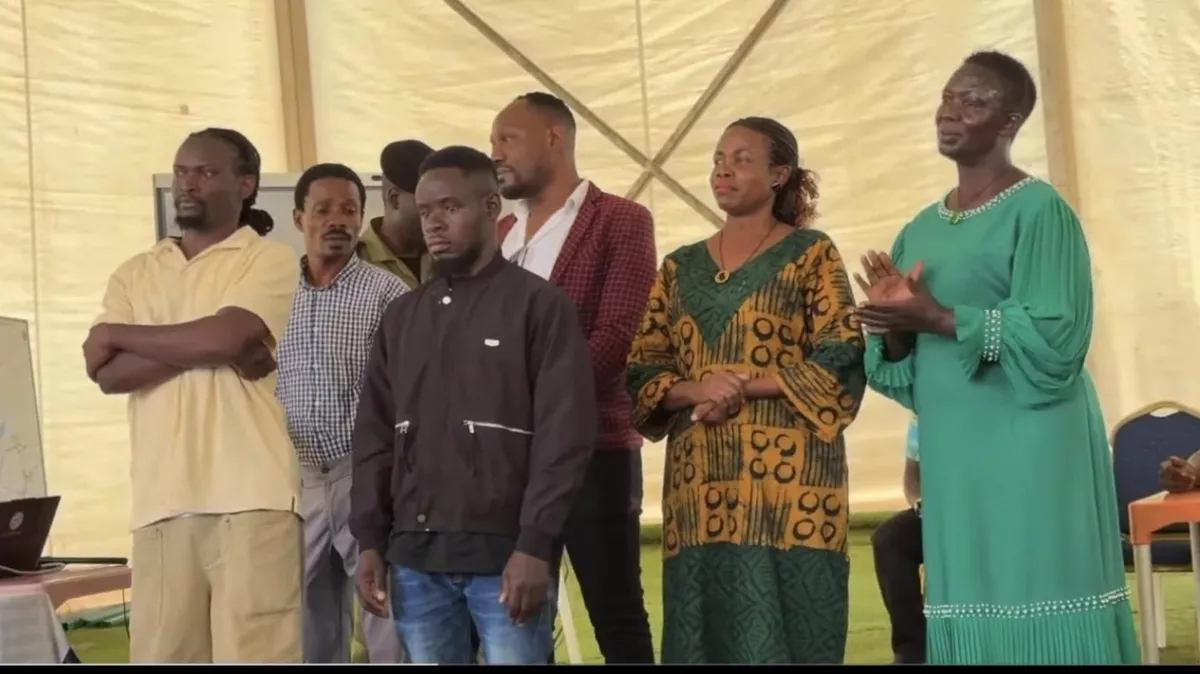
The DNA results in the Paul Kafeero paternity case have drawn a line — four confirmed biological children out of 25 claimants. For those on the wrong side of that line, the conclusion has not been easy to process.
Into that space, Aloysius Matovu Joy has stepped forward with what he describes as a message from the late singer himself — delivered, he says, through a spiritual visitation. Whatever one makes of the claim, the message it carries is one of comfort, and it is directed squarely at those the science did not confirm.
The DNA exercise, court-sanctioned and conducted following the exhumation of Kafeero’s remains, confirmed four of the 25 claimants as his biological children: Simon Peter Kafeero, Thomas Swaz Kafeero, Elizabeth Nagawa, and one additional confirmed child. The remaining claimants were excluded from the biological family.
Matovu Joy, who describes an ongoing spiritual connection with the late musician, said Kafeero visits him during moments of challenge or family tension — and that the release of the DNA results prompted another such visitation.
He was careful to characterise the nature of these visits on his own terms.
“To make it clear, Paul Kafeero doesn’t attack me; he only visits me whenever there is a challenge or misunderstanding. He usually comes with his friend, Mulindwa Muwonge.”
The message he says he received, and is now sharing publicly, was addressed to all the children — confirmed and excluded alike.
“My children, what you asked for has finally come to pass. When I gave birth to you, I never segregated or discriminated against any of you. If this process has separated some of you, you will still remain my children, though not of my blood. We should all respect what the DNA results have confirmed.”
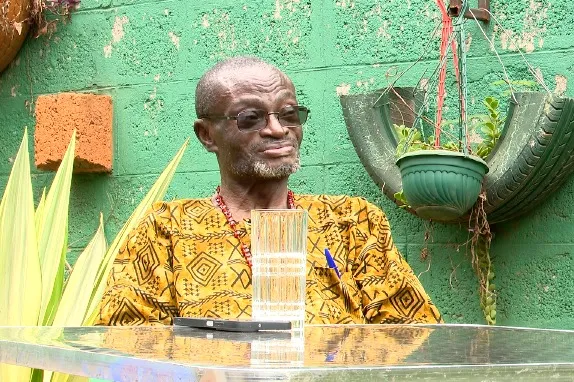
The message does two things simultaneously. It acknowledges the authority of the DNA findings — urging respect for what the results confirmed — while also extending a form of emotional inclusion to those the results excluded. The distinction between biological children and those who remain connected through love and history is drawn gently rather than as a closing door.
Matovu Joy also used the moment to express gratitude toward those who supported and cared for Kafeero’s children over the years following his death. He specifically named Charles James Ssenkubuge and Bobi Wine among those who provided assistance.

“I thank the people who have taken good care of our children, such as Charles James Ssenkubuge, Bobi Wine, and others who gave a hand in taking care of our children.”
The acknowledgement adds a layer to a story that has largely focused on legal and biological questions — a reminder that in the years since Kafeero’s passing, real people stepped in to provide material and emotional support to children navigating an already complicated family situation.
Paul Job Kafeero remains one of Uganda’s most deeply beloved musical figures. His Kadongo Kamu style — intimate, acoustic, emotionally direct — gave him a connection with audiences that has outlasted his death by nearly two decades. That depth of public feeling is part of why the paternity dispute has attracted the attention it has, and why its resolution carries weight beyond the individuals directly involved.
The claim of spiritual communication with deceased figures is not uncommon in Ugandan cultural and religious contexts, and Matovu Joy’s account is presented here as his personal belief and testimony rather than as a verifiable fact. His public statement has nonetheless entered the conversation around the Kafeero case and reflects the broader community dimensions of a dispute that has never been purely legal in nature.
The confirmed children — Simon Peter Kafeero, Thomas Swaz Kafeero, and Elizabeth Nagawa among them — now have a legal and biological clarity that was previously absent. For the excluded claimants, the path forward is less defined, though voices like Matovu Joy’s and, separately, that of Kachumbali TV’s Ivan Kyanzi, have begun articulating what a compassionate response to their situation might look like.

Legal processes determine facts. They do not always determine how people feel about those facts — or how communities choose to hold them.
Matovu Joy’s message, whatever its source in his personal belief system, reflects something real about how the Kafeero family situation is being experienced by those connected to it. The excluded claimants are not abstract figures. They are people who, in many cases, grew up with a specific understanding of who they were — and who now face the task of recalibrating that understanding in the wake of a scientific result.
A message that says you will still remain my children, though not of my blood is not a legal document. But in a story with this much human weight, it may be exactly the kind of thing some people needed to hear.
There is something quietly significant about the specific framing Matovu Joy chose.
He did not present the alleged message as a challenge to the DNA results. He presented it as a complement to them — an emotional acknowledgement sitting alongside a scientific one. Respect what the results confirmed, the message says. But know that family is not only blood.

For a community still processing a dispute that has run for nearly two decades, that distinction may matter more than it appears.
The DNA results have answered the biological question at the centre of the Kafeero paternity case.
Aloysius Matovu Joy is offering something the results could not — a word of comfort for those the science left behind, attributed to the only person whose voice, in this story, everyone was ultimately waiting to hear.