


For many artists, the spotlight hides the struggle. But for Maro, the real battle wasn’t on stage — it was in his mind.
The Ugandan singer has now opened up about a deeply personal journey through depression during his time in Germany, revealing how something as simple as the gym became his unexpected form of healing.
And his description of that process is as raw as it is revealing.
Maro has shared how fitness played a transformative role in helping him overcome depression while living abroad.
According to the “Anjagala” hitmaker, hitting the gym was never just about physical transformation — it became a mental reset, a structured space where he could process emotions and regain clarity.
“When I started taking good care of myself, I decided to take depression to the gym,” he explained.
That phrase alone immediately stood out.
Because instead of treating depression as something abstract or purely emotional, Maro described it as something he actively confronted through routine, discipline, and physical effort.
He went on to explain that the gym helped him redirect negative thoughts and focus on self-improvement rather than emotional decline.
And then came the deeper insight.

“When you sit on the bench lifting weights, your thoughts travel far,” he said. “You begin to reflect on what you can accomplish and what you can’t.”
For him, the gym wasn’t just exercise — it became reflection time.
A space where mental pressure slowly transformed into personal clarity.
But that’s not even the most revealing part.

Maro also noted that rest periods between workouts often sparked creativity and self-awareness, helping him rebuild confidence step by step.
In his words, the process helped him “open up his mind” in ways he hadn’t experienced before.
And gradually, what began as a coping mechanism turned into a foundation for emotional recovery.
Maro, widely known for hits like Anjagala, has long been a recognizable name in Uganda’s music scene, especially in the acoustic and soulful music space.
His time in Germany exposed him to both new opportunities and personal challenges, including isolation and mental strain — something many artists face when working away from familiar environments.
Mental health conversations within Uganda’s entertainment industry have slowly been gaining visibility, but they are still often spoken about privately rather than openly.
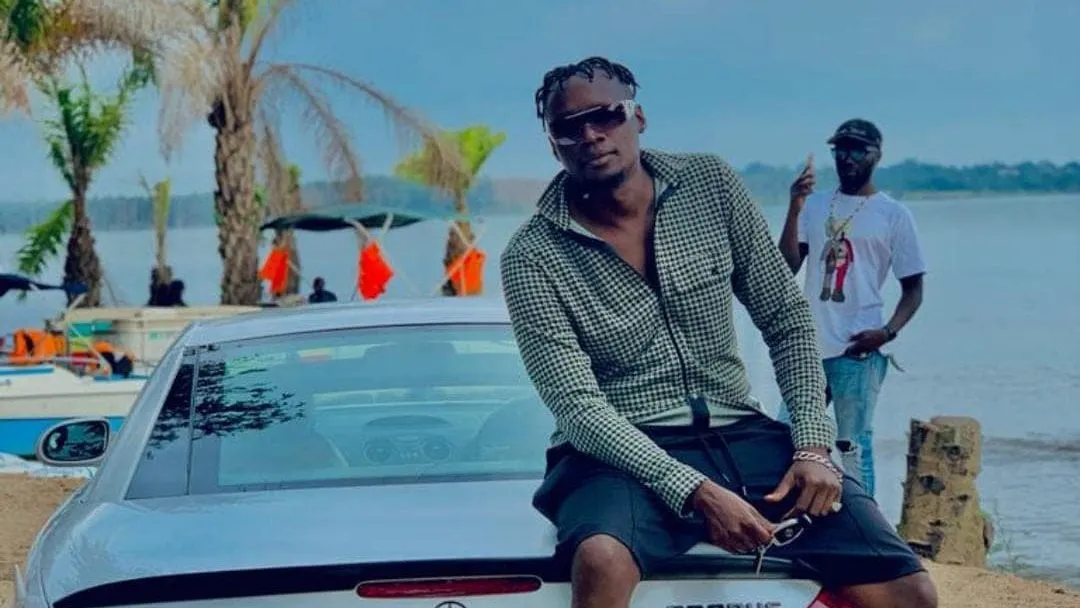
That’s what makes Maro’s comments stand out.
He isn’t just talking about success — he’s talking about survival.
Alongside his mental health reflection, Maro also shared an uncomfortable recent experience involving a popular TikToker.
According to him, he attempted to greet her respectfully while out at a nightclub, but felt ignored during the interaction.
“I greeted her because she is popular and I know her,” he said. “But she shook my hand while looking the other side as if she didn’t know me.”
The moment clearly left an impression, but Maro was quick to downplay its emotional impact.
Instead of frustration, he framed it as part of a broader lesson about ego and human behavior.
The gym confession quickly resonated online, especially the phrase “I decided to take depression to the gym.”
Clips and quotes from the interview began circulating across social media, with fans praising his honesty and vulnerability.
Many users highlighted how rare it is for male artists — particularly in the music industry — to openly discuss mental health struggles in such a direct way.

At the same time, the nightclub story also sparked conversation, with users debating fame, recognition, and respect within Uganda’s entertainment scene.
Some fans defended Maro, saying artists deserve acknowledgment regardless of platform trends.
Others suggested the incident reflected how quickly social dynamics shift in the age of viral fame.
Within hours, both parts of his interview were trending across entertainment pages.
Some fans believe Maro’s openness could encourage more artists to speak publicly about mental health challenges, especially those working internationally or away from home support systems.
Others focused on the gym aspect, sharing their own experiences of exercise as a coping mechanism for stress, anxiety, and depression.
Meanwhile, discussions around the nightclub incident were more divided.
Some users argued that respect should be mutual regardless of status, while others pointed out that misunderstandings in social settings are often misinterpreted.
Still, the dominant reaction remained supportive of Maro’s honesty.
Many praised him for shifting the conversation away from ego and toward emotional well-being.

Beyond the headlines, Maro’s story reflects a reality many people quietly experience — struggling mentally while trying to maintain external appearances of success.
For him, healing didn’t come through fame, validation, or recognition.
It came through discipline, repetition, and moments of solitude in a gym.
And that perspective is what resonated most with fans.
Because it reframes strength not as perfection, but as the willingness to confront personal struggle head-on.
Ironically, what started as a fitness routine ended up becoming a mental survival strategy — one that helped Maro rebuild not just his body, but his sense of self.
And in an industry where pressure rarely pauses, that kind of reset is often the difference between breaking down and breaking through.
One thing is clear — Maro didn’t just lift weights in Germany. He lifted himself out of a dark place, one rep at a time.