

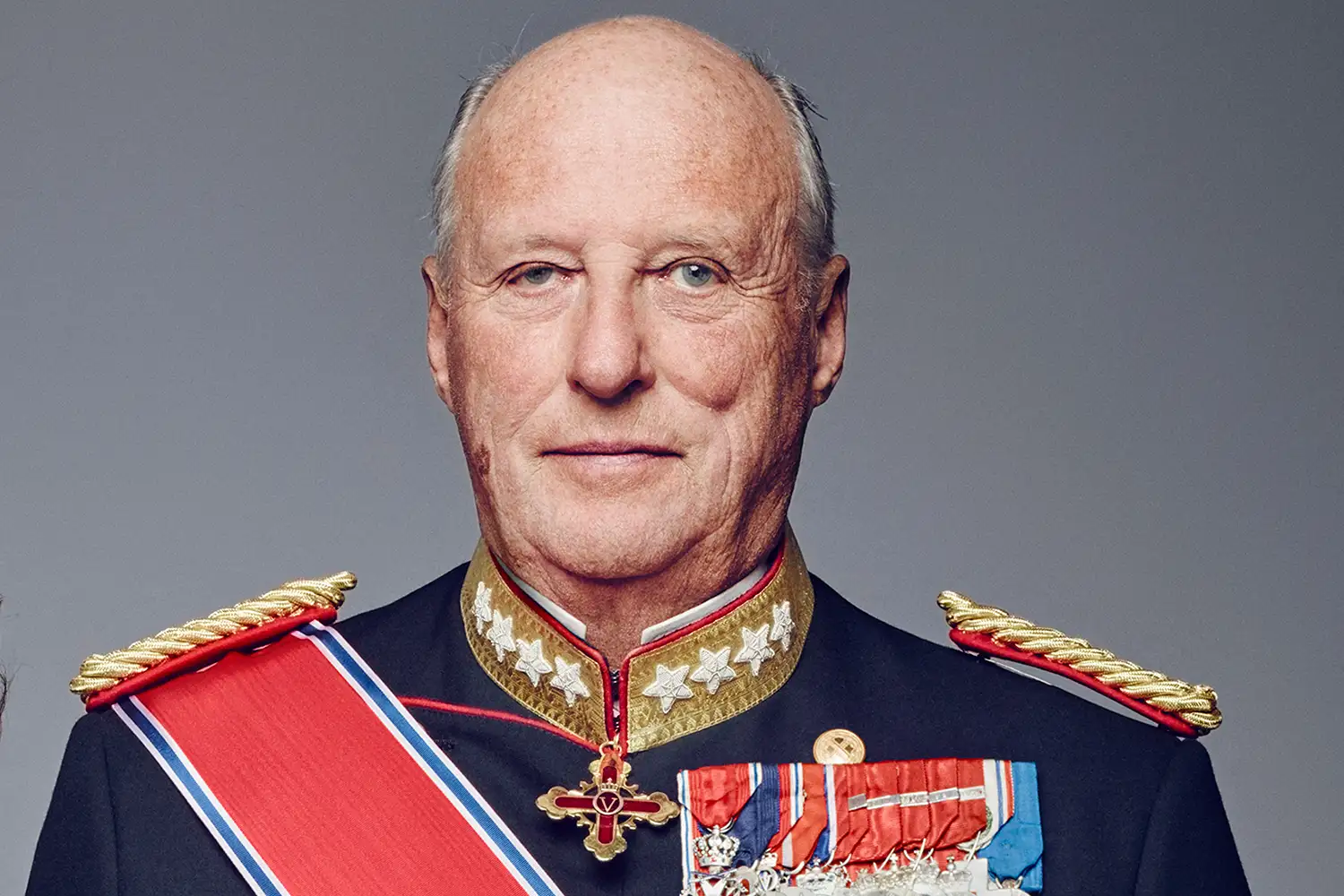
Norway’s longtime monarch has died after a rapid deterioration in his health, with his only son, Crown Prince Haakon, immediately succeeding him on the throne.
King Harald V of Norway has died at the age of 89, bringing an end to a 35-year reign that saw him become one of Europe’s most recognizable and down-to-earth monarchs.
The Royal Palace in Oslo confirmed on Friday, August 28, that the King died peacefully at 6:35 a.m. local time at Oslo University Hospital Rikshospitalet.
“It is with deep grief that we announce that His Majesty King Harald has passed away,” the palace said.
Harald’s death came after a period of deteriorating health. He had been hospitalized earlier in August and was later reported to be suffering from a bloodstream bacterial infection. His condition was described as “very serious” on August 27, prompting Queen Sonja and Crown Prince Haakon to cancel royal engagements and join family members at his bedside.
The news has prompted an outpouring of grief in Norway, with well-wishers gathering outside the Royal Palace in Oslo to leave flowers.
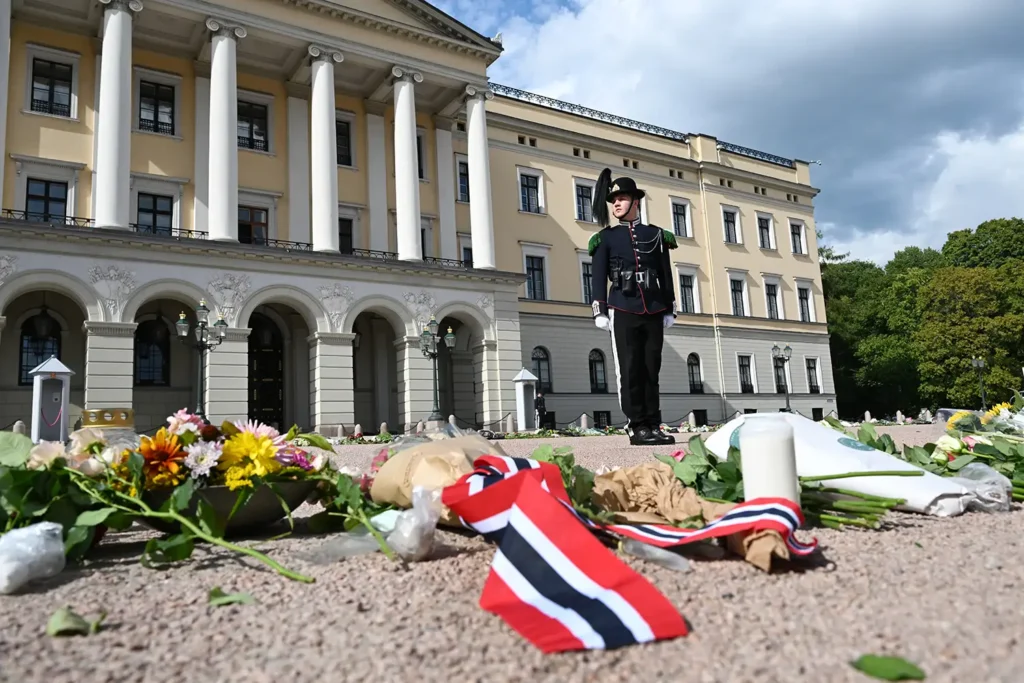
The royal flag above the palace was also lowered to half-staff following the monarch’s death.

Crown Prince Haakon Becomes Norway’s New King
King Harald is immediately succeeded by his only son, Crown Prince Haakon, 53.
Haakon’s eldest child, 22-year-old Princess Ingrid Alexandra, now becomes the heir to the Norwegian throne.
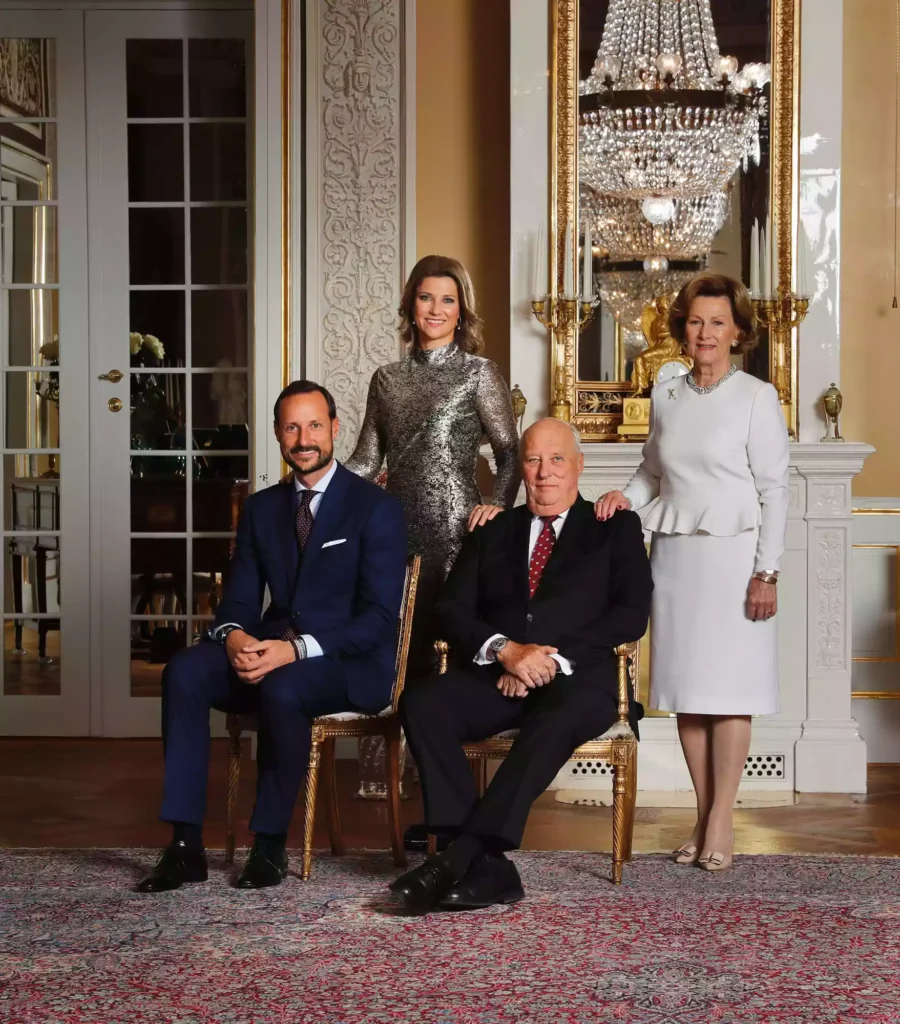
Harald is survived by Queen Sonja, whom he married in 1968, their daughter Princess Märtha Louise, his elder sister Princess Astrid, grandchildren and other members of the Norwegian royal family.
A King Who Came to the Throne in 1991
Harald was born on February 21, 1937, at the royal family’s country residence of Skaugum near Oslo.
He was the only son of Crown Prince Olav, who later became King Olav V, and Crown Princess Märtha.
Harald’s childhood was dramatically shaped by World War II. When Nazi Germany invaded Norway in April 1940, the royal family fled the country. Young Prince Harald eventually found refuge in the United States with his mother and sisters, while his grandfather, King Haakon VII, and father remained involved in Norway’s resistance efforts from London.
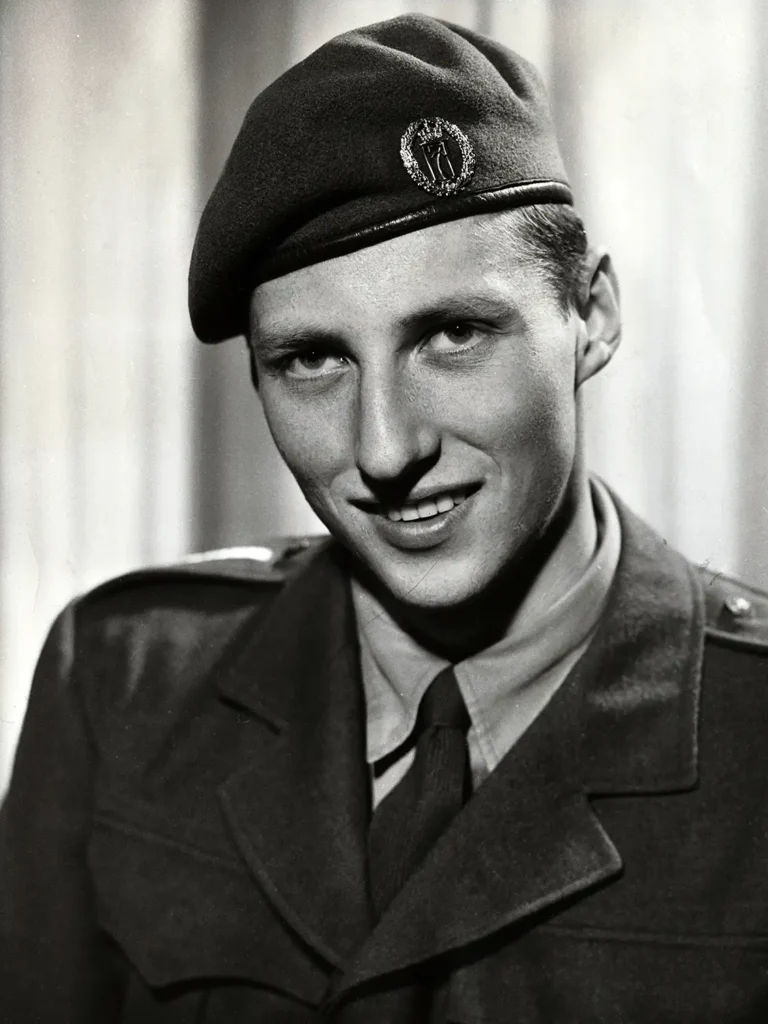
After the Allied liberation of Norway in 1945, Harald returned home and later pursued military training before studying social science, history and economics at Oxford University’s Balliol College.

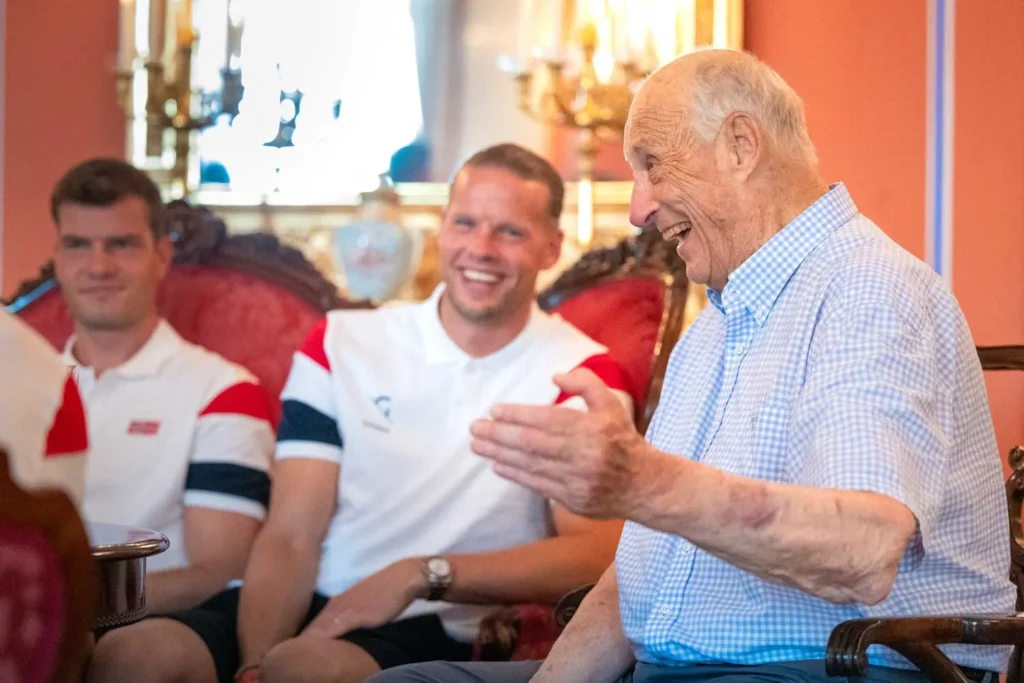
His personal life also attracted national attention when he married Sonja Haraldsen in 1968. Sonja was a commoner, making the marriage a significant moment for the Norwegian monarchy at the time.
The couple went on to have two children: Princess Märtha Louise and Prince Haakon.
Harald became King on January 17, 1991, following the death of his father, King Olav V. He and Queen Sonja were consecrated at Nidaros Cathedral in Trondheim later that year.
For more than three decades, Harald carried out the constitutional duties of Norway’s head of state, including presiding over the Council of State, formally opening Parliament and signing government legislation.
Remembered for His Inclusive Approach
Beyond his official duties, Harald developed a reputation for being unusually approachable and inclusive for a monarch.
In a widely remembered 2016 speech, he spoke about Norway as a country that embraced people regardless of sexuality, religion or background.
“Norway is you. Norway is us,” he said.

His comments reflected an approach to monarchy that emphasized national unity and belonging rather than distance from ordinary citizens.
Harald also became a source of reassurance during difficult moments for the country and his own family.
Following the death of his former son-in-law Ari Behn, Princess Märtha Louise’s former husband, in 2019, the King spoke publicly about grief and the struggles people can face during dark periods of their lives.
A Monarch With a Passion for Sport
Away from royal duties, Harald was an accomplished sportsman.
He represented Norway in sailing at three Olympic Games — in 1964, 1968 and 1972 — and later became European and World Champion in the sport.
He was also an avid hunter, fisherman and skier and had a longstanding interest in environmental issues.
For two decades, he served as president of the Norwegian chapter of the World Wildlife Fund.

Despite his repeated health struggles in later years, Harald had remained committed to his role as Norway’s monarch.
In 2024, amid questions about whether he might follow the example of Denmark’s Queen Margrethe II and abdicate, Harald made his position clear.
“I stand by what I have said all along. I have taken an oath to the Storting, and it lasts for life,” he said.
Now, that lifelong reign has come to an end.
King Harald V leaves behind a legacy defined by duty, national service and a monarchy that sought to remain closely connected to the Norwegian people.
His reign is over. Norway now enters a new royal era under King Haakon.