

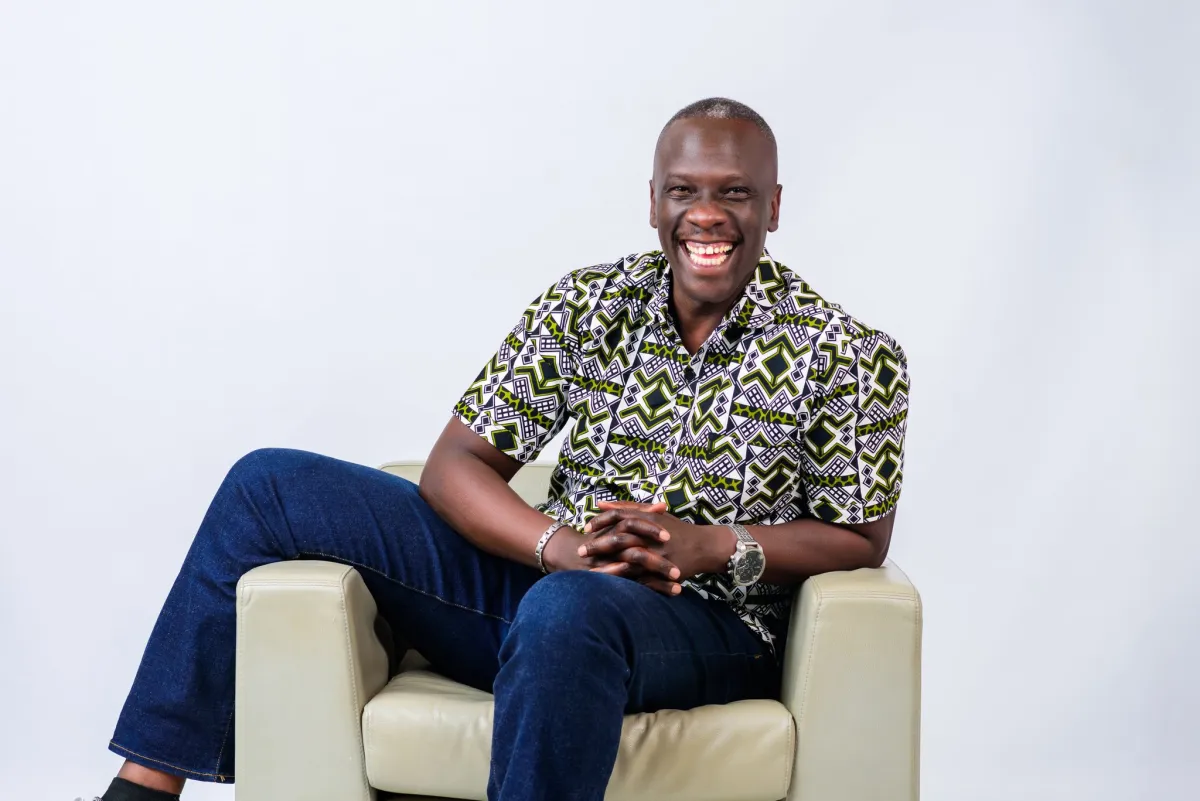
Dr. Ronnie Egwang Reveals The Reality Behind His TV Journey
Behind the polished smiles, perfect lighting, and confident performances seen on television, there is a side of hosting that audiences rarely get to see.
Public-speaking coach and communication strategist Dr. Ronnie Mich Egwang has opened up about the difficult moments he experienced while working in television and radio — revealing that his journey was far from effortless.
One of his biggest challenges came during his time as a host on the popular reality music competition Tusker Project Fame in Kenya.
Although the opportunity looked like a major career breakthrough, Egwang revealed that stepping into the role came with pressure, unexpected resistance, and lessons that shaped his career.
From dealing with behind-the-scenes tension to struggling with cameras and even a makeup disaster, the media personality says television taught him that what viewers see on screen is only part of the story.
And what happened behind the scenes was a completely different experience.
How Dr. Ronnie Egwang Landed Tusker Project Fame Role
Egwang recalled that his opportunity to host Tusker Project Fame came through Beka Magunda, who was then Managing Director of Uganda Breweries before later taking up the same position at Kenya Breweries.
According to Egwang, Magunda approached him during a period when Tusker Project Fame was undergoing a rebranding process and needed his communication skills for the hosting role.
“When I did Tusker Project Fame, I got in, and there was a gentleman called Beka Magunda,” Egwang explained.
“He used to be the MD of Uganda Breweries and moved to Kenya, where he also acquired the same position at Kenya Breweries. He called me in need of my services to be the host of Tusker Project Fame because there was a rebranding that was taking shape.”

The opportunity placed Egwang on a major regional platform, but adjusting to the environment came with challenges.
The Backstage Tension Nobody Saw
While viewers watched the smooth performances and polished episodes, Egwang revealed that the atmosphere behind the cameras was not always comfortable.
He explained that some members of the production team were initially not welcoming toward him, partly because he was from Uganda.
“One of the difficulties was that a member of the crew did not like me because I was from Uganda,” he said.
The situation also extended to his working relationship with his co-host.
Egwang revealed that the two experienced tension for years before eventually building a strong professional connection.
“Even with my co-host, we had friction for almost two or three years before we actually started hitting it off.”
He added that audiences only saw the final product, while the real journey involved learning how to work together under pressure.
“You see it happening there, but behind the scenes, it wasn’t always rosy.”
But that was only one part of the challenge…

The cameras themselves came with a whole new set of pressures.
The TV Mistakes Viewers Never Notice
Unlike radio, where audiences focus mainly on the voice and conversation, Egwang explained that television adds another layer of pressure — appearance.
Presenters have to think about camera angles, facial expressions, lighting, and presentation.
“You struggle with which right camera to focus on, and whether I look good in the camera,” he shared.
He also recalled one embarrassing moment when a makeup mistake left him looking completely different on screen.
“The third show that I did, there was somebody who did makeup for me and left me looking like a ghost. I looked white. It was bad.”
Despite the mistake, he still had to continue with the broadcast.
“And I had to do the show like that, and the bosses were like, ‘Dude, never do it again.’”
The moment became one of the many lessons he picked up from working in front of cameras.
More TV Challenges From Around Africa
Egwang revealed that his experiences were not limited to Uganda and Kenya.

While working in South Africa, he faced another unexpected challenge when a hairstyling session before production went wrong.
“I have had so many hiccups. In South Africa, there was a lady who offered to do my hair, but she ended up messing it up.”
The experiences, although frustrating at the time, became part of the learning process for someone working in a highly visual industry.
Fans React to The Untold Side of Television
Egwang’s revelations highlighted a side of broadcasting that many viewers rarely consider.
Fans immediately noticed the honesty behind his stories, especially the reminder that television personalities also face mistakes, pressure, and uncomfortable moments.
The internet had thoughts, with many appreciating the behind-the-scenes perspective.
For many aspiring presenters, his experiences showed that confidence on camera often comes after years of learning, adjusting, and making mistakes.
TV vs Radio: Different Pressures
Reflecting on his career, Egwang explained that television and radio come with completely different challenges.
He said radio often allows presenters more flexibility because audiences mainly connect through sound.
“Unlike radio, where listeners can call in and engage with you, you may not immediately know whether you’re messing up or flying high.”
Television, however, puts every detail under public observation.
From appearance to delivery, presenters are constantly being judged.
The Human Side of Dr. Ronnie Egwang’s Story
Beyond the mistakes and challenges, Egwang’s journey shows the reality of building a career in media.
Every successful appearance comes with preparation, pressure, and moments that never make it to the screen.
His experiences prove that even professionals have to learn, adapt, and overcome uncomfortable moments.
The Final Takeaway
The biggest lesson from Dr. Ronnie Egwang’s story is simple: television may look effortless, but behind every confident presenter is a collection of struggles, lessons, and unforgettable mistakes.
The cameras only show the final product — not the journey behind it.
What’s your most memorable TV moment where everything went wrong?