


Uganda’s music industry is fracturing — and the fault lines just became impossible to ignore.
On one side: a group of disgruntled artists, led by Ziza Bafana, threatening to walk away from the existing structure and build something new. On the other: Eddy Kenzo, BET Award winner, UNMF frontman, and apparently the last person in the room willing to pretend this isn’t a full-blown crisis.
Kenzo didn’t call a press conference. He didn’t release a statement through a publicist. He stood up, spoke plainly, and delivered a message that landed somewhere between a firm institutional reminder and a very direct personal challenge.
“Anything with ‘Uganda’ and ‘National,'” he said, eyes steady, “that is us.”
Uganda’s music fraternity has entered the chat — and it is not calm in there.
The tension has been building for weeks.
A faction of artists, reportedly frustrated with the current direction of the Uganda National Musicians Federation, has been making noise about establishing a parallel body — one they believe would better represent their interests and amplify their voices within the industry.
Leading the charge, at least publicly, is Ziza Bafana, whose hints at a breakaway federation sent shockwaves through an industry already navigating the pressures of a new copyright law, digital revenue disputes, and the lingering question of who actually speaks for Ugandan musicians.

Enter Eddy Kenzo — and he came prepared.
Addressing the issue directly, Kenzo made the legal and structural case first: Uganda’s framework only permits one national musicians federation. Not two. Not a main one and a rival one. One. And that one, he reminded everyone, is the UNMF.
“In the music industry, we are only allowed to have one federation,” he stated. “I don’t know when that will be amended to have more, and today the Uganda National Musicians Federation — anything with ‘Uganda’ and ‘National’ — that is us.”
But that’s not even the most pointed part of what he said — because Kenzo didn’t stop at legal structure. He went personal.
He addressed the whispers directly — the sentiment among some artists that his leadership feels intimidating or exclusionary — and dismissed it without hesitation.
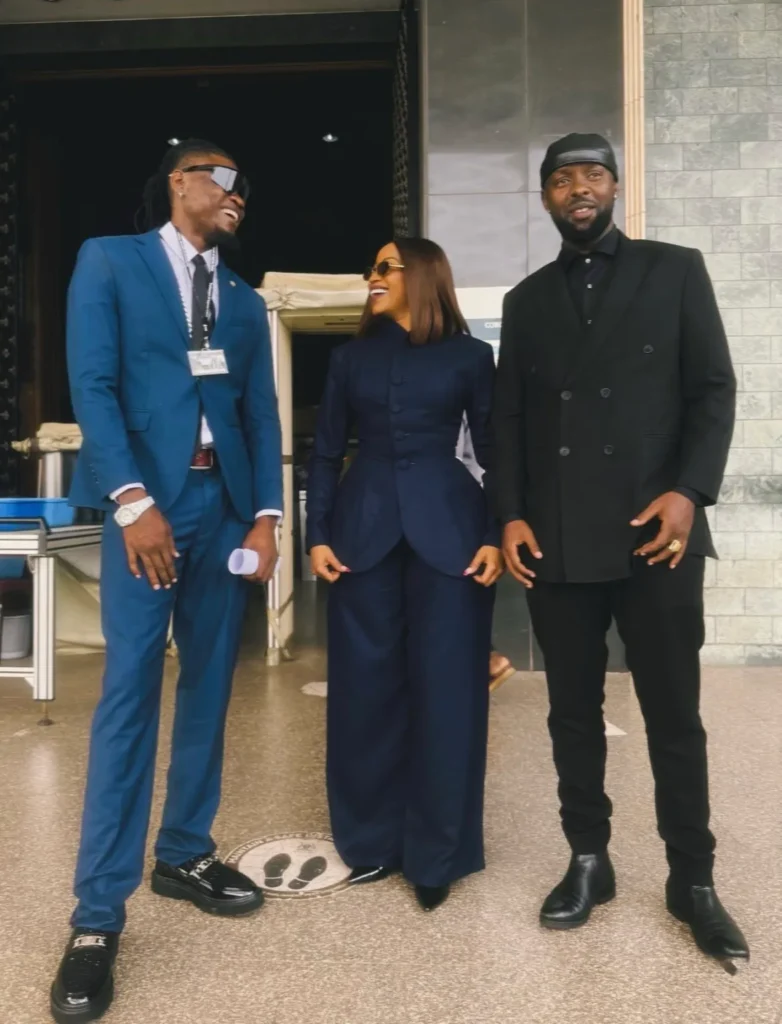
“Right now, you might distance yourself because of jealousy and ego,” he said, “but your child might become a singer and need the voice you put back in the day so they don’t face the same problems.”
The room went very quiet.
And then things got really interesting — because Kenzo pivoted from confrontation to legacy, reframing the entire argument not as a power struggle but as a generational responsibility.

“This is our term, and the next one can be yours or someone else’s,” he said. “Uganda is ours and the job is ours. We are working for our children and grandchildren.”
It was the kind of statement that makes it very hard to keep arguing without looking like you’re fighting against your own future.
[RELATED: Uganda National Musicians Federation — What It Does and Why It Matters]
Eddy Kenzo needs little introduction in East Africa’s music landscape. Beyond his extensive discography and international recognition, he has positioned himself as one of the most visible advocates for structural change in Uganda’s music industry — making his role at the UNMF feel like a natural extension of his public persona rather than a political detour.
Ziza Bafana is a veteran of Uganda’s music scene whose frustrations, whether personal or ideological, have found an audience among artists who feel underserved by the current federation’s leadership. His willingness to float the idea of a rival body publicly is itself a significant escalation.
The Uganda National Musicians Federation was established to serve as the unified voice of the country’s music community — negotiating on behalf of artists, engaging with government, and coordinating industry-wide initiatives. Its effectiveness, or perceived lack thereof, has been a source of debate for years.
The timing of this particular clash — arriving in the same moment as Uganda’s new copyright law and ongoing royalty disputes — means the stakes feel higher than they might have even a year ago. This is not just an ego conflict. It is a fight about who controls the future of Ugandan music.
Fans and industry observers immediately seized on Kenzo’s “jealousy and ego” line — and it spread with the sharp, uncomfortable velocity of a statement that hits too close to home for too many people.
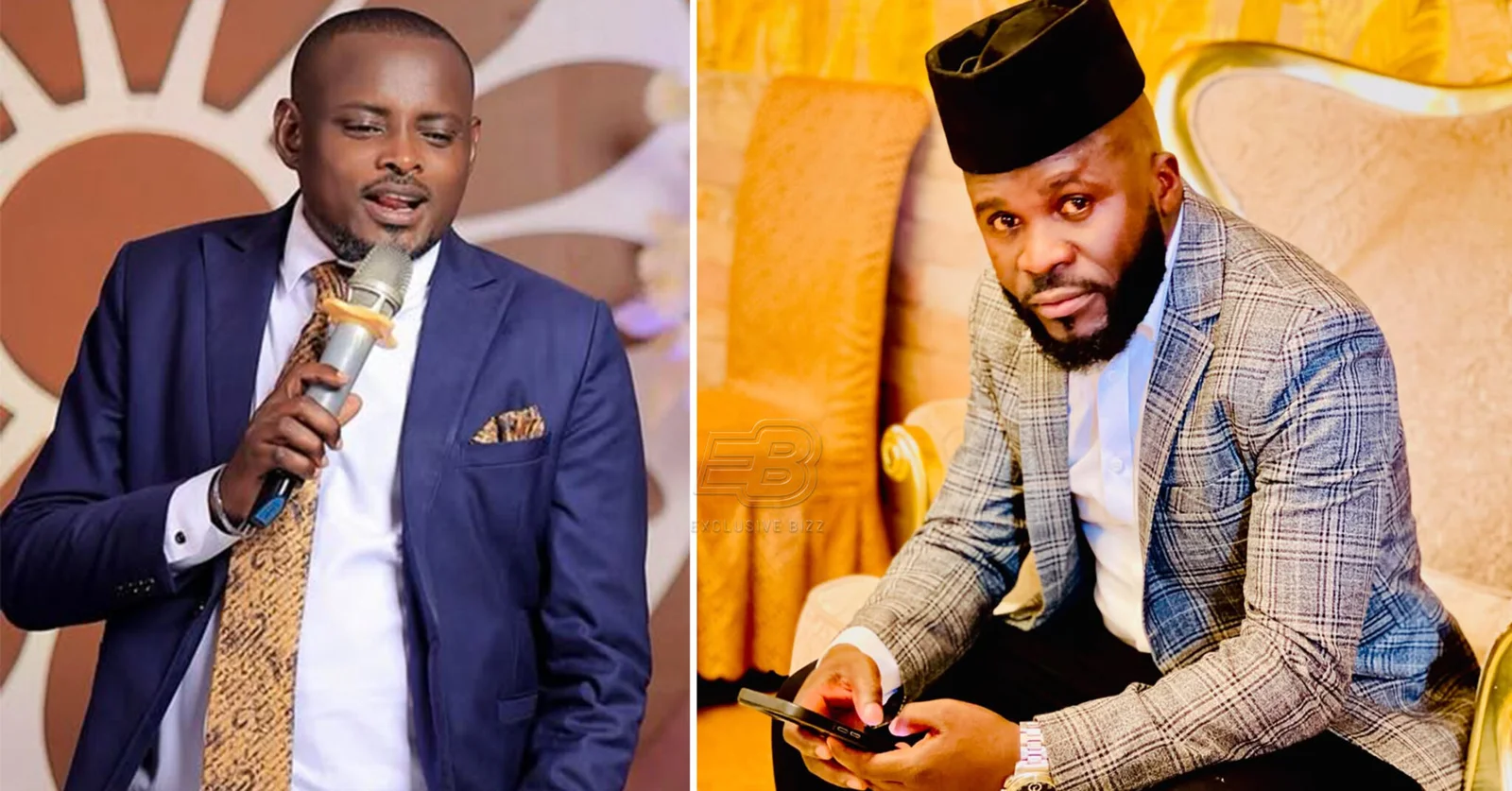
The clip circulated rapidly across Twitter, Facebook, and WhatsApp, with artists, managers, and music lovers all weighing in on whether Kenzo was speaking institutional truth or protecting personal turf.
The internet had thoughts, and they were absolutely not holding back.
Some clipped the “your child might become a singer” portion separately, with fans noting that reframing industry unity as a gift to future generations was either genuinely visionary — or the most effective rhetorical pivot they had seen from a Ugandan artist in years.
Within hours, the debate had split cleanly into two camps, and neither was showing any signs of backing down.
Some fans believe Kenzo’s invocation of legacy and generational responsibility was a calculated masterstroke — making it nearly impossible for breakaway artists to publicly oppose unity without appearing to work against the interests of Uganda’s future musicians.
Others remain sympathetic to Ziza Bafana’s faction, arguing that frustration with existing leadership is legitimate regardless of the legal framework, and that Kenzo’s dismissal of dissent as “jealousy and ego” conveniently sidesteps the actual grievances being raised.
Sources close to the UNMF suggest that internal conversations about restructuring and broader inclusion have been ongoing, though it’s unclear whether those conversations will move fast enough to prevent a more public fracture.
It’s unclear whether Ziza Bafana will respond directly to Kenzo’s remarks — but given the temperature of this particular dispute, silence seems unlikely.
Strip away the federation politics and the legal arguments, and what this dispute is really about is something far more human — the feeling of not being heard.
Artists who gravitate toward Ziza Bafana’s position are not necessarily anti-unity. Many of them are simply exhausted by the gap between what a federation promises and what it delivers. That exhaustion is real, and Kenzo’s “jealousy and ego” framing, however rhetorically effective, risks dismissing legitimate pain with a convenient label.
His point about legacy, though, is harder to argue with. The decisions Uganda’s music industry makes right now — about structure, about solidarity, about who gets a seat at the table — will echo for decades.
The question is whether both sides are willing to sit at the same table long enough to build something worth inheriting.
Here is the irony nobody is saying out loud: the man defending the unity of Uganda’s music industry is doing so in a speech that has divided Uganda’s music industry more sharply than anything Ziza Bafana has said so far.
Sometimes the loudest argument for togetherness is also the thing that makes togetherness feel furthest away.
Eddy Kenzo knows this industry better than most.
Whether he can heal it — that is the part nobody has figured out yet.
Eddy Kenzo drew the line in the sand and dared anyone to cross it — now the only question is whether Ziza Bafana and his camp are lacing up their boots or backing down.
Uganda’s music industry is at a crossroads. Which road do you think they should take? 👇