

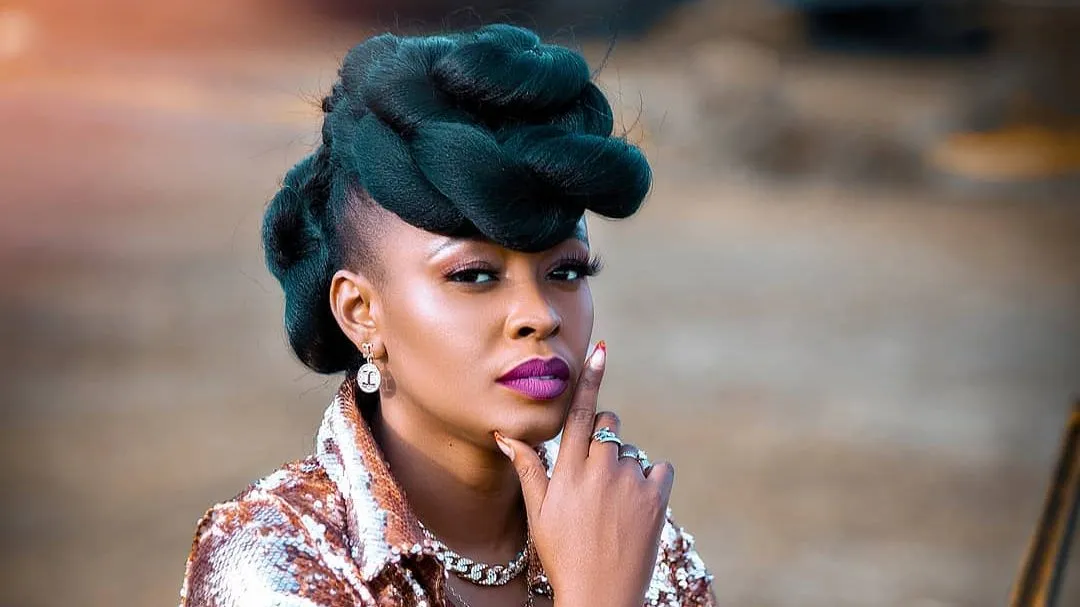
Someone Stole Her Outfit — In a Dream. Then Her Car Disappeared in Real Life.
In Uganda’s entertainment industry, the competition is fierce, the friendships are complicated, and apparently — the spiritual warfare is very much active. At least, that’s what Grace Nakimera wants you to know.
In a raw, unfiltered interview on Executive Media, the beloved Ugandan songstress dropped a bombshell that has the internet doing a double take. She says a fellow female artist bewitched her, and she didn’t find out the old-fashioned way. She found out in a dream — and what happened next left her shaken to her core.
Nakimera didn’t ease into the story. She went straight for the throat.
She described a disturbing vision in which she saw a woman — someone she knows personally — undress her and put on her clothes. Not a metaphor. Not symbolism. She says she watched it happen, and she recognised the face.
“I saw that person in my dream and they undressed me and wore it on themselves,” Nakimera said. “When they wore it, the next day I got an accident.”
The accident happened in Kyaliwajjala. Her car was taken.

For Nakimera, that wasn’t a coincidence. That was confirmation.
She says the incident was only the beginning — a chain of setbacks followed, and she believes each one was spiritually connected to that single moment in the dream.
But that’s not even the wildest part.
She says she forgave the woman. But she will not greet her.
“I can’t greet that person even if I find them,” she said. “There’s a lot of pain, but I forgave her because as a born-again Christian, we are told to forgive.”
That’s forgiveness — but not friendship. And there’s a difference.
Grace Nakimera is one of Uganda’s most respected female vocalists, known for her soulful Luganda music and a career that has spanned decades of consistent hits and live performances. She is not the kind of artist who courts drama for clout — which is precisely why this interview hit differently.

She has cultivated a reputation as a deeply spiritual woman, publicly identifying as a born-again Christian. Her faith, she says, is not performative. It is her first line of defence.
Which explains why, when she speaks about witchcraft, she speaks about it the way someone does when they have lived through it — not theorised about it.
She is also preparing for a major upcoming concert at Serena Hotel, one of Kampala’s most prestigious venues. The timing of these revelations — made publicly, on camera — feels deliberate.
Nakimera didn’t just share her story. She issued a warning.
She cautioned people about the hidden intentions lurking inside Kampala’s social and entertainment circles, telling her audience plainly: you need to pick a side.
“You either be a prayer warrior or be into witchcraft, you’ve got to pick a side,” she said. “For me, I’m a prayer warrior.”
Then she went further — directly addressing anyone who might be plotting against her Serena Hotel concert. She expressed full confidence that her faith would shield her from any attempt to sabotage the event.

She didn’t name the woman. She didn’t have to.
The message landed regardless.
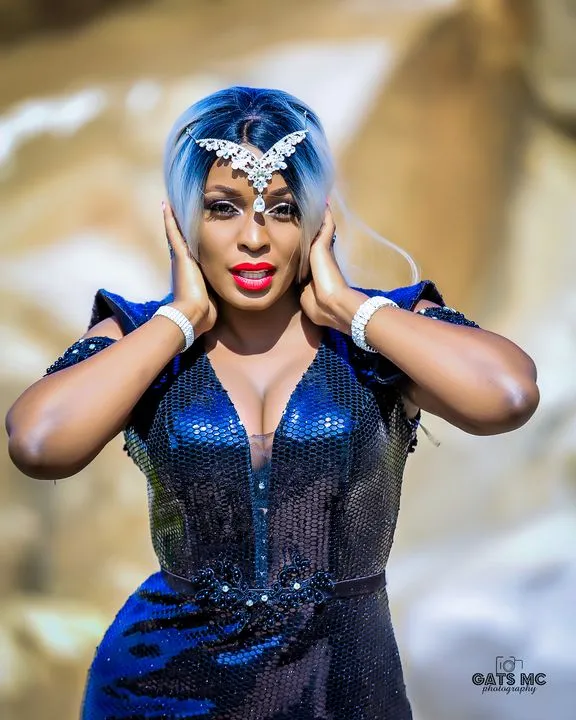
Fans immediately noticed the weight of what Nakimera was saying — not just the witchcraft claim, but the layers underneath it.
Here was a celebrated, senior female artist sitting down and saying, clearly and calmly, that someone in her own circle tried to destroy her. Using her clothes. In the spirit realm.
The internet had thoughts, and they were not holding back.
Social media was divided between those who took the spiritual dimension seriously — particularly among audiences familiar with how deeply embedded such beliefs are in Ugandan culture — and those who were floored by the boldness of the claim itself.
Comments ranged from full solidarity to wide-eyed speculation about who exactly the unnamed woman could be.

Some fans believe the unnamed artist is someone Nakimera has publicly interacted with in the past. Others point to the specificity of the story — the dream, the accident, the location — as details that feel too precise to be vague.
It’s unclear whether Nakimera intends to say more. Sources close to her circle suggest the interview was meant to serve as a public record, not a prolonged exposé.
What is clear is that Nakimera is not afraid of the conversation. She opened the door herself, on camera, knowing full well what the audience would do next.
Behind the drama is a woman who says she has been quietly carrying pain. The kind that doesn’t make headlines — the kind that lives in the body, shows up in setbacks, and takes years to name out loud.
Nakimera choosing to speak publicly about forgiveness — not just the accusation — says something about where she is spiritually. She isn’t calling for confrontation. She is calling for protection.
For many women in Uganda’s entertainment industry, the pressures are invisible and relentless. Her willingness to say “I was hurt, I know who did it, and I forgave her anyway” may resonate far beyond celebrity gossip.
She was undressed in a dream, involved in an accident the next morning, had her car taken — and still chose to forgive. But don’t mistake forgiveness for weakness. Grace Nakimera made sure of that. She looked into the camera and essentially said: I know your face, I know what you did, and God is my witness. If that isn’t a screenshot-worthy moment, nothing is.
Grace Nakimera came to that interview with receipts from the spirit realm — and she left no room for debate. The only question now is: does the woman in the dream know she’s been exposed?