

The Music Ended. The Mic Was Still On. And Juliana Was Fast Asleep.
There is a version of Juliana Kanyomozi that Uganda has always known — polished, composed, magnetic. The voice that fills a room before she even opens her mouth. The performer who makes it look effortless.
Then there is the version she just revealed on The Deep Talk — the one sitting alone in a late-night studio at Capital FM, head drooping toward the mixer, completely knocked out while the music played.
Yes. Juliana Kanyomozi fell asleep on air.
And that is only the beginning of what she had been quietly carrying behind that professional smile.
Juliana didn’t buried the detail. She served it plainly, with a laugh that suggested she has made peace with the memory.
She was assigned a late-night show — the kind of slot that sounds glamorous until you’re actually sitting in a dark studio at 10 or 11pm, running on empty, watching the clock and fighting your own eyelids.

“There were times when the music would end and I have dozed off on the mixer because it was late, like at 10 p.m. or 11 p.m,” she said. “Sleepy much.”
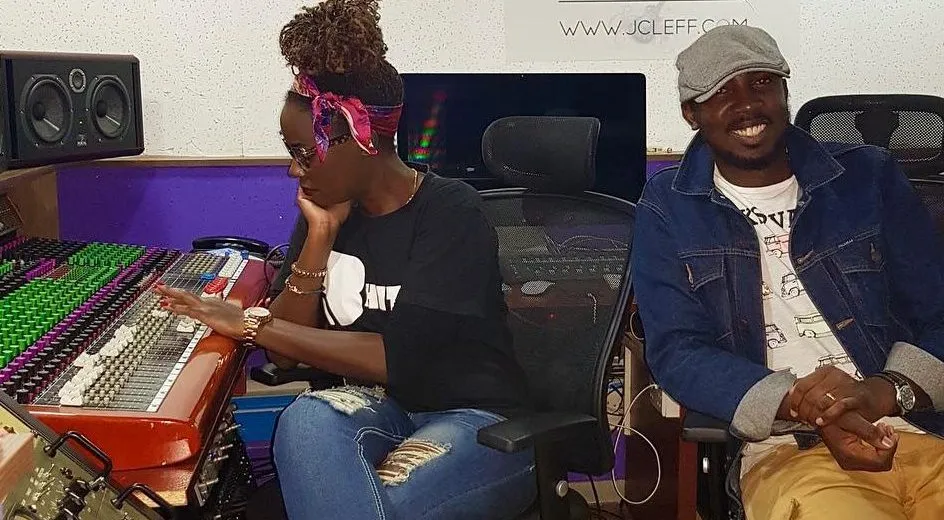
The image alone is everything — Uganda’s most celebrated female vocalist, slumped over the mixing board, dead to the world while her show technically continued.
But the exhaustion was only half the story.
Because what Juliana also revealed was something far more emotionally demanding than missing a cue.
Radio has a cruel requirement that most people never think about: you must always sound fine.
It doesn’t matter if your world is falling apart the moment you walk through the studio door. It doesn’t matter if you cried in the car on the way in, or received devastating news an hour before your show. The moment that mic goes live, the audience expects the same warm, energetic voice they tuned in for yesterday.
Juliana said that pressure was one of the hardest things she had to learn to carry.

Listeners expected the same Juliana every single day — bright, engaging, present. No off days. No bad mornings. No grief allowed on air.
“When you switch on the mic, the professional voice comes out and when you switch off, life kicks in,” she explained.
She eventually learned to flip the switch. But learning that skill, she made clear, took time and took something from her.
And then things got really interesting — because she described it not as damage, but as growth.
Juliana Kanyomozi is one of the most decorated artists in East African music history. With a voice that has defined an era and a catalogue that spans multiple generations of fans, she occupies a rare space in Uganda’s cultural landscape — universally respected, genuinely beloved.
Her time at Capital FM Uganda was an earlier chapter in a career that would go on to reach extraordinary heights. At the time, she was building herself, learning the industry from the inside, and figuring out — as so many young broadcasters do — how to be a professional while still being a human being.
The Deep Talk interview sits inside a broader wave of Ugandan celebrities choosing vulnerability over image management. Juliana’s willingness to share the unglamorous parts of her story lands differently because of who she is — someone with every reason to only show the highlight reel.

Fans immediately noticed something in the way Juliana told the mixer story — not with embarrassment, but with warmth. Like someone who has earned the right to laugh at their younger self.
The clip moved fast. The image of one of Uganda’s most iconic voices completely knocked out mid-broadcast struck a nerve, not because it was scandalous, but because it was so deeply human.
The internet had thoughts, and they were not holding back — most of them full of affection rather than judgment.
“She really said I was tired and clocked out mentally,” one comment read, capturing the general energy of the reaction. Within hours the phrase “sleepy much” had become the most quoted line from the interview, circulating across WhatsApp and social media with the kind of warmth reserved for moments that feel genuinely real.

Some fans believe the interview marks a deliberate shift in how Juliana is choosing to present herself publicly — more open, more reflective, less concerned with maintaining the untouchable icon energy.
Others simply related to the exhaustion she described in a way that had nothing to do with celebrity. Late nights. Professional masks. Smiling when you are breaking. These are not experiences unique to radio presenters.
It’s unclear whether Juliana plans to share more from that period of her life, but sources close to her circle suggest the Deep Talk appearance was a genuine moment of reflection rather than a calculated media move.

Either way — people felt it.
What Juliana described is something millions of working people understand without needing a studio or a microphone. The performance of being okay. The discipline of separating what you feel from what your job requires you to project.
She learned to switch the professional voice on and life off — and somewhere in that discipline is a story about what it costs to be seen a certain way for long enough that the mask starts to feel like your actual face.
The fact that she can talk about it now, clearly and without bitterness, says more about where she has arrived than any award ever could.
She built one of the greatest careers in East African music history — and somewhere in the middle of it, she was alone in a radio booth at midnight, asleep on the mixer, the music playing to an audience that had no idea. That gap between what the world sees and what actually happens behind closed doors? Juliana just closed it. Voluntarily.
Juliana Kanyomozi survived late nights, emotional masks, and at least one very public nap — and came out with her voice, her grace, and her story fully intact. The real question is: how many other presenters are out there right now, asleep on the mixer and hoping nobody notices?