

The government representative steps forward. The microphone goes up. The crowd quiets.
And then, with full ceremony, comes the announcement: the state is contributing Shs10 million to the bereaved family.
Applause. Gratitude. A handshake for the cameras.
What happens next — according to King Saha — is the part nobody talks about. Because the moment that figure gets announced publicly, every debt collector who knew the deceased starts doing the maths. And by the time the family has fielded those conversations, the Shs10 million may already have somewhere else to go.
King Saha has blown the lid off one of Uganda’s most quietly accepted funeral traditions — and his argument cuts deeper than just the numbers.
The Kings Love Entertainment boss was speaking in a recent interview when he turned his attention to a practice most Ugandans have witnessed but few have publicly challenged.
His opening position was simple: Shs10 million is not enough money to justify the public theatre surrounding its presentation.

“The condolence package should be at least Shs50 million, especially for ordinary citizens,” he said. “Those in the diplomatic class can receive up to Shs100 million.”
He is not making a charity argument. He is making a proportionality argument — that if the government is going to stand before a grieving family and make a declaration of support in front of witnesses, the figure behind that declaration should be capable of making a genuine dent in what those families face.
Burial costs. Transport. Food for mourners. Lost income. The financial weight that lands on a family the moment someone dies does not pause for a Shs10 million announcement.
But that’s not even the sharpest point he made.
King Saha flagged something that rarely surfaces in these conversations — the danger of publicising the contribution at all.
When a government representative announces at a funeral that a family has just received cash, that information travels. Creditors and debt collectors who may have been owed money by the deceased now know that funds are available. The family, already grieving, suddenly finds itself managing financial claims it may not have even known existed.
“The Shs10 million would be better handed over privately,” he argued, “because publicising the contribution could attract debt collectors seeking to recover money owed by the deceased, leaving little benefit for the bereaved family.”

It is a quiet, specific, and entirely overlooked consequence of a tradition Uganda has normalised without examining.
For anyone unfamiliar with the practice, government condolence contributions at burial ceremonies have become a standard feature of official attendance at funerals across Uganda. When a minister, MP, or senior government figure shows up to pay their respects, the Shs10 million package typically follows — announced publicly as a gesture of state solidarity with the bereaved.
The tradition is widely recognised. It is rarely questioned.
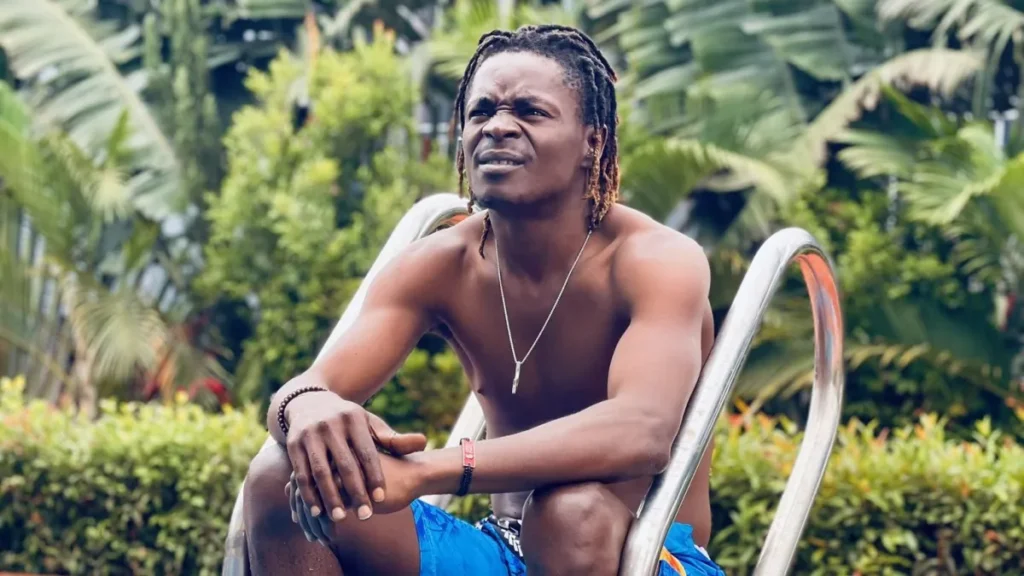
King Saha — born Mansoor Semanda — has built a reputation not just as a musician but as one of Uganda’s more outspoken industry voices. As the head of Kings Love Entertainment and a regular presence in public discourse around music, governance, and social issues, he tends to say what others in his position leave unsaid.
His comments came during what was also a tribute to the late Master Parrot, the veteran Ugandan singer whose burial in Butembe, Kammengo, Mpigi District recently drew figures from across the entertainment industry. The setting — a funeral — gave his argument about how families are treated in grief an added layer of weight.
The debt collector observation is the line that got people talking.
Fans immediately noticed that King Saha wasn’t just complaining about the amount — he was exposing a specific, practical consequence of the announcement culture that most attendees at funerals had probably never consciously considered.

The internet had thoughts, and they were not holding back.
Comment sections filled with people sharing personal experiences — mourners who had watched families navigate financial claims in the aftermath of a loss, others who had seen the Shs10 million disappear into logistical costs before it could provide any meaningful relief.
“He said what everyone at every burial has quietly thought,” one commenter wrote. The clip began circulating rapidly across WhatsApp groups, which is often where Uganda’s most resonant social commentary actually spreads.
Some people are fully behind the Shs50 million proposal, arguing that the figure hasn’t been reviewed in years and no longer reflects the actual cost of death and burial in Uganda in 2025.
Others are more focused on the privacy argument — with several voices pointing out that King Saha’s suggestion to hand the money over quietly, without a public announcement, would require government representatives to rethink the entire ritual of how condolence visits are conducted. Whether any official will engage with that suggestion is unclear.
A portion of the conversation has taken a more pointed direction — with some asking whether the public announcement tradition is less about helping families and more about the optics of being seen to help. That question, once asked, is proving difficult to shake.
King Saha made his remarks while also paying tribute to Master Parrot — a man he described as someone who genuinely showed up for people in difficult moments.
“Master Parrot was a good person who knew how to comfort his peers during challenging times. He would advise his friends whenever they faced hardships, and if you followed his guidance, you would often succeed.”
There is something deliberate about making an argument for better treatment of grieving families while standing at the burial of a man remembered specifically for how he treated people in their hardest moments. Whether intentional or not, the setting gave King Saha’s words a context that a studio interview never could.
Here is the detail worth sitting with: Uganda has been announcing Shs10 million at funerals long enough that it has become tradition — unremarkable, expected, applauded. King Saha just pointed out that the applause may be the most expensive part of it. A family nodding gratefully at a public announcement while debt collectors in the crowd take mental notes is not a support system. It is a performance. And performances, as King Saha would know better than most, only work when the production budget matches the stage.
King Saha came to bury Master Parrot and ended up challenging the government’s entire approach to grief support in one interview. Whether Uganda’s decision-makers are listening is another matter entirely.
Drop your thoughts in the comments — should the government raise the condolence package to Shs50 million, and should it be handed over privately?