

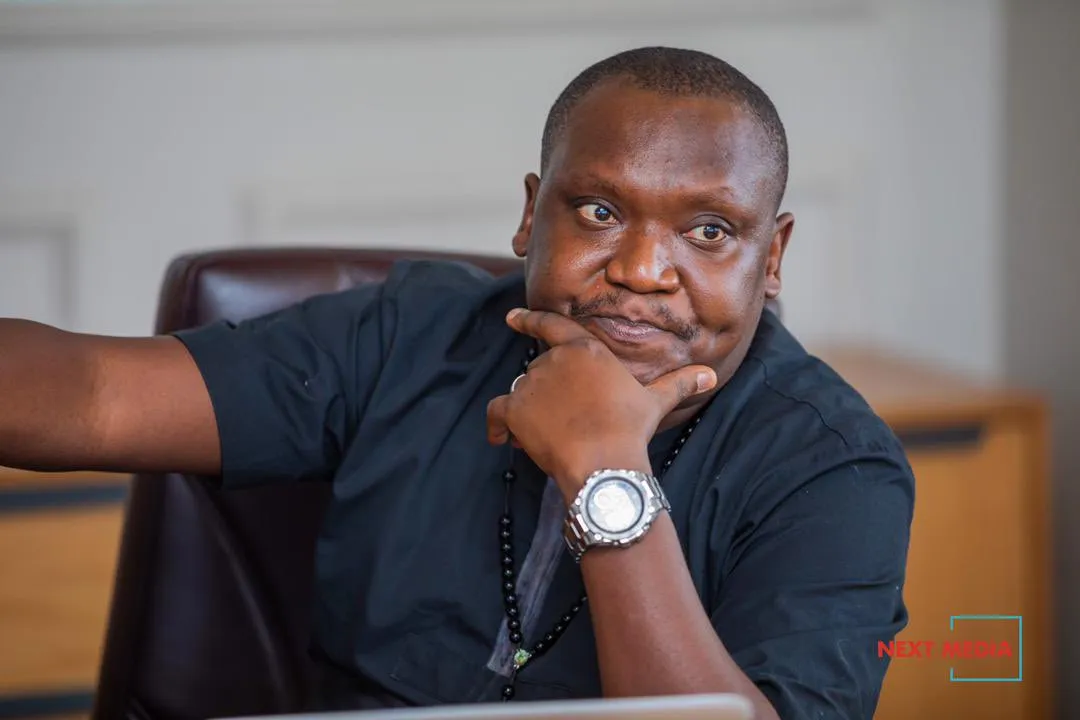
Ugandan comedian Patrick Salvado says bringing musicians into comedy shows contributed to the decline of Uganda’s comedy industry, arguing that the arrangement eventually disrupted performances and changed the experience for audiences who came primarily for jokes.
Speaking during an interview on Kasuku Live, Salvado acknowledged that comedians themselves played a role in the situation. He explained that what began as an opportunity to collaborate with musicians gradually became a challenge for organisers trying to maintain the identity and structure of their comedy events.
“We messed up. From the genesis, it was purely comedians, and musicians came to us for features. We would let them have the stage first, and events got full,” Salvado said.

According to the comedian, the shows initially attracted strong audiences without depending on musical performances as a central part of the programme. Musicians would approach comedians for opportunities to feature at their events, creating collaborations that appeared to benefit both sides.

However, as the shows grew, organisers began facing a different challenge: finding enough people to fill larger venues.
Salvado recalled that they eventually moved their events to La Bonita, a venue with a capacity of approximately 1,300 people. The bigger space raised questions about how organisers could consistently attract crowds, prompting discussions about bringing popular musicians onto the comedy stage.

He said a manager suggested incorporating musicians as a way to draw larger audiences. The organisers subsequently relied on some of Uganda’s biggest music stars, including Jose Chameleone, Bobi Wine and Bebe Cool, with Radio and Weasel also appearing occasionally.
But the strategy came with unintended consequences.
“The musicians were the curtain raisers, and remember, they move with their gangs, so they started discomforting the real comedy audience,” Salvado explained.

The problem, as he described it, was no longer simply about attracting people to the venue. Organisers also had to consider whether the musical performances were interfering with the experience of audiences who attended specifically to watch comedians.
They later attempted to address the situation by changing the running order, allowing comedians to perform before the musicians took the stage.
That adjustment, however, created another complication. Salvado said musicians would sometimes arrive late, leaving comedians reluctant to begin performing before the audience had fully assembled.

Some comedians consequently began insisting that musicians should perform first to attract the crowds, rather than having comedians take the stage when seats were still empty.
The competing preferences made it harder to maintain a consistent programme, with disagreements over who should perform first disrupting the flow of the shows.
Salvado’s account points to a difficult balance for comedy organisers: attracting larger audiences while protecting the format that made their events appealing in the first place.
His remarks also suggest that the challenges facing Uganda’s comedy industry cannot be separated from decisions made by the comedians and organisers themselves. What started as a crowd-attracting strategy eventually complicated the scheduling and delivery of the very shows it was intended to strengthen.
For Salvado, the issue is not simply that musicians appeared at comedy events, but that integrating their performances changed how those events were organised and experienced.