

By Wamala Sipirian
Published: September 23, 2026
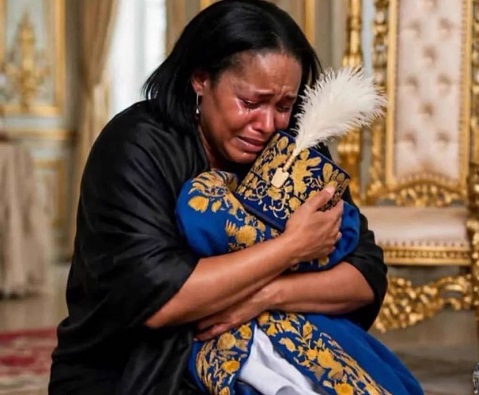
Queen Mother Best Kemigisa has given her first detailed account of the 16 days between the death and burial of King Oyo Nyimba Kabamba Iguru Rukidi IV, describing the period as one of the most painful episodes of her life.
In a statement released to the media on Tuesday, September 22, Kemigisa said her primary concern after Oyo’s death was to bring her son home, mourn him and give him a dignified burial before questions about succession were addressed.
“I have lost my only son,” Kemigisa said. “King Oyo was my son before he was my King.”
Oyo died on August 27 at the age of 34 after a period of illness. His death brought widespread mourning across Tooro, with thousands of people gathering at Karuziika Palace in Fort Portal and along the routes taken during his final journey.
According to Kemigisa, however, discussions over the future of the Tooro throne began within hours of his death.
“My simple wish was to bury my son peacefully and with dignity,” she said. “Let a mother mourn her son. Let Tooro mourn its King. And then, after the burial, let us address succession calmly, lawfully and respectfully.”
Kemigisa said that did not happen.
“Only hours after my son’s death, a committee was started to choose a new king,” she said.
She further said succession developments continued while Oyo’s remains were still being transported to Uganda.
“While my son’s body was still making its journey home to Tooro, a new king was announced,” she said.
Oyo’s remains arrived in Uganda on September 4 and were taken to Karuziika Palace, where mourners were allowed to pay their respects before the September 12 burial.
Kemigisa said the family had hoped the funeral period would remain separate from the succession dispute. She said another announcement followed after the late king’s will was read to members of the Royal Family, Musuuga and representatives of the Babiito clan.
“A couple of days after we reached Karuziika Palace, and with my son’s burial still ahead of us, another announcement of a second king was made immediately after the Will of King Oyo was read,” she said.
Kemigisa said celebrations associated with the announcement were particularly difficult for the family because they occurred close to where Oyo’s remains were lying.
“Loud celebrations took place only metres from where my son’s body lay,” she said.
Dispute over Oyo’s child
The succession dispute also affected plans for Oyo’s child.
Kemigisa said there had initially been an expectation that the child would return to Uganda from Texas on the same plane carrying his father’s remains.
She said the family ultimately decided against bringing the child back amid concerns about the increasingly tense situation surrounding the succession dispute.
“No child should ever be placed in circumstances where returning to his father’s homeland could mean being drawn into hostility and conflict,” she said.
As burial preparations continued, Kemigisa said representatives of the family held discussions with Government leaders, Musuuga and representatives of the Babiito community.
According to her account, the discussions resulted in an understanding that Oyo would be buried peacefully and that succession-related matters and traditional rituals would be handled after the funeral.
A memorandum of understanding was subsequently signed. The document stated that succession-related rituals, declarations, installations or proclamations would not take place at Karambi Royal Tombs during the burial.
Despite the agreement, Musuuga Charles Kamurasi later declared Prince Edward Rukidi Kijanangoma the new Omukama.
Kamurasi said the Babiito had followed Tooro customs and Ugandan law in selecting Kijanangoma.
“I now wish to state to the people of Tooro and Uganda and inform you that we have a new king,” Kamurasi said.
He identified the new monarch as King Edward Rukidi Nabongo I and said the process had followed applicable laws, norms and traditions.
Kemigisa, however, said the events surrounding the burial did not reflect the understanding reached before the funeral.
“What happened at Karambi left me devastated,” she said.
“The understandings reached before the burial were not honoured, and the events of those final moments caused my daughter, Princess Komuntale, and me profound distress.”

Oyo buried after 31 years on the throne
Oyo was buried at the Karambi Royal Tombs on September 12, exactly 31 years after he was enthroned as Omukama of Tooro on September 12, 1995.
He became king as a child and remained on the throne for more than three decades until his death at 34.
Reflecting on his life, Kemigisa said Oyo had grown from a young monarch into an adult who carried the responsibilities of the throne and devoted himself to Tooro.
She said the circumstances surrounding his accession were not of his choosing but that he accepted the responsibilities placed upon him.
Despite her account of the events surrounding the succession, Kemigisa said she did not want anger or disappointment to determine the future of the royal family.
“I do not want fear, anger or disappointment to define our future,” she said.
She called for peace, respect for lawful processes and trust in God, while saying the family would continue to preserve Oyo’s legacy.
“King Oyo’s wishes will always matter to us,” she said. “We will honour his memory, protect his legacy and continue the work to which he devoted his life.”
Kemigisa outlines Oyo’s proposed legacy projects
The Queen Mother also thanked people who supported the royal family during Oyo’s illness, death and burial, including President Yoweri Museveni.
She said Museveni, who had known Oyo from childhood, had supported the late king throughout his reign and illness.
Kemigisa also welcomed Museveni’s decision to become Patron and Founding Chairman of the proposed King Oyo Memorial Foundation.
The foundation is expected to provide a framework for several projects intended to preserve Oyo’s legacy.
They include the proposed King Oyo Tooro Museum, which would preserve his personal belongings and document aspects of Tooro’s history and culture.
The family also wants the King Oyo International Stadium completed. Kemigisa said Oyo had donated about 50 acres of land to the Government for the project and strongly believed in youth development and sport.
Another proposed project is the King Oyo Research and Teaching Hospital, which would include dedicated cancer and HIV research centres.
Kemigisa said Oyo’s own experience with illness strengthened his interest in contributing to efforts to combat disease.
“If work carried out in my son’s name helps another mother keep her child, then his legacy will have performed one of its greatest acts of service,” she said.
The family also plans to preserve and expand the King Oyo Model Farm at Bugaaki into a centre for agricultural education, innovation and community outreach.
The projects, Kemigisa said, are intended to ensure that Oyo’s contribution to Tooro continues beyond his reign and death.