

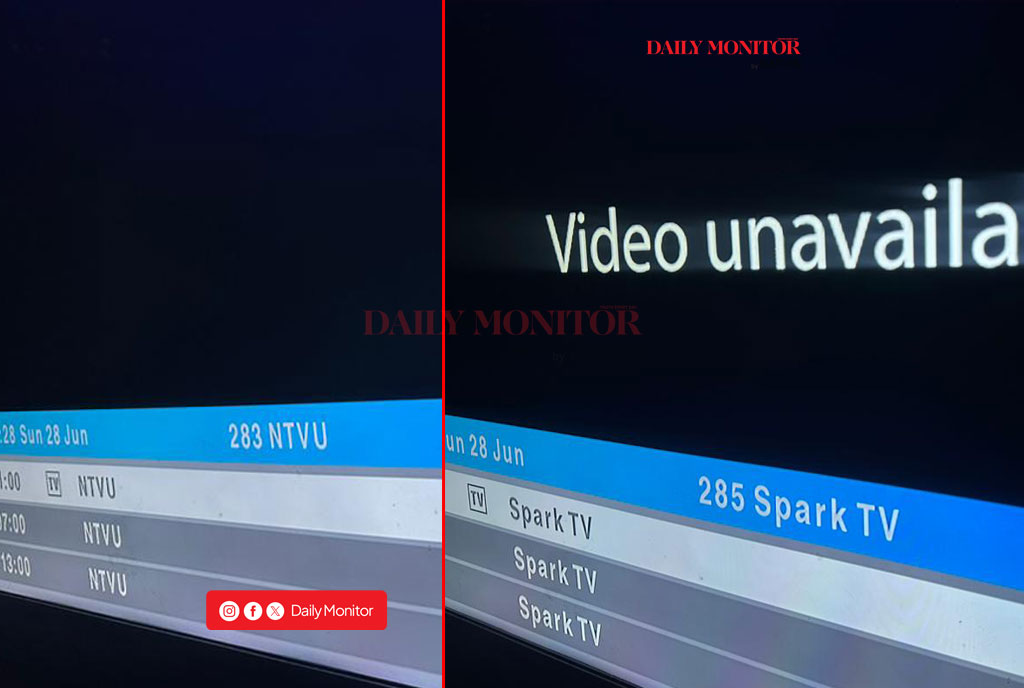
Armed soldiers sealed off Nation Media Group’s Kampala offices overnight as Uganda’s most-watched TV station went dark by dawn.
Ugandans who switched on their televisions on Sunday morning, 28th June 2026, found something deeply unsettling where NTV Uganda should have been — a blank screen and the words “video unavailable.”
It was not a technical glitch.
By 5 am, NTV Uganda’s broadcast had gone dark following an overnight shutdown operation ordered by Chief of Defence Forces Gen. Muhoozi Kainerugaba, son of President Yoweri Museveni. Sister station Spark TV went down with it. The Daily Monitor, Uganda’s leading independent newspaper, was simultaneously disrupted. Millions of Ugandans woke up to silence from the media houses they had relied on for decades.
This was not rumoured, leaked, or anonymous. Muhoozi announced it himself — on X, in plain language, in the middle of the night.
The first sign came through a series of posts on Gen. Muhoozi’s official X account on Saturday evening. In a sequence of declarations that read less like policy and more like a personal edict, he announced that Nation Media Group Uganda would be shut down immediately.
“Mzee has approved my plan to close both NTV and Monitor. We are moving immediately!” he posted.
He followed that with: “From now on ALL bad stories about Uganda have to be cleared by my office!”
And then, more starkly: “In Uganda, I DO NOT believe in a free press! The press should be guided by cadres of the revolution.”
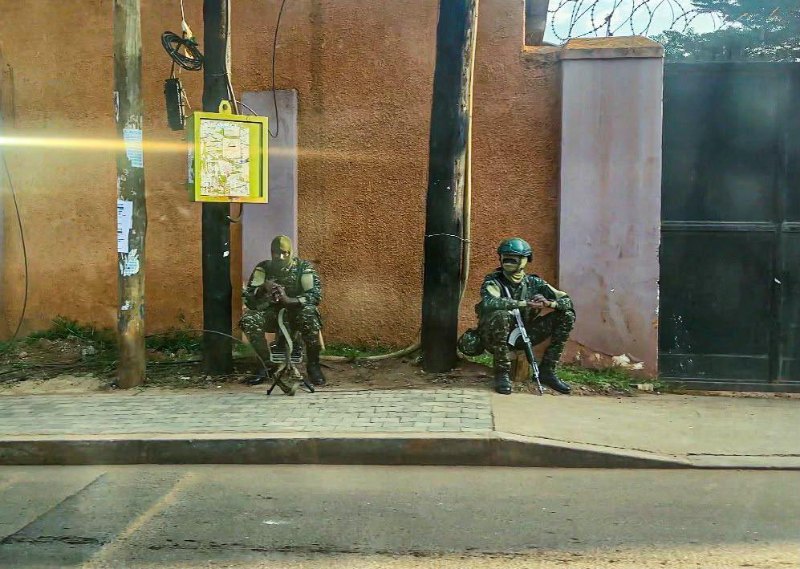
Within hours, heavily armed security personnel were deployed to Nation Media Group’s offices in Namuwongo, Kampala. According to reports from the Daily Monitor itself, the operation began shortly after midnight. Staff were reportedly confined within the premises. Security officers maintained a heavy presence, preventing personnel from entering or leaving.
By early morning, the damage was visible to the entire country. NTV Uganda confirmed its broadcasts had gone dark by around 5 am. The station shared images showing soldiers stationed outside its offices. Spark TV, which broadcasts on the same infrastructure, went down simultaneously.
The Daily Monitor’s print operations were disrupted as well — meaning Uganda’s most-read independent newspaper could not reach its readers on one of the most consequential news days in the country’s recent history.

Muhoozi also claimed the closures were costing the company financially and that he had held this authority for years. “I hear both NTV and Daily Monitor are losing 5 million dollars a day from my closure. That’s Good News for me,” he posted.
He further stated: “I have the power in Uganda to shut down ANY media house I want to. I have had this power since 2017.”
Who Is Nation Media Group?
Nation Media Group is East Africa’s largest independent media company, headquartered in Nairobi, Kenya. Its Uganda portfolio is extensive — NTV Uganda, Spark TV, the Daily Monitor, The East African, 93.3 KFM, 90.4 Dembe FM, Ennyanda newspaper, and Nation Courier, among other assets.
NTV Uganda has, for years, been one of the country’s most-watched television stations. The Daily Monitor has long been regarded as Uganda’s primary independent voice in print journalism — a publication that has historically covered government and military affairs with editorial independence.

Gen. Muhoozi Kainerugaba serves as Chief of Defence Forces of the Uganda People’s Defence Forces and is widely regarded as President Museveni’s likely political successor. The public’s awareness of his proximity to power gives his statements — and his actions — a weight that goes beyond social media.
Why It Matters
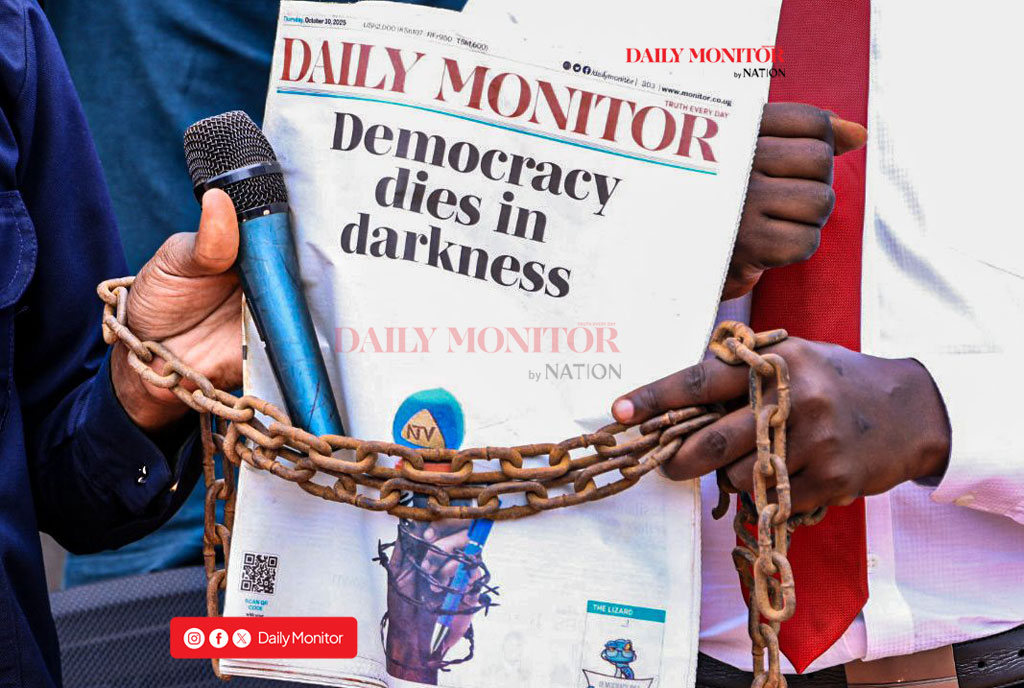
Press freedom in Uganda was already under sustained international scrutiny before Sunday. The closure of NMG Uganda does not just affect journalists — it affects every Ugandan who relied on those platforms for news, entertainment, sport, and public information.
For the entertainment and media industries specifically, NTV Uganda has been a cornerstone. Ugandan musicians, celebrities, and public figures have used its platforms to reach audiences nationwide. The silence that fell on its frequencies on Sunday morning carried implications far beyond politics.
The manner of the closure — announced via personal social media posts, carried out by armed forces overnight, framed explicitly as a rejection of press freedom — drew immediate attention not just locally but across East Africa and internationally.
Condemnation came quickly. Opposition leader and musician Robert Kyagulanyi, known internationally as Bobi Wine, issued a direct statement.

“Muhoozi, acting with his father’s full approval, has moved to silence Uganda’s remaining independent voices by shutting down NTV Uganda, Daily Monitor, Dembe FM and Spark TV,” he said.
Bobi Wine described the development as evidence of an accelerating authoritarian turn in the country.
“This is the harsh reality we now face — a country under open military rule, where fear replaces law and force replaces accountability,” he added.
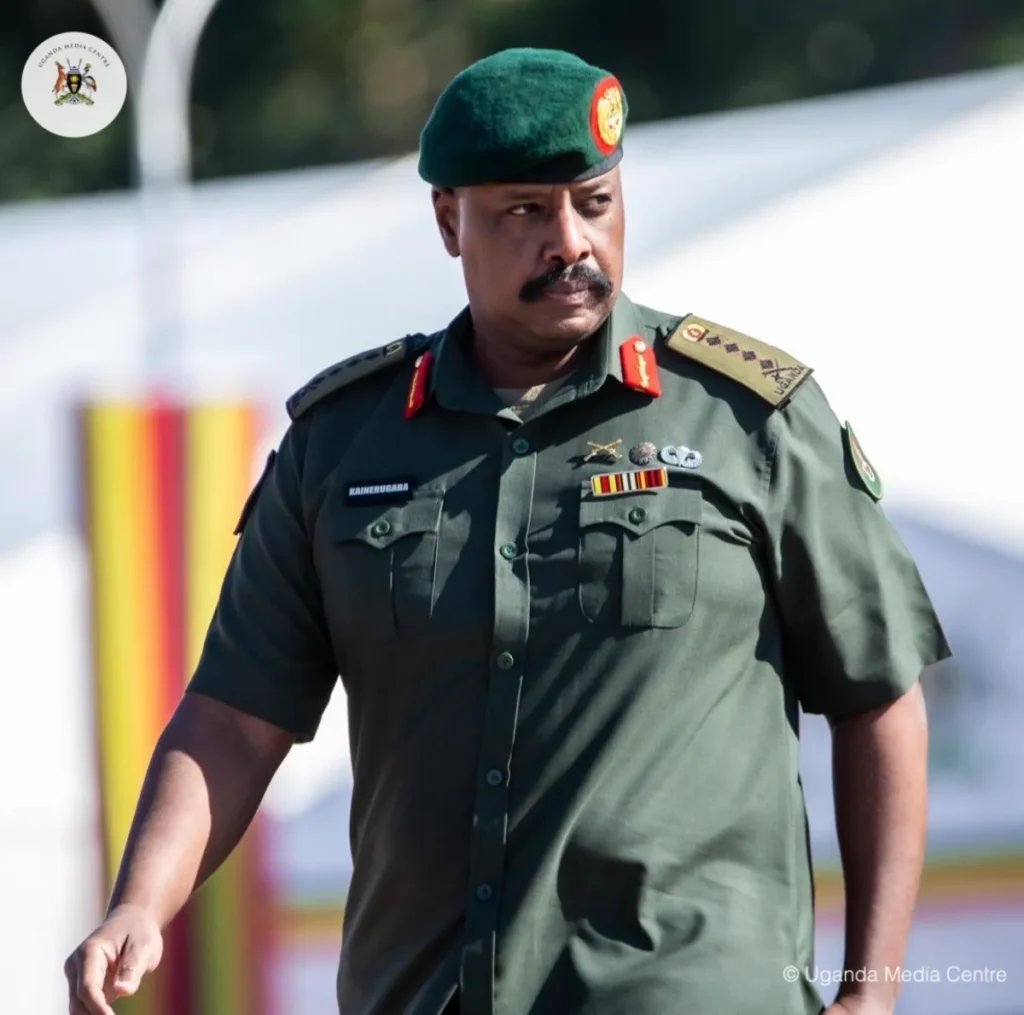
Broader online reaction was described as widespread outrage, with divergent opinions circulating on social media throughout Sunday.
Behind the institutional story are the people who work inside those walls. Journalists, camera operators, producers, editors, presenters, and support staff who arrived at Nation Media Group’s offices to find soldiers at the gate. Staff who, according to reports, were confined inside the premises through the night. People whose professional lives — and the livelihoods of their families — hang in suspension until a general on social media decides otherwise.
That, beyond the politics and the press freedom debates, is the story that is hardest to look away from.
NTV Uganda confirmed its screens went dark by 5 am on June 28th, 2026. As of that morning, Muhoozi had stated that neither NTV nor the Daily Monitor would reopen without his personal permission.
The question Uganda — and the rest of East Africa — is now asking: who decides when the lights come back on?