

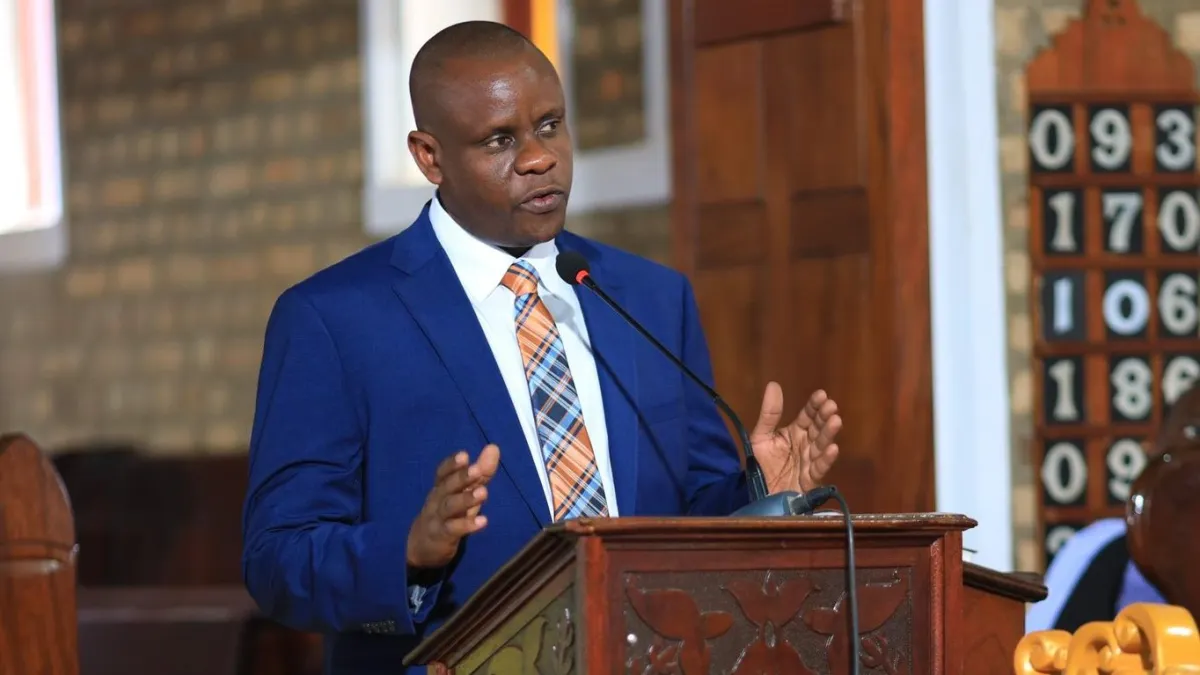
Balaam Barugahara Urges Early DNA Testing Amid Rising Paternity Debate
Ugandan Minister of State for Gender, Labour and Social Development Balaam Barugahara has called for increased use of DNA testing shortly after childbirth, saying it could help prevent future disputes over paternity.
He made the remarks while addressing journalists at the Uganda Media Center on Tuesday, as public debate around DNA testing continues to intensify across the country.
The conversation has gained momentum in recent weeks following high-profile discussions surrounding paternity verification cases in Uganda’s entertainment and cultural spaces.

Minister Cites Past DNA Testing Figures
During his briefing, Balaam referenced findings from his previous work in the Ministry of State for Gender, Labour and Social Development, particularly in the children and youth affairs docket.
He stated that many men were reportedly raising children who were later discovered not to be biologically theirs.
According to him, past government-linked testing exercises showed a significant number of negative results.
He revealed that out of 250 DNA tests conducted, only 12 confirmed biological paternity, while 238 returned negative results.


“Many Men Are Raising Children That Are Not Theirs”
Balaam used the findings to highlight what he described as a widespread social challenge affecting families.
He noted that some men unknowingly invest emotionally and financially in children who are later proven not to be biologically theirs.
The minister said this situation often leads to long-term emotional and social consequences once discrepancies are discovered.
His comments add to the ongoing national conversation around trust, family structure, and the role of DNA testing in modern relationships.

Advice to Young People on Relationships and Responsibility
Beyond DNA testing, Balaam also advised young people to be more cautious in their relationships.
He suggested that limiting multiple sexual partners could help reduce confusion and disputes around paternity.
He further emphasized that early testing after birth could provide clarity and prevent conflict later in life.
His remarks reflect a broader push within public discourse to address family disputes through medical verification and responsible relationship practices.

A Topic That Continues to Spark Debate
DNA testing has become a widely discussed issue in Uganda, especially after recent high-profile cases that have drawn public attention.
The debate has extended beyond private family matters into media, entertainment, and political discussions.
While some advocate for routine testing, others argue that it could undermine trust within families and relationships.
Balaam’s comments place him among public figures calling for structured approaches to addressing paternity uncertainty.
Closing Perspective
As conversations around DNA testing continue to grow, Balaam Barugahara’s remarks highlight the tension between scientific verification and traditional family values.
His call for early testing is likely to further fuel public debate on how best to balance trust, responsibility, and clarity in modern relationships.