


He walked into Makindye Chief Magistrate’s Court on Wednesday afternoon as one of Uganda’s most recognisable opposition figures. He walked out headed to Luzira.
Erias Lukwago — former Kampala Mayor, seasoned lawyer, and president of the People’s Front for Freedom — has been formally charged with misprision of treason and remanded to prison until June 22, 2026. He denied the charge. The court remanded him anyway.
This is not a social media spat or a political threat. This is a criminal charge, a prison cell, and a court date that Uganda will be watching very closely.
Lukwago’s appearance at Makindye court on Wednesday came days after his arrest on Monday — an operation that immediately drew sharp criticism from opposition politicians, lawyers, and human rights activists across the country.
The charge he now faces carries significant weight.
Misprision of treason, according to the court documents, is levelled at a person who had knowledge of plans to unlawfully change the government — and chose not to report that information to the relevant authorities. In other words, Lukwago is not accused of plotting against the state himself. He is accused of knowing something and saying nothing.
That distinction matters enormously — both legally and politically.
In court, Lukwago denied the charge without hesitation. His legal background means he understood exactly what was being put to him and exactly what his response needed to be.
The magistrate remanded him to Luzira Prison regardless, with the case scheduled to return to court on Monday, June 22, as investigations continue.
And then things got really interesting — because the charge itself raises a question nobody in that courtroom answered out loud: what exactly is Lukwago alleged to have known, and when?
Those details remain sealed from public view for now.
Erias Lukwago is not a newcomer to confrontation with the state. As a longtime opposition politician and practising lawyer, he has built his public identity around challenging authority — in courtrooms, in parliament, and in the streets of Kampala.

He served as Lord Mayor of Kampala and has been one of the most vocal critics of the Museveni administration over the years. His party, the People’s Front for Freedom, positions itself as a serious opposition vehicle in Uganda’s tightly controlled political landscape.
His arrest on Monday was not carried out quietly. The operation triggered immediate and loud responses from opposition circles, with fellow politicians and human rights organisations calling it politically motivated. By Wednesday, those voices had grown louder — not quieter.
Lukwago has faced legal and political pressure before. He has never, publicly, backed down from any of it.
The moment news of the remand broke, Ugandans online reacted with a speed that reflected just how significant this arrest is perceived to be.
Fans and followers of Lukwago immediately noticed the specific nature of the charge — misprision of treason, not treason itself — and began debating what that framing means in practice. Legal commentators flooded timelines explaining the distinction between commission and concealment of an offence.
The phrase “he knew and said nothing” became shorthand across social media for a charge that many people were hearing for the first time. Within hours, the term “misprision” was being searched and shared across platforms by Ugandans trying to understand exactly what their most prominent opposition lawyer had been accused of.
Luzira Prison — Uganda’s most well-known correctional facility — gave the story a visual weight that no amount of legal terminology could.
The reactions online have been intense and largely polarised along familiar political lines.
Supporters of Lukwago have been unequivocal, describing the charge as a political weapon deployed against a man who has made a career of holding the government accountable. Comment sections are filled with calls for his immediate release and expressions of solidarity from across the opposition.
Others, more cautious in their framing, are reserving judgment until the specifics of the alleged knowledge become public. Some fans believe the June 22 court date will reveal far more about the substance of the case than Wednesday’s brief appearance suggested.
It is unclear at this stage what evidence the prosecution intends to present, or whether Lukwago’s legal team will seek bail at the next hearing. What is clear is that this case has moved from arrest to formal charge faster than many observers expected.
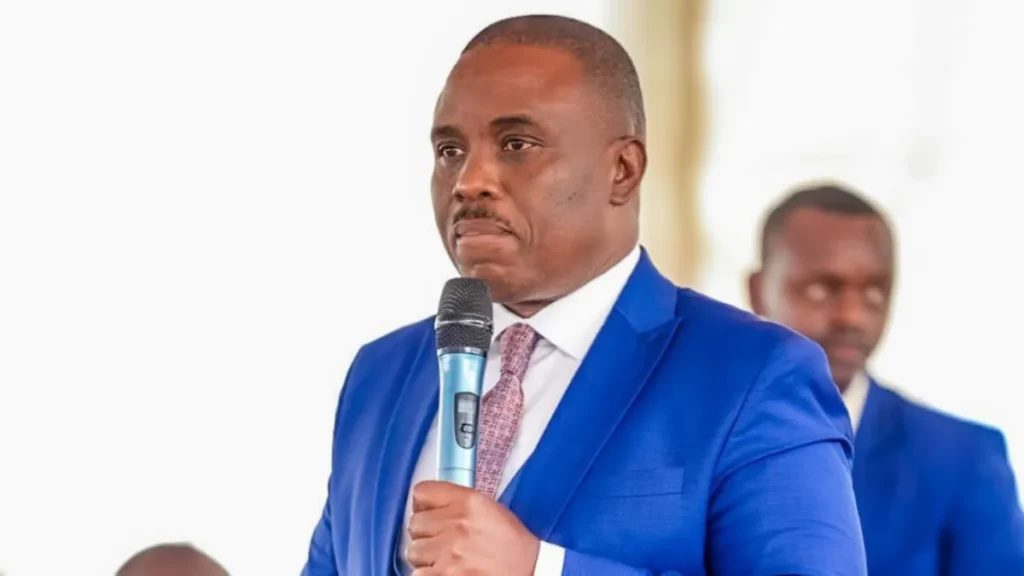
Erias Lukwago is a husband, a father, and a man who has spent decades in public life fighting legal battles on behalf of others. Wednesday was the day one of those battles landed squarely on him.

Spending even a single night in Luzira as a remand prisoner — let alone the days between now and June 22 — is not an abstraction. It is a concrete human experience for a man whose entire identity is built around the rule of law and the right to dissent.
For the opposition movement watching this unfold, the message being sent — and received — goes well beyond the courtroom.
There is a quiet, brutal irony in the fact that Erias Lukwago — a lawyer by training, a man who has spent years walking others through Uganda’s legal system — is now on the other side of it, sitting in Luzira on a charge that accuses him not of acting, but of knowing.
In Uganda’s current political climate, apparently, silence can be just as dangerous as speech.
June 22 is the next chapter — and if Wednesday was anything to go by, it will not be a quiet one. Do you think this charge will hold up in court, or is this a case that collapses under scrutiny? Tell us what you think below.