


Two hundred and sixteen million shillings sounds like a big number — until you consider how many Ugandan artists made music this year, how many times that music played on radio, in malls, at weddings, in bars, and across streaming platforms.
Then the number starts to feel a little different.
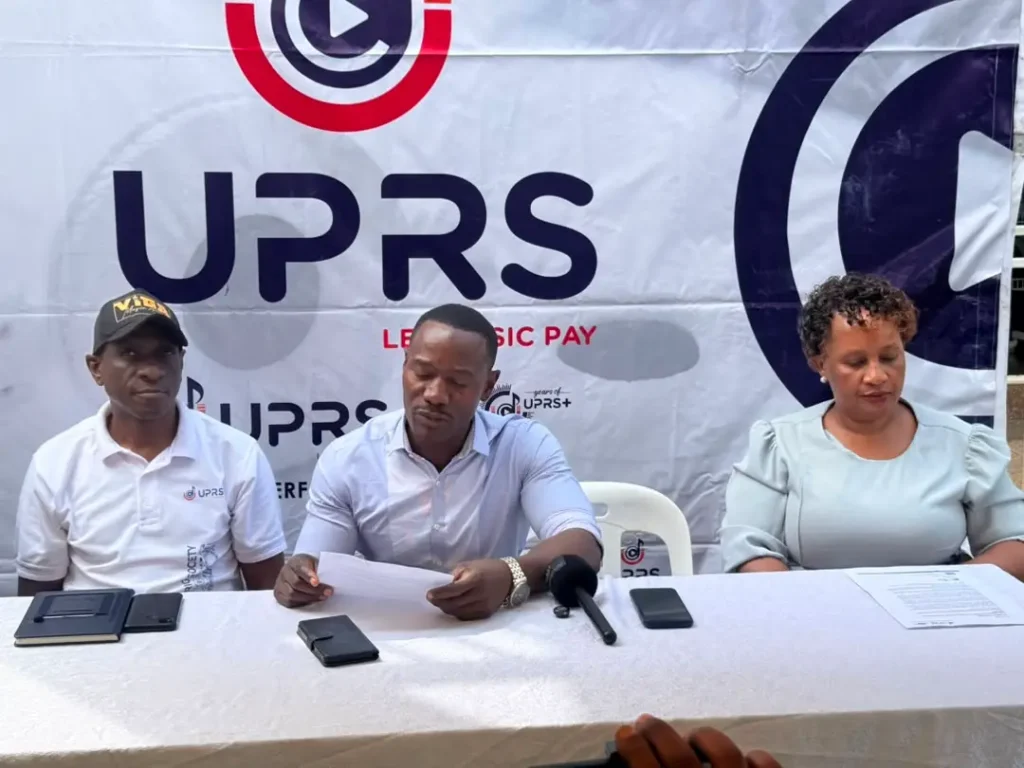
The Uganda Performing Rights Society (UPRS) made its latest royalty distribution announcement on Wednesday, confirming a UGX 216 million payout to its members. The mood in the room was cautiously optimistic. But it was the chairman’s own admission — that collections remain “below desirable levels” — that told the fuller story of where Uganda’s music royalty system actually stands right now.
Ugandan artists have been asking hard questions about royalties for years. This week, they got some answers. Not all of them were comfortable.
At a press conference held at UPRS offices, chairman Martin Nkoyoyo confirmed that the UGX 216 million payout reflects income collected from music licensing and usage fees across the country throughout the distribution period.
He was measured but candid.

“We understand that many of our members have high expectations regarding their royalty earnings, and we recognize that for some rights holders, the amounts received may not fully represent the true value of their creative works,” Nkoyoyo acknowledged publicly.
That’s a significant statement from the head of the organisation — essentially confirming what many creators have long felt: the system isn’t yet paying what their music is truly worth.
But that’s not even the most important part of what was revealed.
Nkoyoyo went further, outlining active plans to expand licensing coverage, strengthen enforcement against music users who operate without proper licensing, and push for better compliance across the board. The goal, he said, is to grow the pool before the next distribution — not simply defend the current one.
“Despite our collections currently being below desirable levels, we are making significant strides,” he stated, framing the 216 million not as a ceiling but as a starting point.
The society also flagged one of the most persistent technical challenges in royalty management: data quality. Without reliable information on exactly where, when, and how music is being used, truly fair distribution remains difficult to achieve. UPRS says it is now investing in upgraded monitoring systems and better reporting mechanisms to fix this.

For anyone unfamiliar with how royalties work, here’s the short version: every time a song plays on radio, in a supermarket, at a concert, or in a hotel lobby, the music owner is legally entitled to payment. Collecting rights societies like UPRS exist to gather those fees from businesses and distribute them back to the artists and songwriters who created the music.
In Uganda, that system has historically been underpowered — plagued by low compliance from music users, limited monitoring infrastructure, and, at times, questions about transparency in how collected funds are distributed.
UPRS has been attempting a credibility rebuild, and Wednesday’s press conference was framed as part of that ongoing process. Nkoyoyo explicitly described the payout as “an important milestone in the body’s ongoing journey to rebuild and strengthen the collective management system in Uganda” — language that acknowledges the road has been bumpy.
It didn’t take long for musicians and industry insiders to react online after the announcement landed.
Fans immediately noticed the contrast between the headline figure — UGX 216 million — and the chairman’s own admission that it doesn’t fully reflect what artists are owed. That tension hit differently for people who know just how much Ugandan music moves across platforms, airwaves, and events every single week.
The internet had thoughts, and they were not holding back.

Comments ranged from cautious appreciation for the transparency to pointed frustration, with several artists and fans questioning how a music scene as active as Uganda’s results in a national royalty pool that still falls short of expectations. “Our music is everywhere — so where is the money?” was a sentiment being echoed widely.
Some fans believe the real issue isn’t collection effort — it’s enforcement. The argument being made in comment sections is that countless Ugandan businesses use music daily without any licensing arrangement, and until UPRS develops real teeth to pursue those users, distributions will remain limited.
Others pointed to the data problem Nkoyoyo himself flagged. Without accurate tracking of music usage, some artists likely receive less than they’re owed while others may receive more — a fair distribution system can only be as accurate as the data feeding it.
It’s unclear exactly how the UGX 216 million was divided among members, or which genres or artists received the largest shares. UPRS has not yet released a detailed breakdown, though the society says distributions follow established policies and international collective management principles.
Behind every royalty figure is a musician who wrote something real — late nights, personal stories, money spent on studio time — and then handed their creation to the world.
For Uganda’s independent artists especially, royalty income isn’t just a bonus. It’s often the financial bridge between making music sustainably and quitting altogether. When the system underperforms, the people who feel it first are the mid-level and emerging artists — not the stars with brand deals and sold-out concerts, but the ones whose songs you know every word to even if you’ve never seen their face.


UPRS acknowledging that gap publicly is meaningful. Whether the systems being promised will close it is the question the industry will be watching closely.
Here’s the irony nobody is skipping past: the chairman of Uganda’s music royalty society stood in front of cameras and confirmed that Uganda’s music royalty society isn’t yet paying musicians what their music is worth.
That kind of honesty is either the first sign of a system genuinely fixing itself — or the most polished way to manage expectations ahead of more disappointment. The difference will show up in the next distribution.
UGX 216 million is a milestone — but Ugandan artists didn’t start making music to hit milestones. They started to get paid fairly.
Is UPRS finally turning a corner, or is this just a well-packaged press conference? Drop your thoughts below — especially if you’re one of the artists who received a cheque this week.